Common Whitetail Dragonfly – Plathemis lydia
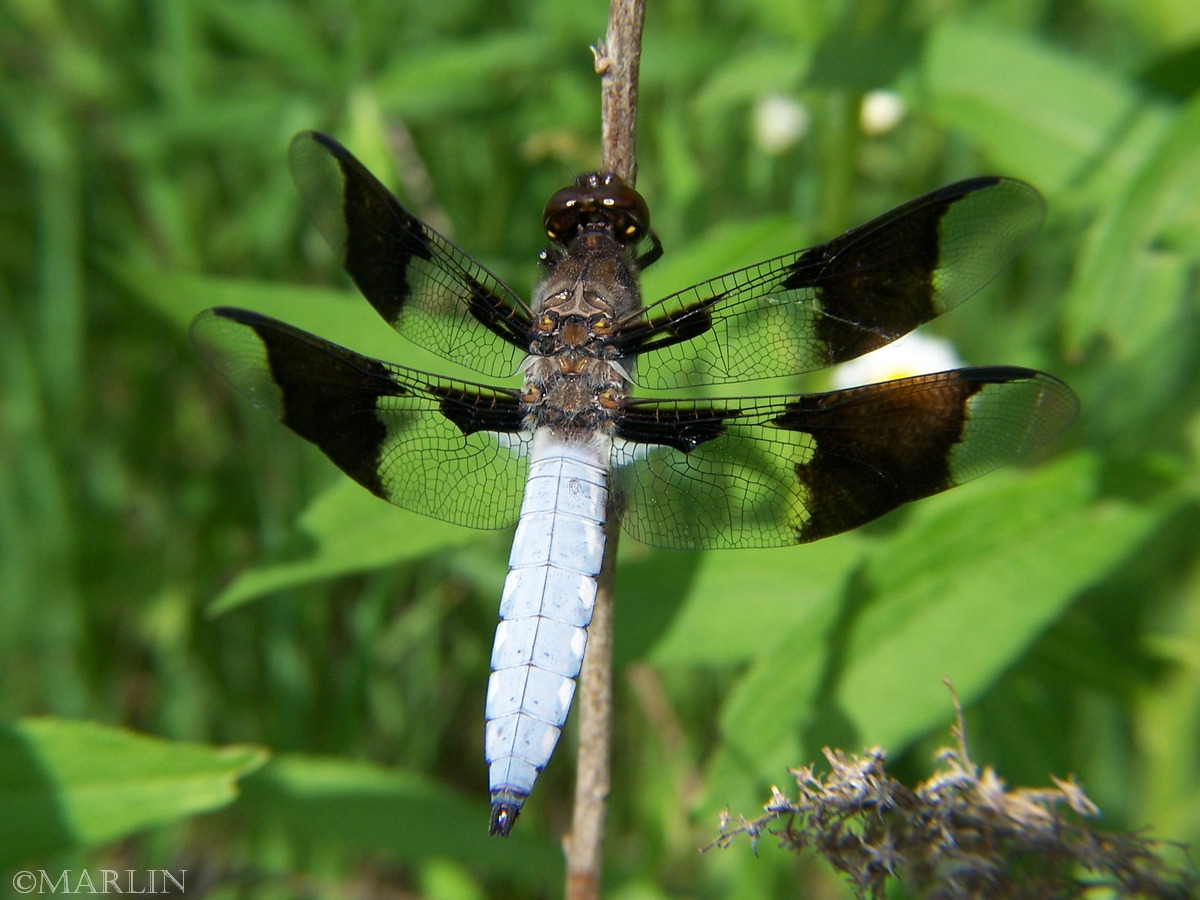
Mature Male Whitetail displays namesake white waxy coating (pruinosity) on his wings and abdomen
The common whitetail dragonfly gets its common name from the white waxy coating that develops on the wings and abdomen of the mature male.
Dragonflies have excellent eyesight. Their compound eyes have up to 30,000 facets, each of which is a separate light-sensing organ or ommatidium, arranged to give nearly a 360° field of vision. Odonates are completely harmless – they do not sting or bite. Indeed, they are beneficial in the same respect spiders and other predators are beneficial – they keep the burgeoning insect population in check. Many of these species prey on each other; I often see dragonflies devouring damselflies.
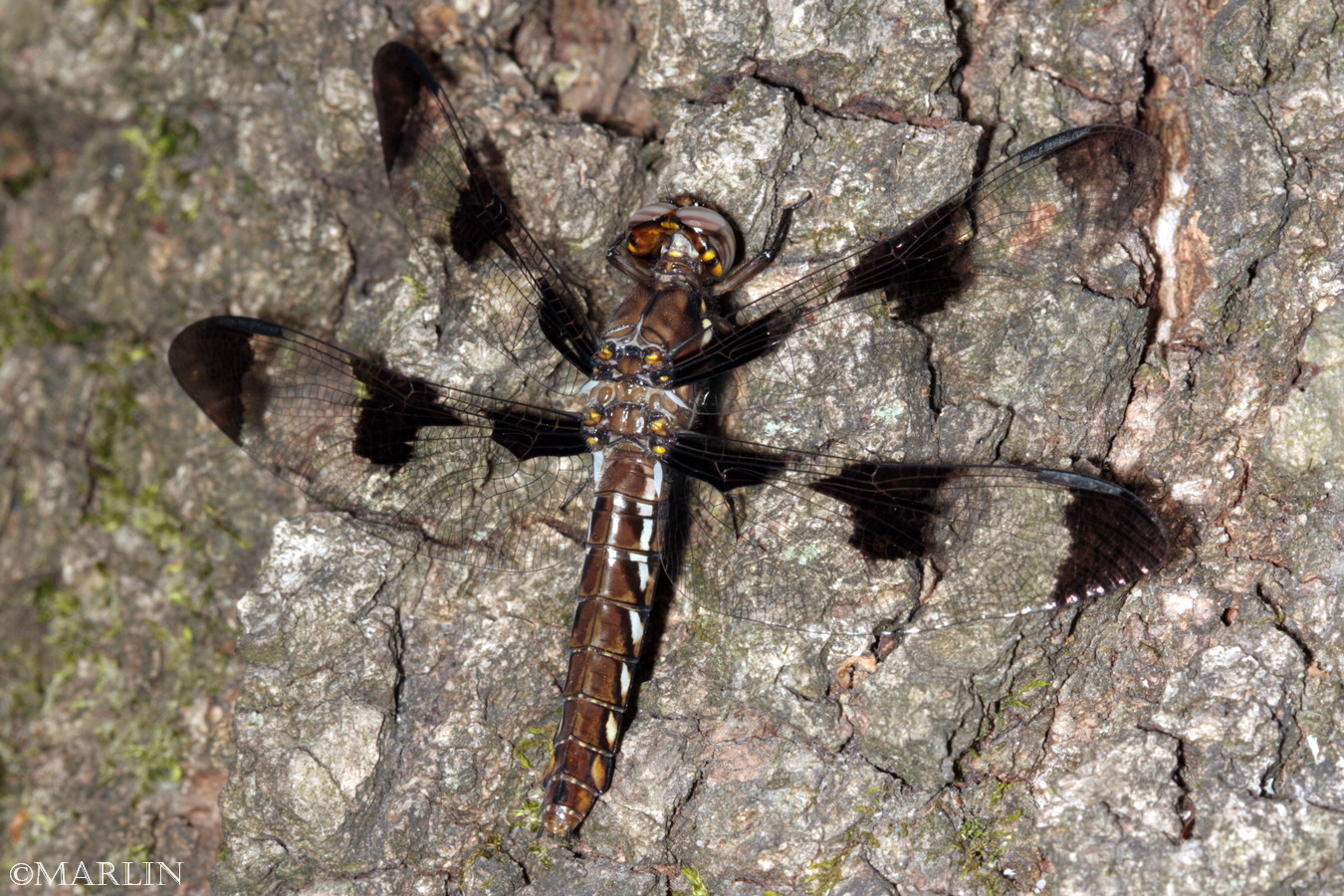
Female
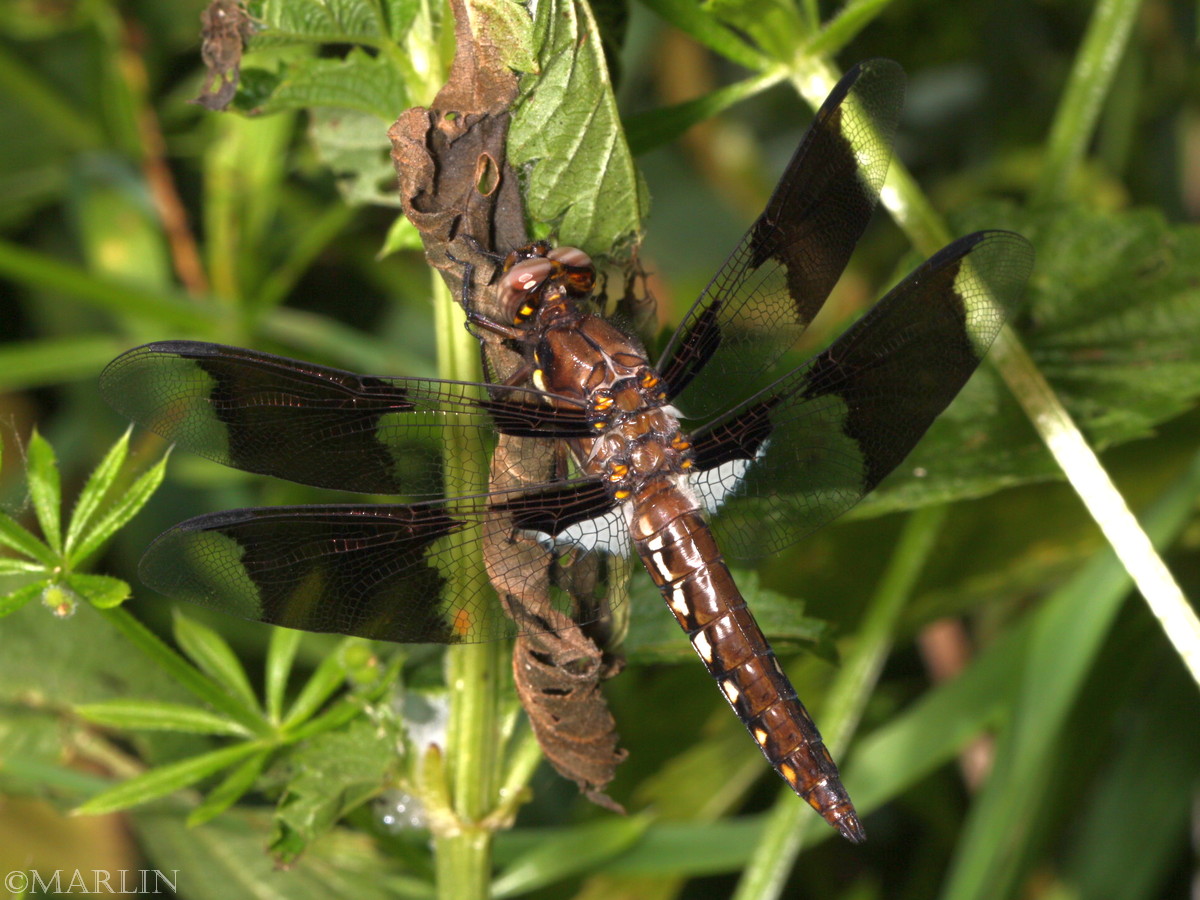
Freshly-minted male whitetail is not yet completely pruinose
Dragonflies are among the most ancient of living creatures. Fossil records, clearly recognizable as the ancestors of our present day odonates, go back to Carboniferous times which means that the insects were flying more than 300 million years ago, predating dinosaurs by over 100 million years and birds by 150 million.
Live adult dragonflies photographed in the wild at Winfield, Illinois, USA
Insects | Dragonflies | Damselflies | Spiders
