Black Saddlebags Dragonfly – Tramea lacerata
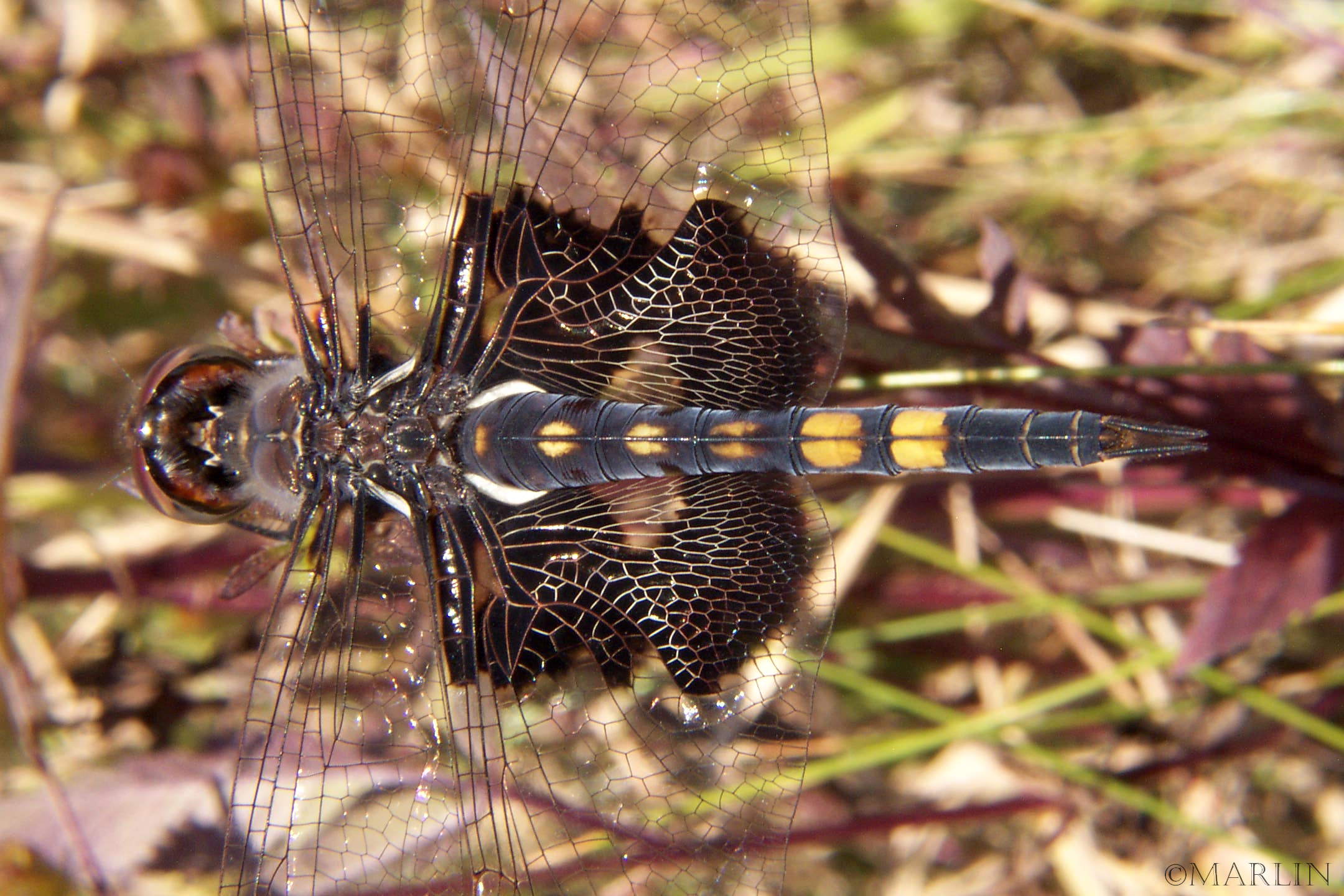
Black Saddlebags Dragonfly black saddlebags
The black saddlebags dragonfly can be found almost everywhere in the United States except in some extreme northern areas of the country. It ranges south to Baja California and Mexico and is also found on Hawaii, the Florida Keys, Bermuda and Cuba. It can be seen as far north as Quebec, Ontario and British Columbia in Canada.
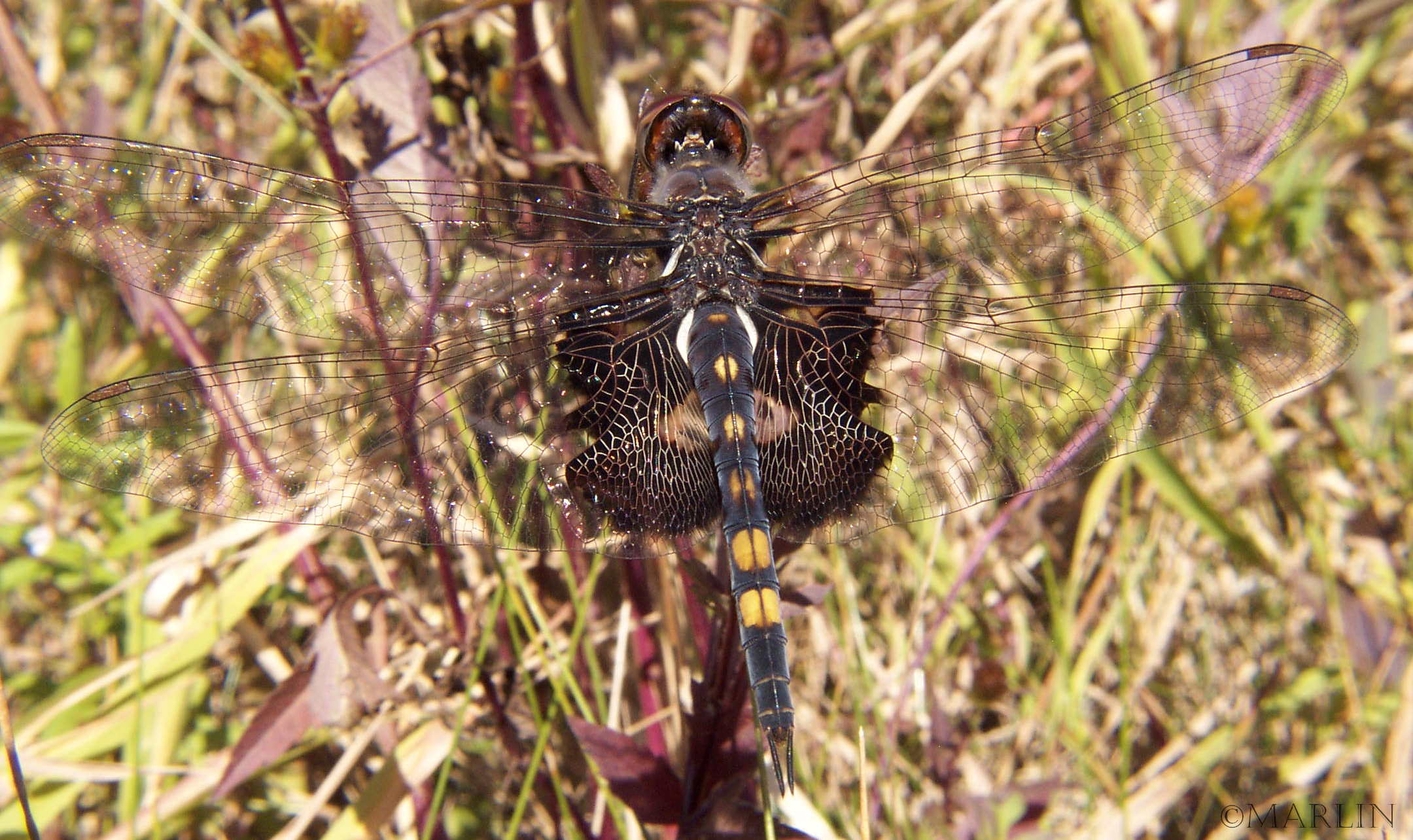 Sorry for the busy background. One takes photos when the opportunity presents itself; dragonflies as a rule do not like being approached! The black saddlebags’ hind wings are quite long and wide, with the eponymous iridescent black bands. Besides these markings, the rest of the wing is clear. I consider black saddlebags to be a rather large dragonfly (it’s about 50mm long), though not quite as large as the green darner.
