American Rubyspot Damselfly – Hetaerina americana
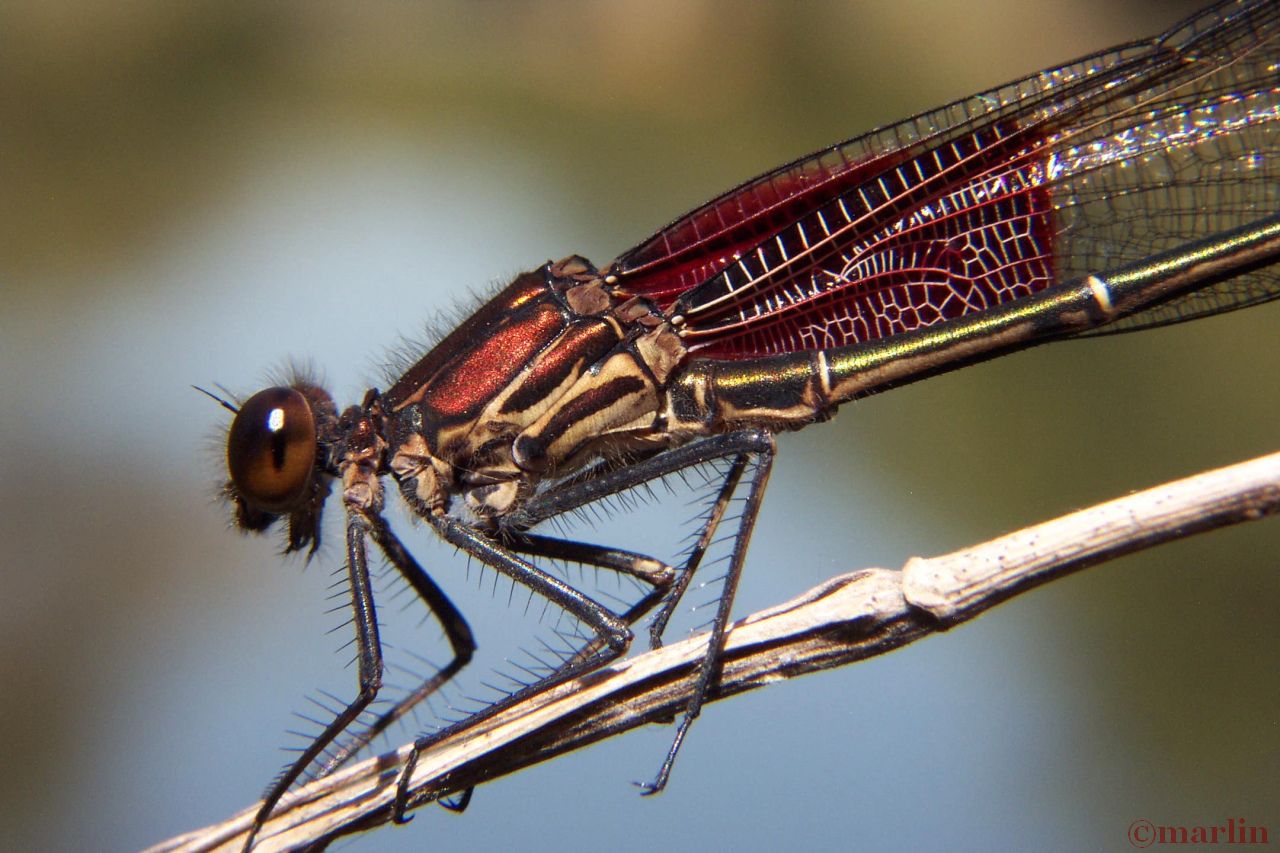
American Rubyspot Damselfly – Hetaerina americana
These skittish insects requires a photographer’s patience and persistence. Their annoying habit of perching on swaying grass blades projecting over the water certainly presents a challenge. Every macro-photographer owes her or himself an hour or two photographing some of the loveliest creatures on Earth. What better way to spend a quiet summer afternoon?
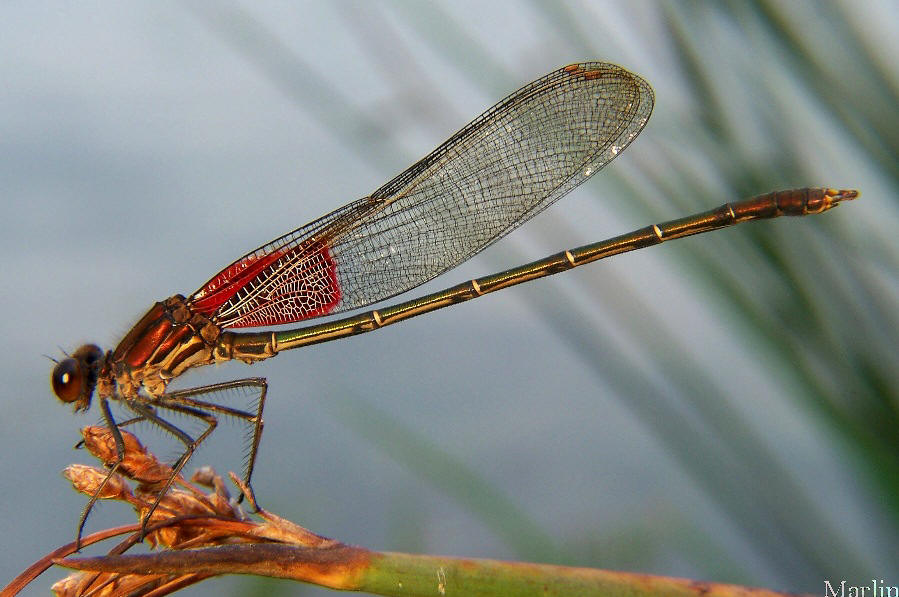
Among the states, only Washington and Idaho lack records of this species. The range continues from the United States south into Mexico. In Canada, these provinces have records: Ontario, Quebec, and New Brunswick. One of three Nearctic species in the genus.
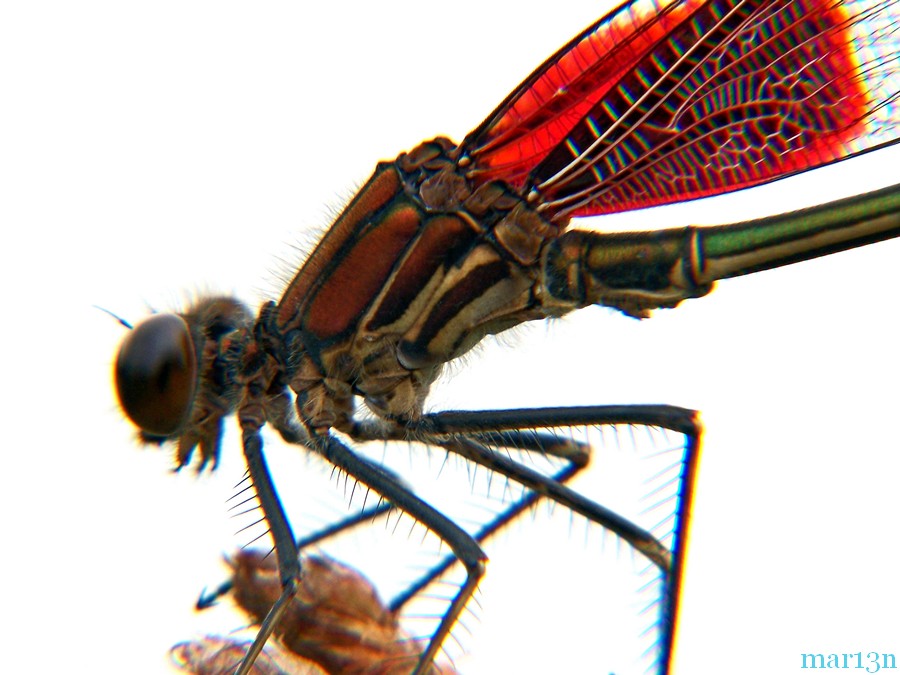
Damselflies complete a life cycle in one or two years. The adults mate over the shallow water, sometimes in flight but often while clinging to the exposed portions of weed beds or shoreline vegetation. Immediately after mating, the female will crawl down the vegetation, and ‘into’ the water to lay her eggs on the submerged portion of the vegetation.
Once the eggs are laid she will crawl back up the vegetation and repeat the process. When the eggs hatch they do not go through the larva and pupa transformations. The newly hatched damsel is just a smaller version of the later immature stages. Thus they are simply called ‘nymphs’ until they actually hatch into adults.
The damselfly nymph is predacious. Usually it lies in wait for other aquatic bugs to get within range and then grabs them with its ‘labium’ which is a modified lower jaw. The nymph will proceed through 10 to 12 instars before becoming fully developed and ready to emerge as an adult. With each molt the nymph becomes somewhat darker in color. Finally the nymph will swim towards the shore and crawl into shoreline vegetation. While clinging to this vegetation the nymph’s skin breaks along the wing case and out crawls a shortened version of the adult. Before taking flight, the new adult must pump body fluids into its abdomen and wings. Depending on the species, the adult will live for several weeks to several months before mating and dying.
Order Odonata: dragonflies and damselflies date back 300 million years, to the Carboniferous Period of the Paleozoic Era. These colorful, enchanting insects are revered second only to the butterflies in the popular psyche. Explore detailed close-up photographs of live, adult dragonflies and damselflies photographed in the wild.
Insects | Dragonflies | Damselflies | Spiders