Gray Comma Butterfly – Polygonia progne
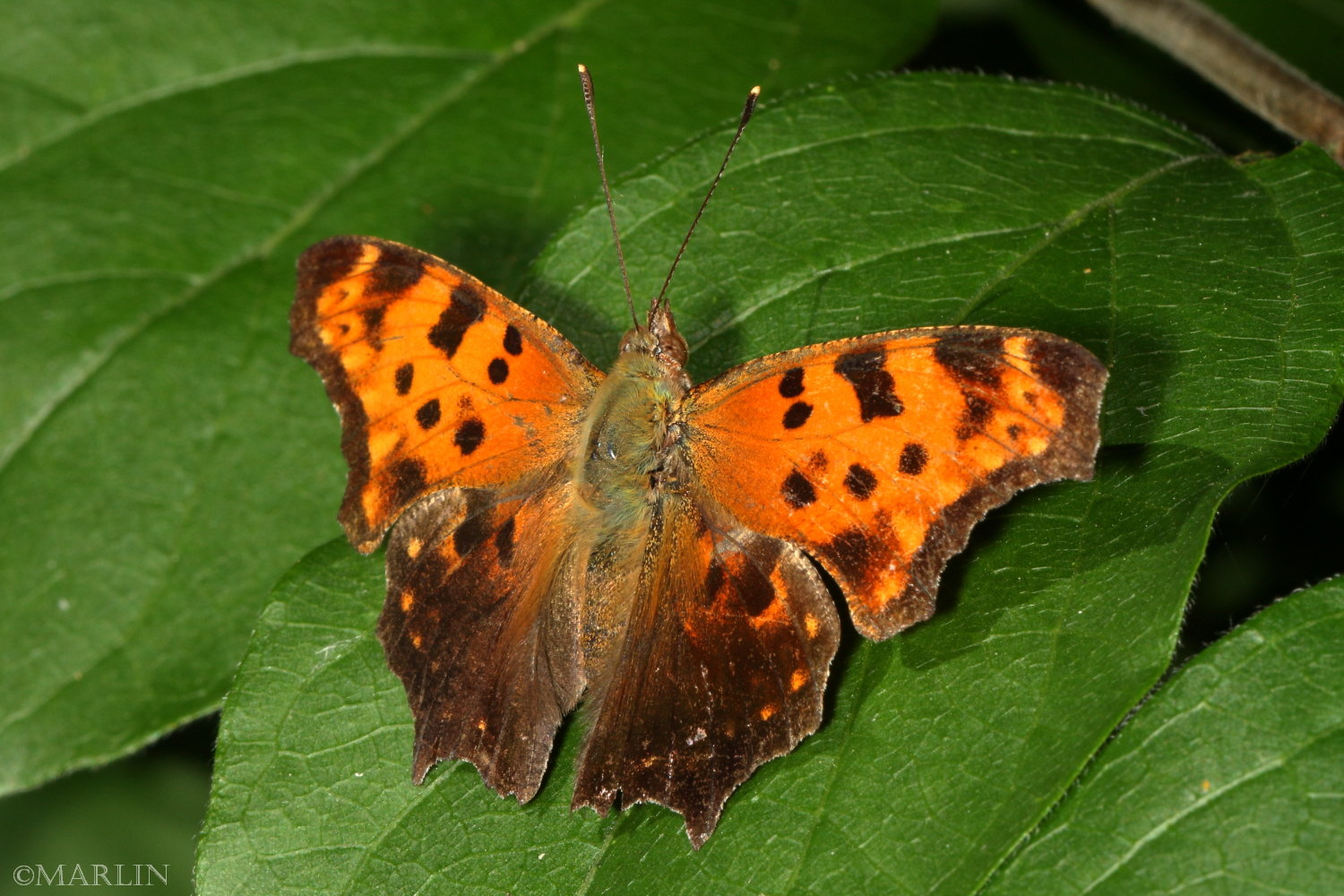
The commas are some of the most cooperative and “friendly” butterflies I’ve encountered. They will buzz you and perch on you if you hold still in the sunshine where they are patrolling. If they land on your bare skin, don’t be startled if they stick you with their proboscis – it’s like being poked gently with a tiny, sharp twig.
Commas are part of an association of butterflies commonly known as “anglewings,” which have sharply angled wings. When folded at rest, the undersides resemble dead leaves or pieces of bark. This group includes anglewings, tortoiseshells, commas, question marks, leafwings, snouts and daggerwings.
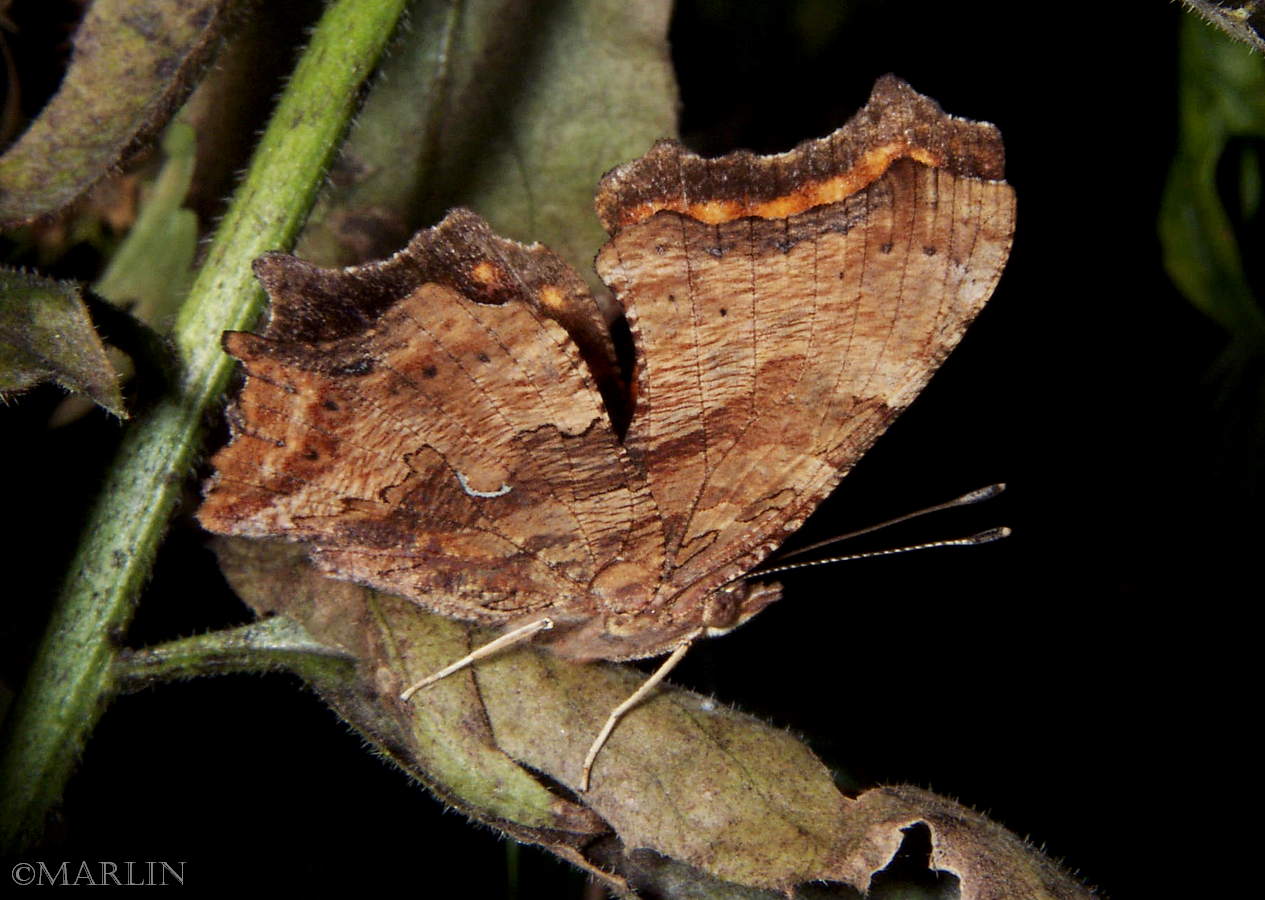
Habitat: Look for them in deciduous woods, along trails and on the sunny edges of clearings. They often fly in pairs, rapidly dancing up into the forest canopy. Since the adults overwinter, these are some of the earliest spring butterflies, taking wing at the first few warm days, about mid-March here, near Chicago. They feed primarily on tree sap in the early spring. If you can find wounded trees dripping sap, you’ll find both gray and eastern commas as well as mourning cloaks.
Similar species: Question Mark had pronounced tails; other anglewings extremely similar.
Life Cycle: Eggs pale green, ribbed, laid in stacks of 2 – 9. Caterpillar 1″ light green with spines along length. Chyrsalis brown with gold spots., curved, irregular shape. Hops and nettles are preferred host plants. Adults overwinter. 2 broods in north, more south [1]. Habitat: Deciduous woods, forest clearings and edges, open woodlands.
Butterfly Index | Moth Pictures | Moths Index | Skipper Butterflies