Eastern Tiger Swallowtail – Papilio glaucus
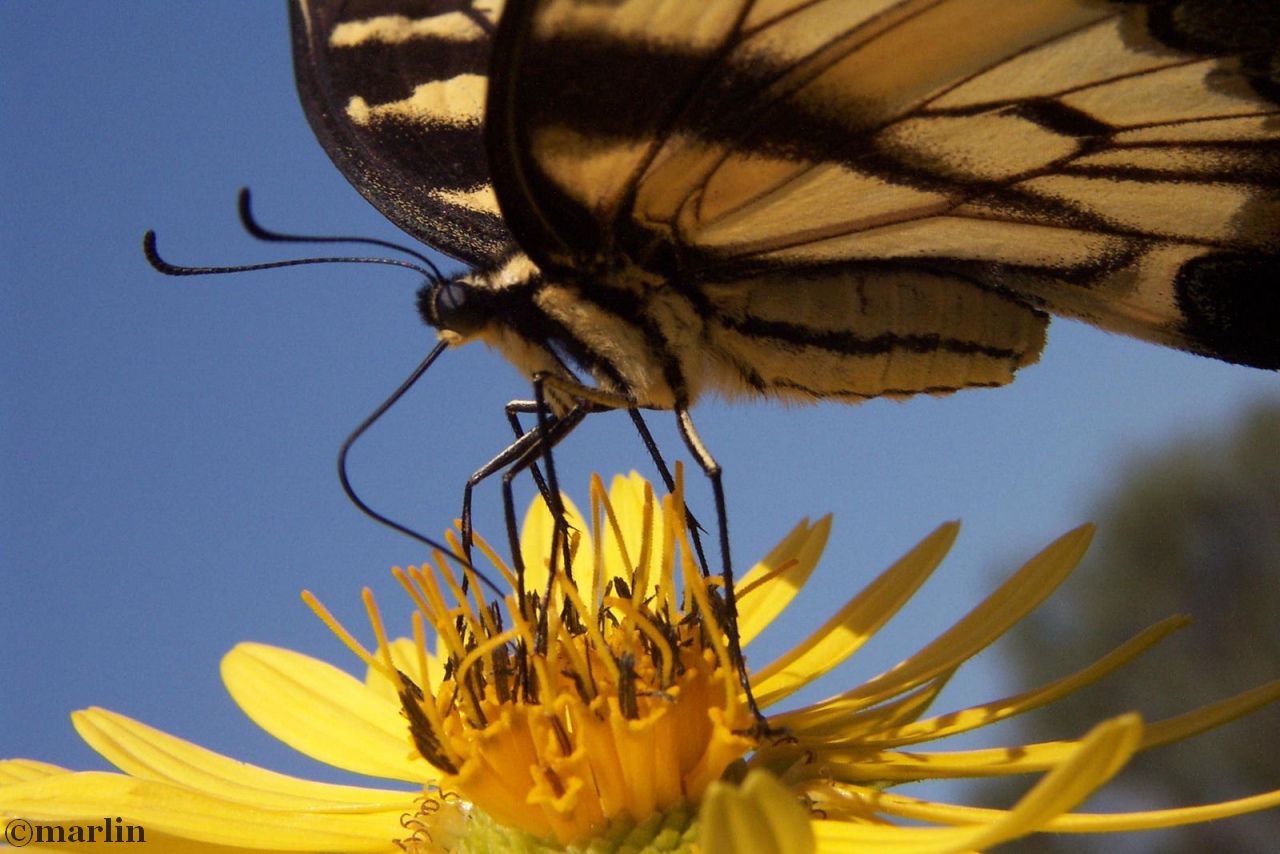
Eastern Tiger Swallowtail
The Eastern Tiger Swallowtail is one of the most familiar butterflies here in the American midwest. Common in forests and along streams, the tiger swallowtail is equally at home in urban gardens.
Found in the Eastern United States as far north as Vermont and as far west as Colorado. Flies from spring through fall, and most of the year in the southern portions of its range, where it may produce two or three broods a year. In the Appalachian region, it is replaced by the closely-related and only recently described larger-sized Papilio appalachiensis, and in the north, it is replaced by the closely-related Papilio canadensis. These three species can be very difficult to distinguish, and were formerly all considered to be a single species [2]
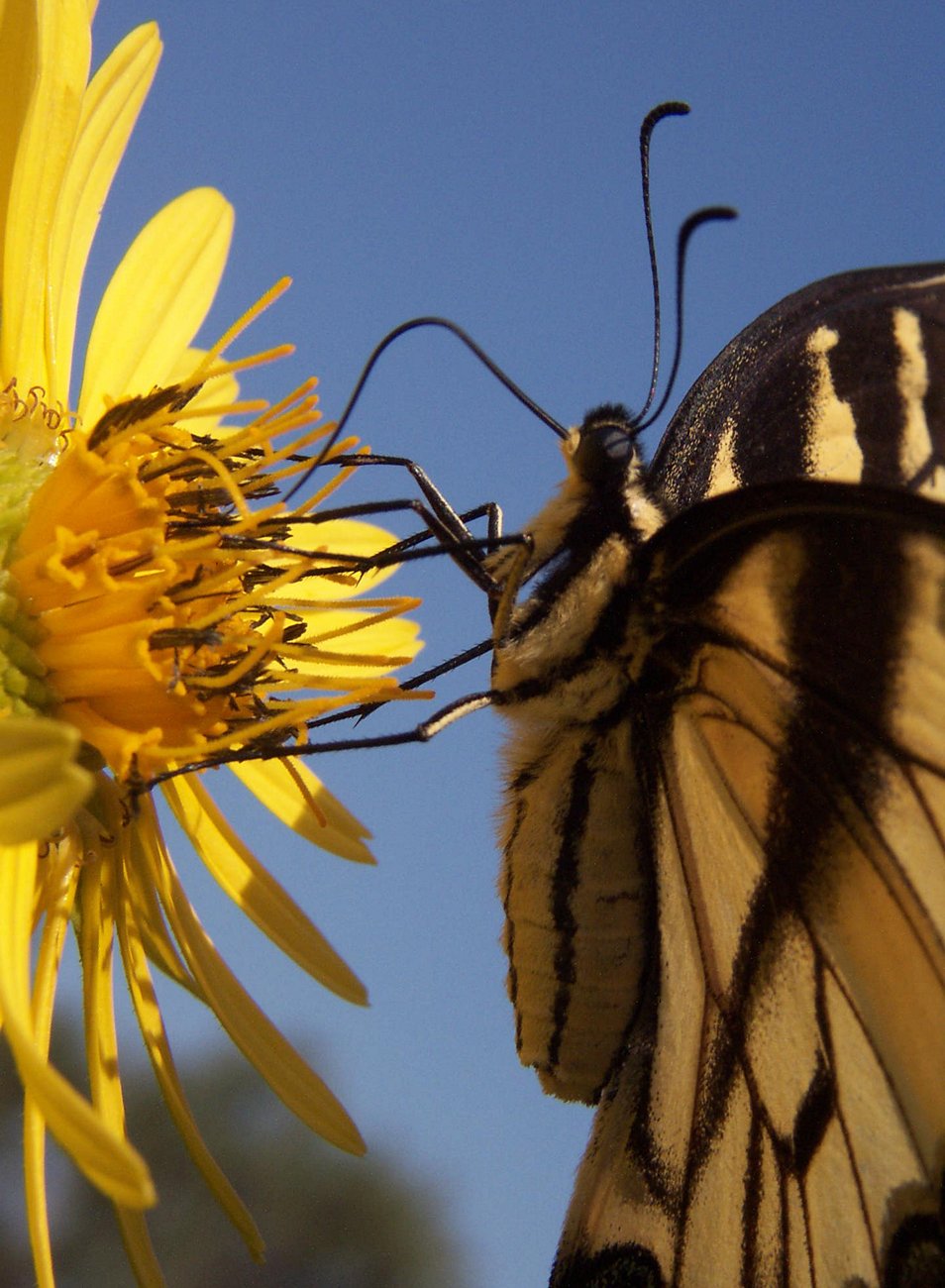
Adult males are yellow, with four black “tiger stripes” on each fore wing. The trailing edges of the fore and hind wings are black which is broken with yellow spots. On the medial margin of the hind wing next to the abdomen there are small red and blue spots.
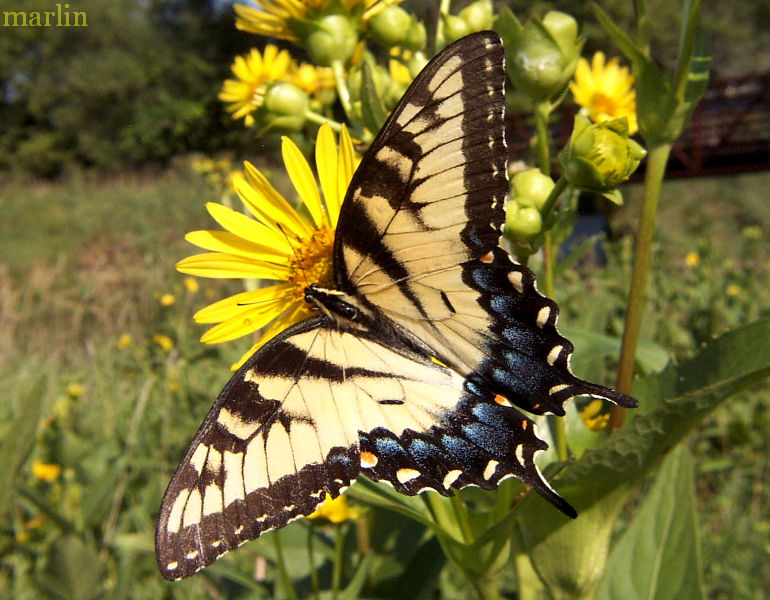
Live butterflies photographed at Alpharetta, Georgia and Winfield Illinois. Family Papilionidae — swallowtail butterflies
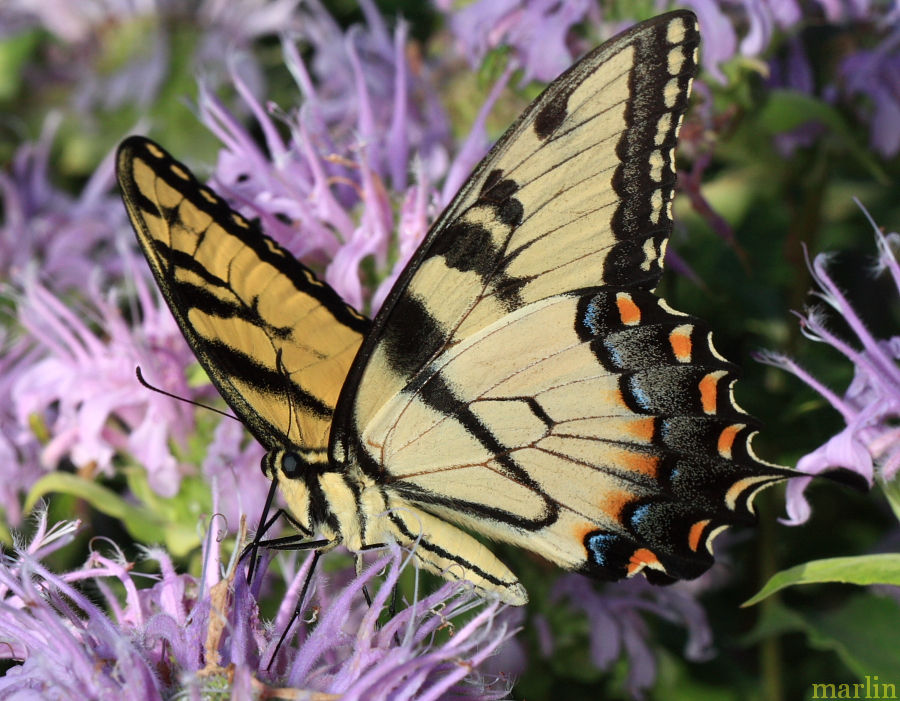
Eastern tiger swallowtail is the state butterfly of Georgia, Virginia, Alabama, South Carolina and Delaware.
Similar species: Western Tiger swallowtail, Giant Swallowtail, Two-tailed swallowtail. Life Cycle: Large eggs are pale green, globular. Caterpillar starts out brown and white, mimics bird droppings. Mature caterpillar grows to 50mm (2″), is green with big orange and black eyespots at front. Chrysalis overwinters. Host plants are mostly broadleaf trees such as cottonwood, willow, birch and ash, polar and cherry. One to three broods, depending on latitude. Habitat: Deciduous woods, forest clearings and edges, open woodlands, gardens and parks [3].

Eastern Tiger Swallowtail – Black Female Form
References
- Opler, Paul A., Harry Pavulaan, Ray E. Stanford, Butterflies and Moths of North America.
- National Audubon Society Field Guide to Insects & Spiders Chanticleer Press 1980
- Eric Eaton & Ken Kaufman, Kaufman Field Guide to Insects of North America, Hillstar Editions 2007
Order Lepidoptera, which contains both butterflies and moths, includes at least 125,000 known species including 12,000 in North America. Butterflies are revered for their brightly colored wings and pleasing association with fair weather and flowers.
Learn to identify many of the American Midwest’s common species through descriptions and large diagnostic photos of live, wild specimens.
Butterfly Index | Moth Pictures | Moths Index | Skipper Butterflies