Eastern Comma Butterfly – Polygonia comma
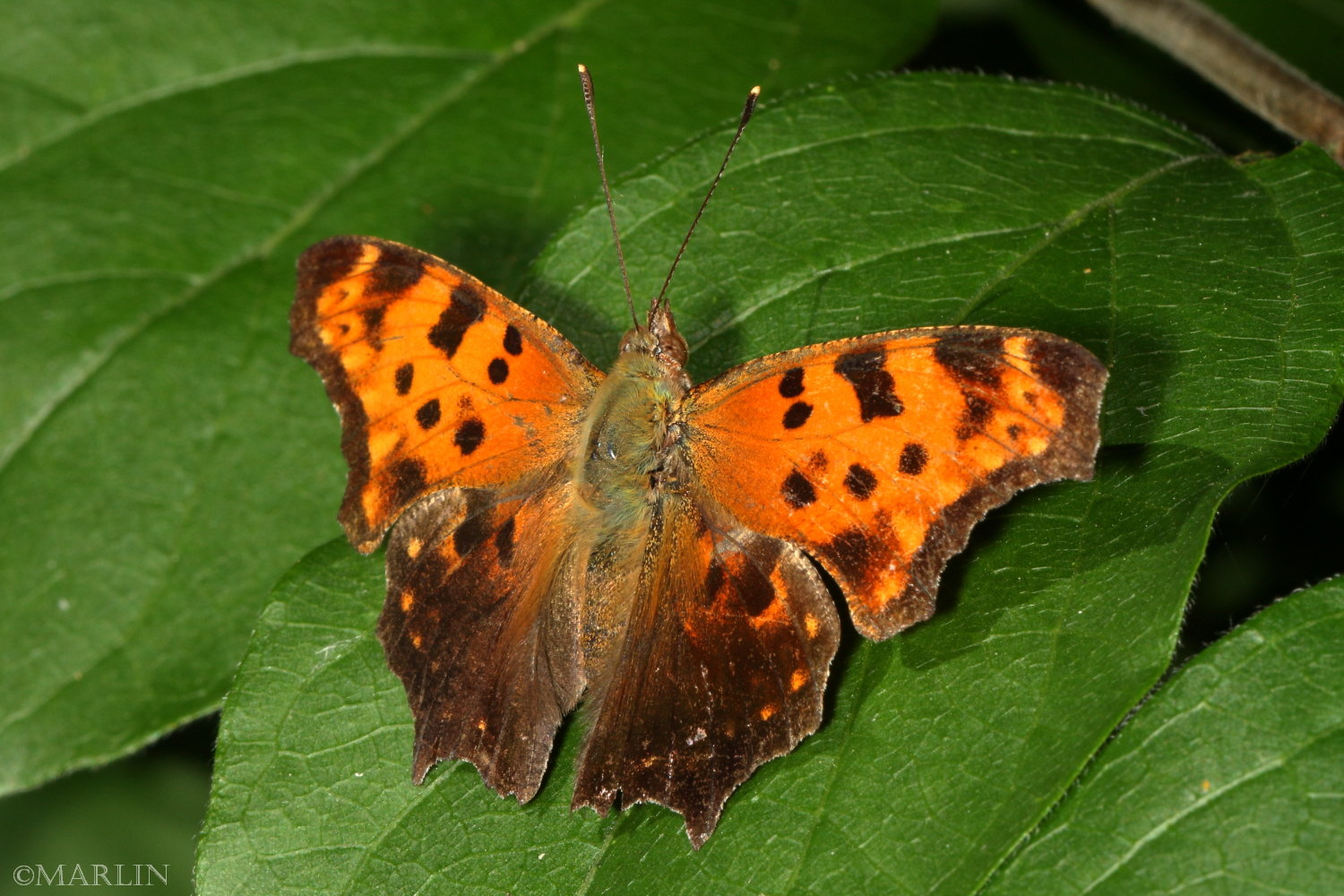
Live adult butterflies photographed at Winfield, Illinois. Family: Nymphalidae (Brush-footed Butterflies)
Commas are part of an association of butterflies commonly known as “anglewings.” When folded at rest, the undersides resemble dead leaves or pieces of bark. This group includes anglewings, tortoiseshells, commas, question marks, leafwings, snouts and daggerwings.
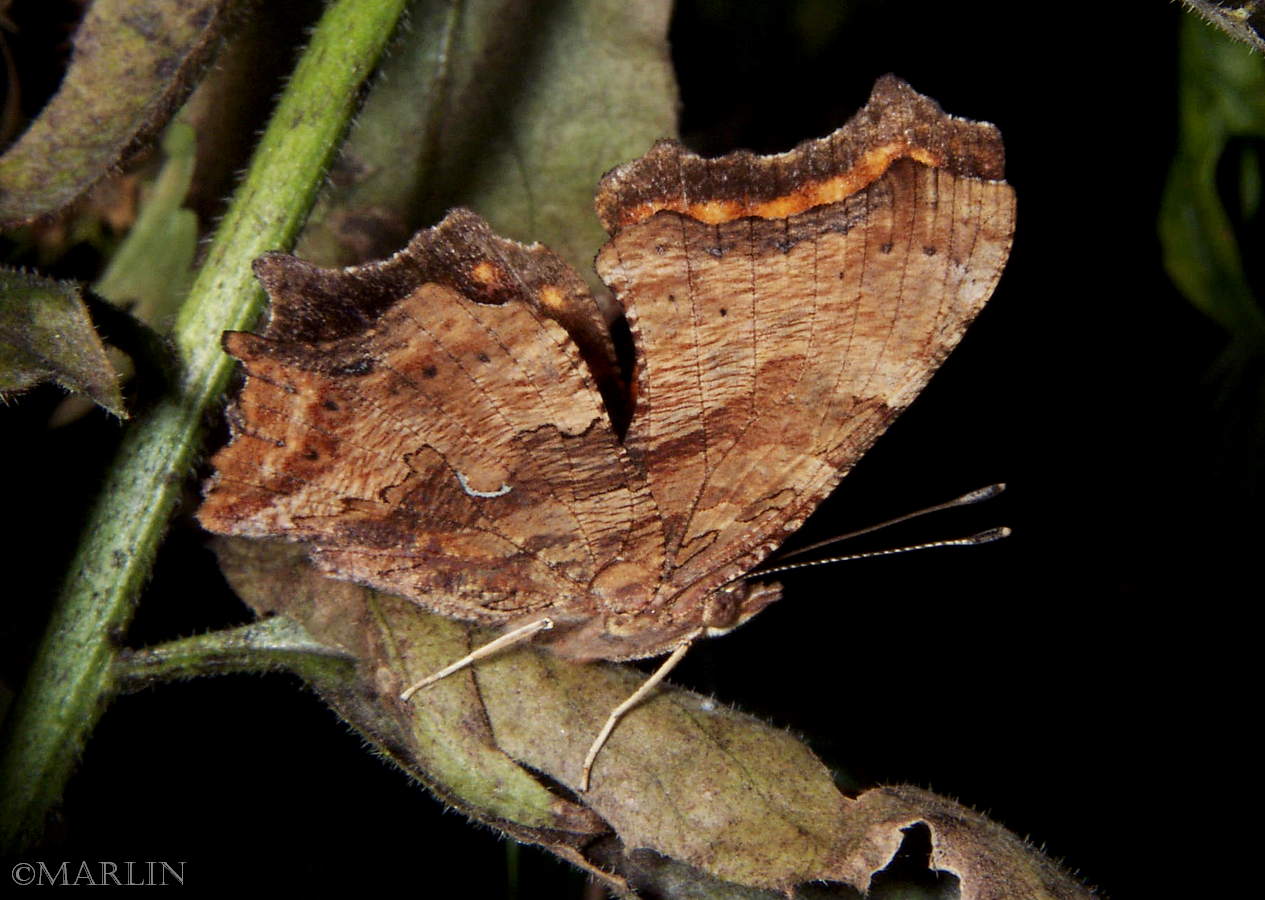
Commas have always been, to me, the “friendliest” of the butterflies. They will frequently buzz you, and often alight on your clothing if you are standing in the sun in their favorite forest clearing. Commas seem quite social, and will dance with each other, rapidly twisting and turning about each other, spiraling up into and above the forest canopy, and out of sight – but will return to the current sunny perch in a matter of a minute or so.
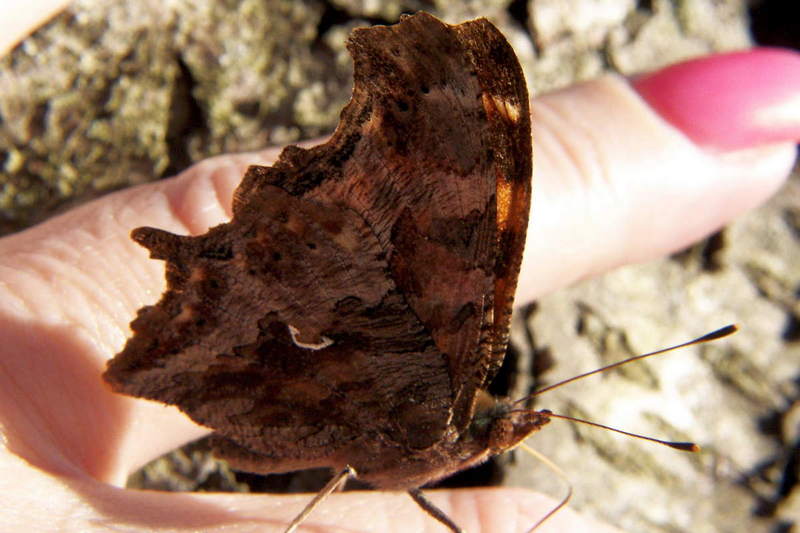
One fine spring day, some commas were messing with us, and one of them insisted on landing on our hands, and poking us with their proboscises – it tickles!
Similar species: Question Mark had pronounced tails; other anglewings extremely similar.
Life Cycle: Eggs pale green, ribbed, laid in stacks of 2 – 9. Caterpillar 1″ light green with spines along length. Chyrsalis brown with gold spots., curved, irregular shape. Hops and nettles are preferred host plants. Adults overwinter. 2 broods in north, more south. Habitat: Deciduous woods, forest clearings and edges, open woodlands.
Order Lepidoptera, which contains both butterflies and moths, includes at least 125,000 known species including 12,000 in North America. Butterflies are revered for their brightly colored wings and pleasing association with fair weather and flowers.
Learn to identify many of the American Midwest’s common species through descriptions and large diagnostic photos of live, wild specimens.
Butterfly Index | Moth Pictures | Moths Index | Skipper Butterflies