Water Strider – Gerris sp.
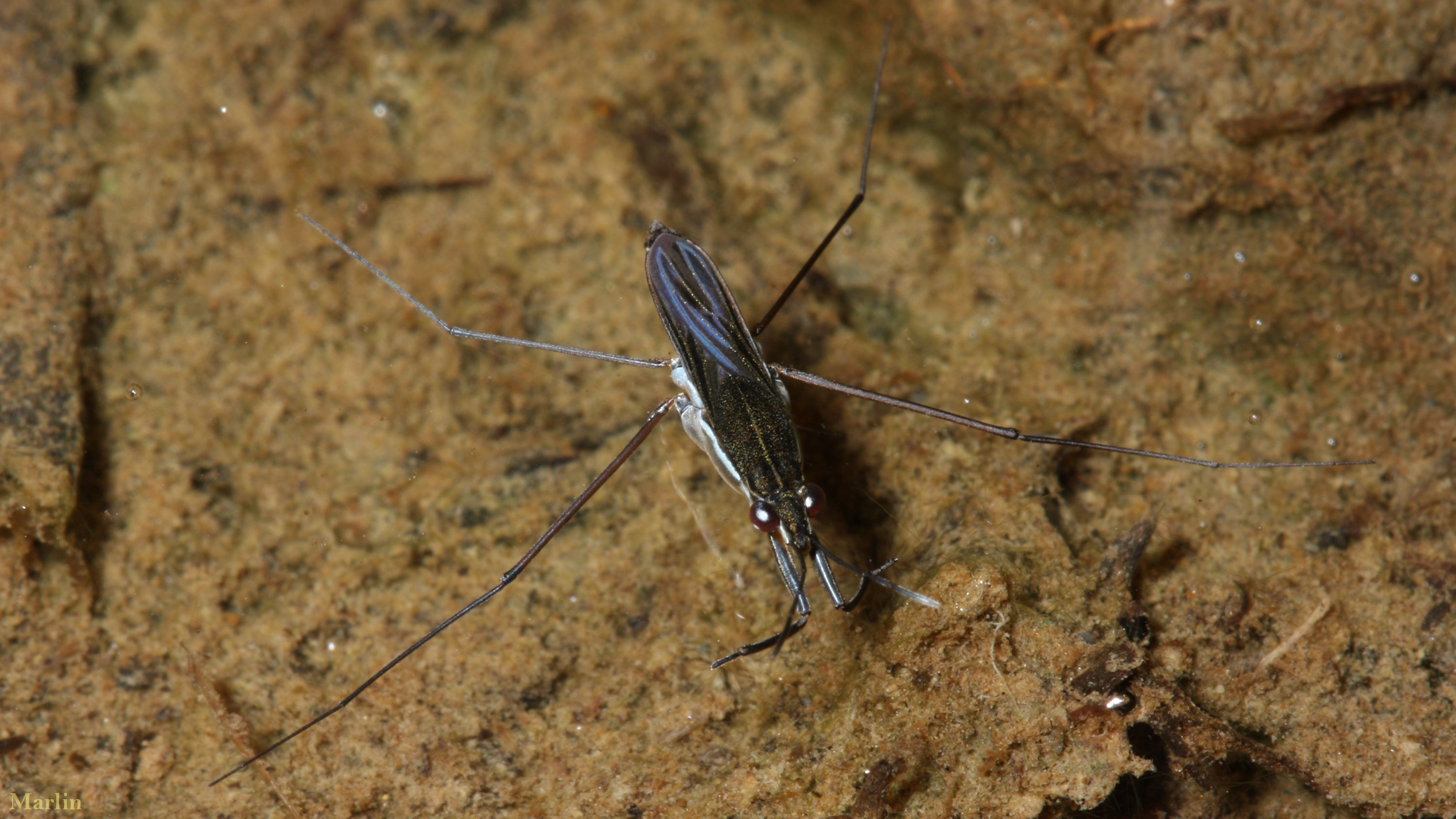 Water Strider – Gerris spp.
Family: Gerridae (Leach, 1815) — water striders / Genus: Gerris (Fabricius, 1794)
Bugs Main | Bugs Index | Assassin Bugs | Plant Bugs | Ambush Bugs
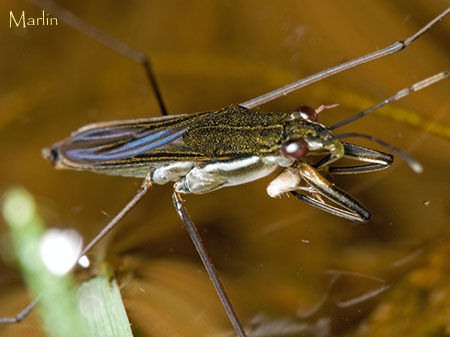
Live adult water striders photographed in the wild on Sawmill Creek at Darien, Illinois, USA.
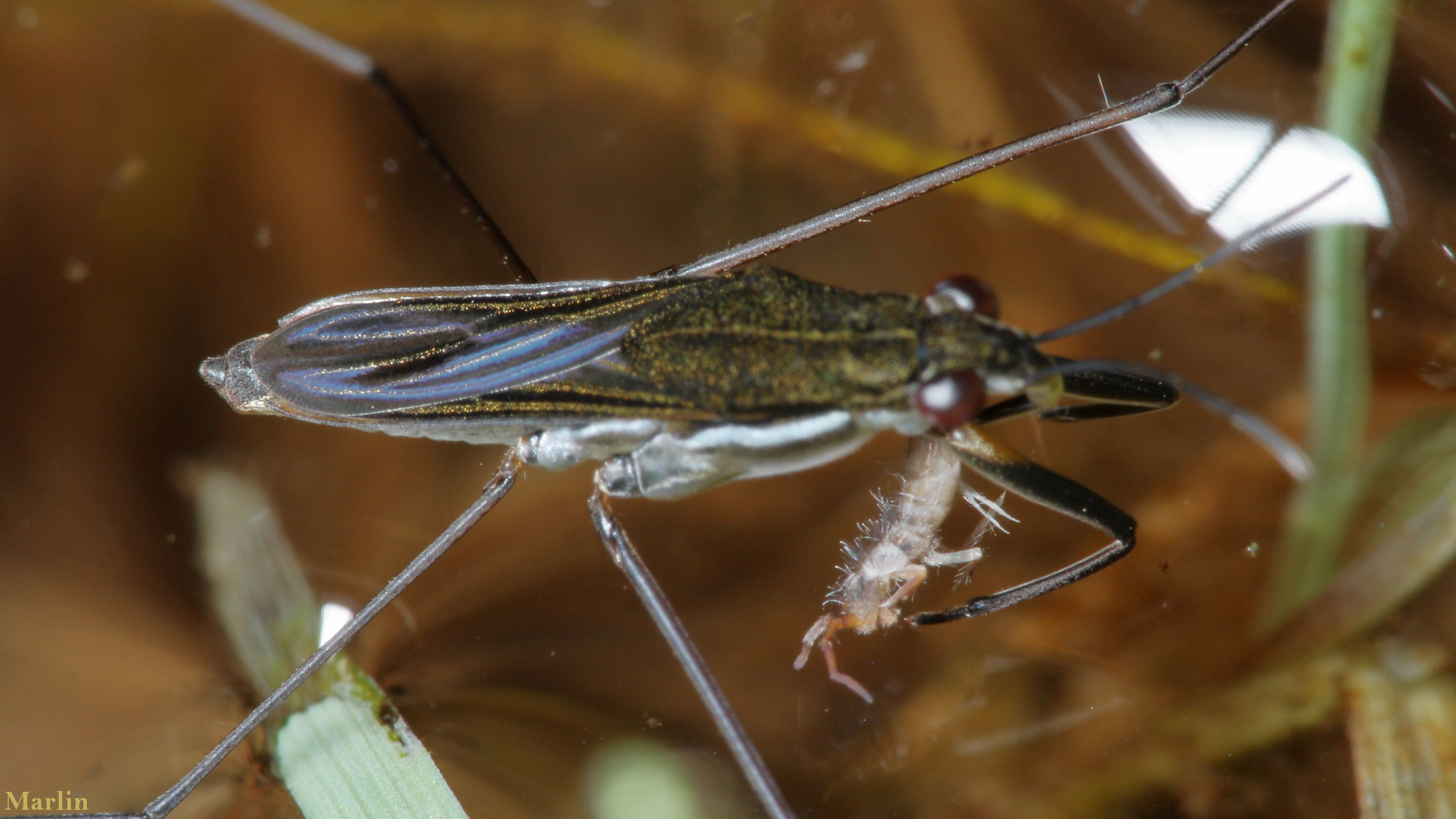
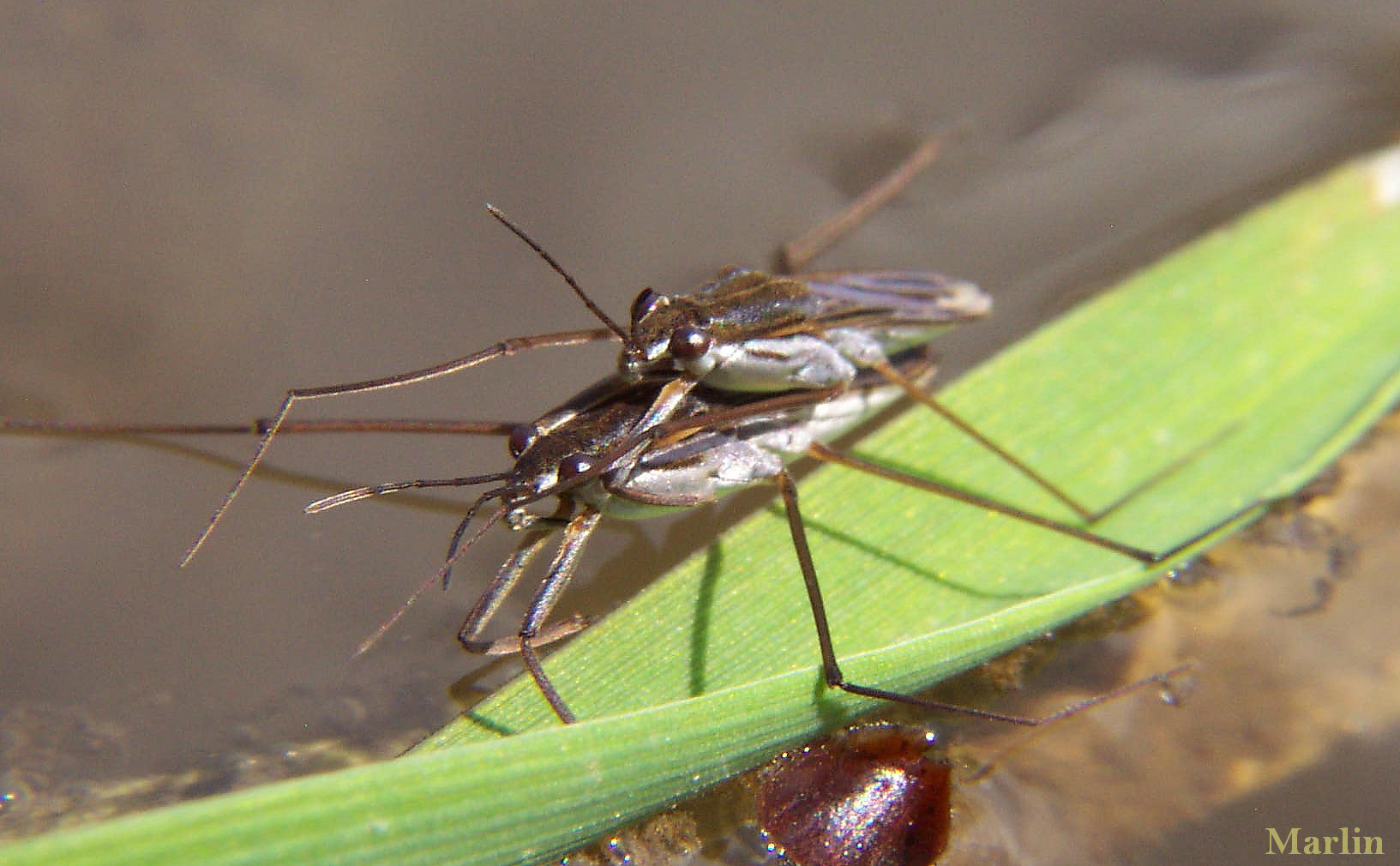
Water striders’ legs are covered with microsetae, microscopic hairs that trap tiny bubbles of air, allowing them to float on top of the water. Water striders (also commonly called pond skaters or Jesus bugs) are predacious and carnivorous. The front legs have become shortened and adapted to catching and holding prey while the bug sucks out internal juices (fig.1). The middle set of legs are used like oars to propel the bug through the water, and the hind legs are used for steering.
| Water striders can vary in length from 1.6 mm to 36 mm. Their body shape ranges from slender and elongate to almost completely round. Similar to other bug groups (such as Pyrrhocoridae), the development of wings can vary significantly within the same population. Most of the individuals in a community are wingless, but a few develop flying wings which are used in moving to other locations and establishing new breeding populations. Hemiptera was first recognized by Linnaeus in the Systema Naturae of 1758. Defined by its possession of distinctive mouthparts in which the labium assumes the form of a sheath surrounding the elongate, slender mandibles and maxillae. The maxillae are modified into a pair of concentric tubes forming the salivary and food canals; the mandibles lie external to the maxillae, are coupled to them, and serve a cutting function when introducing the mouthparts into the food source, be it flora or fauna. This feeding method requires liquid food. Saliva, which may serve a variety of functions including histolysis, paralysis, or anticoagulant passes through the salivary canal to the food source. The liquid food is then drawn into the insect gut through the action of pharyngeal and cibarial pumps (the cibarium is the primary sucking organ in mosquitoes). Anyone fortunate enough to watch these charming creatures jet around in the calm water near the shore of a slowly moving stream couldn’t help but be entranced with their energy and single-midedness; they are hunting for food of hunting for sex or both. Pond skaters are in turn preyed upon by many other insects and arachnids such as the huge fishing spider pictured below. It uses a wait and pounce method to take advantage of the poor pond skater’s negligence! |
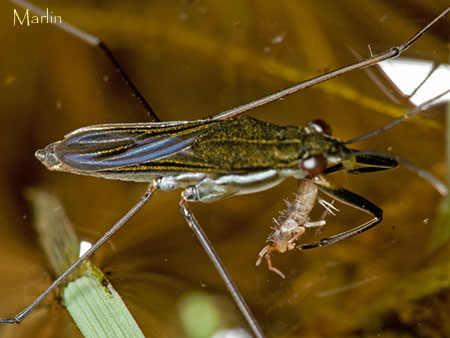 fig. 1 |
 Sucking the guts out of a springtail |
.JPG) Fishing spider on the rocks in Mud Creek near Oregon, Illinois has caught a water strider. This large spider was hunting on rocks semi-submerged in a creek, and appeared to be at home qually on a solid or liquid surface. The prey did not stand a chance against the sudden burst of speed ambush this gal mounted. These tiny micro-dramas are going on, all the time, all around us. You don’t have to go to Africa to see some very clever hunters doing their thing!
|
References
- Bugguide.net, Water Strider – Gerris spp.
- Alfred G. Wheeler and Sir T. Richard E. Southwood FRS, Biology of the Plant Bugs
- National Science Foundation New South Wales, Plant Bugs (Miridae)
Tree Encyclopedia / North American Insects & Spiders Online since 2002