 |
Plant Bugs – Family Miridae The family Miridae is the largest among the order Hemiptera with approximately 10,000 species. Bugs Main | Bugs Index | Assassin Bugs |
|
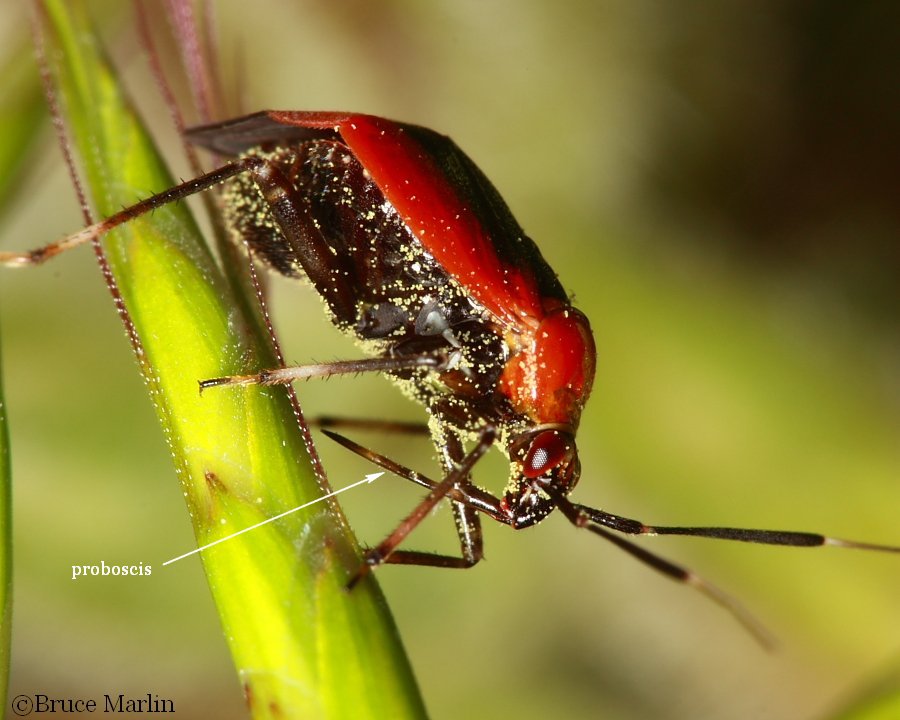 Bugs' business end: the proboscis or rostrum. Plant bug M. Dislocatus |
|
The Miridae are unique within the Heteroptera in their possession of specialized setae known as trichobothria on the middle and hind femora. Most species lack the pair of ocelli found situated between the compound eyes of the majority of heteropteran species; the exception to this rule is the subfamily Isometopinae, which is thought to be the sister group of all remaining Miridae (the most basal lineage). The hemelytra, or forewings, nearly always have a well-demarcated cuneus, a triangular structure that is found in some other groups such as the non-parasitic Cimicoidea (bed bugs and their relatives) and whose anterior margin if formed by the costal fracture. The pretarsus (claws and associated structures) shows much greater variation in the Miridae than in most other hemipterans, and provides many features crucial for understanding the subfamily classification of the group. As in most other bugs, the claws in the Miridae are symmetrical, the right and left claws being similarly developed. They may bear a pulvillus, a fleshy pad, on the ventral or interior surface of the claw; the exterior claw surface is sometimes ornamented with a few claw hairs of variable length. Between the claws are found the parempodia, paired, structures that arise from the distal end of the unquitractor plate. The parempodia are frequently in the form of common setae and are symmetrically developed. Also present in some Miridae are structures known as pseudopulvilli that arise from the base of the claws. In some groups the pseudopulvilli have the appearance of parempodia whereas in others they look more like pulvilli. [1] Plant bugs are economically and globally important pests of alfalfa, apple, cocoa, cotton, sorghum, and tea, among many other crops. Some plant bugs are predators of other insect crop pests and have been used successfully in biological control. Certain omnivorous plant bugs have been considered both harmful pests and beneficial natural enemies of pests on the same crop, depending on environmental conditions or the perspective of an observer. As high-yielding crop varieties that lack pest resistance are planted, mirids are likely to become even more important pests. They also threaten crops as insecticide resistance in the family increases, and as the spread of transgenic crops alters their populations. Predatory mirids are increasingly used as biocontrol agents, especially of greenhouse pests such as thrips and whiteflies. [3] Rhopalidae, the so-called "scentless" plant bugs is a much smaller family, with only about 200 species in 18 genera worldwide. However, the boxelder bug falls into this family, along with other agriculture pests (feeding as they do on seeds). |
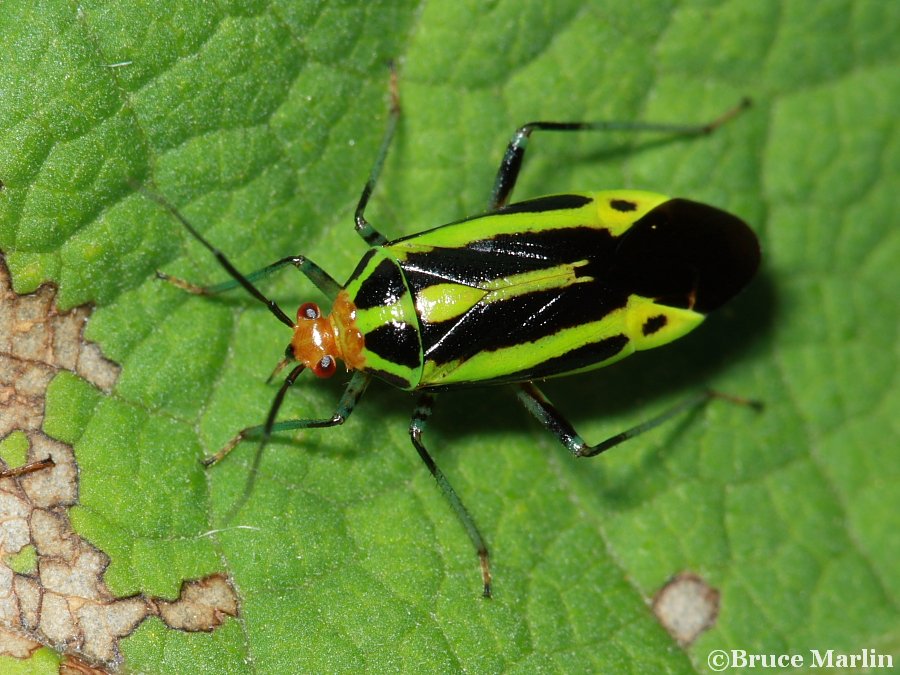 Four Lined Plant Bug, Poecilocapsus lineatus |
| Four-lined plant bugs have been found on over 250 species of plants in 57 families; tarnished plant bugs have been found on over 380 hosts. Most of the other species prefer single host plants or restrict their feed to a single genus or family of plants. In typical urban gardens, the four lined plant bug damage is most commonly found on perennials (especially those in the mint family or composites), but they also attack shrubs including azalea, dogwood, forsythia, viburnum and weigelia. |
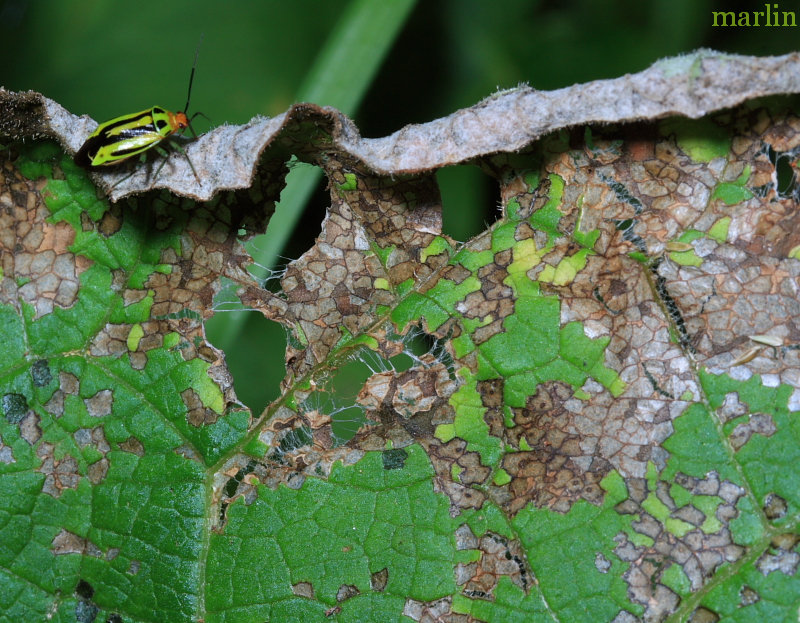 Four-lined plant bug and mosaic leaf damage |
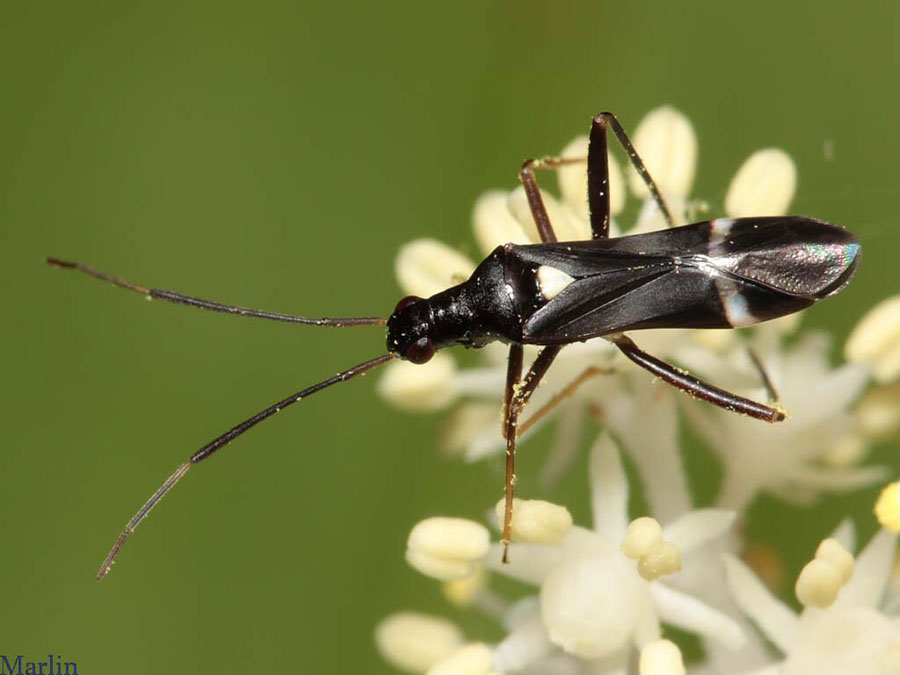 Plant Bug – Pseudoxenetus regalis Size: 8mm |
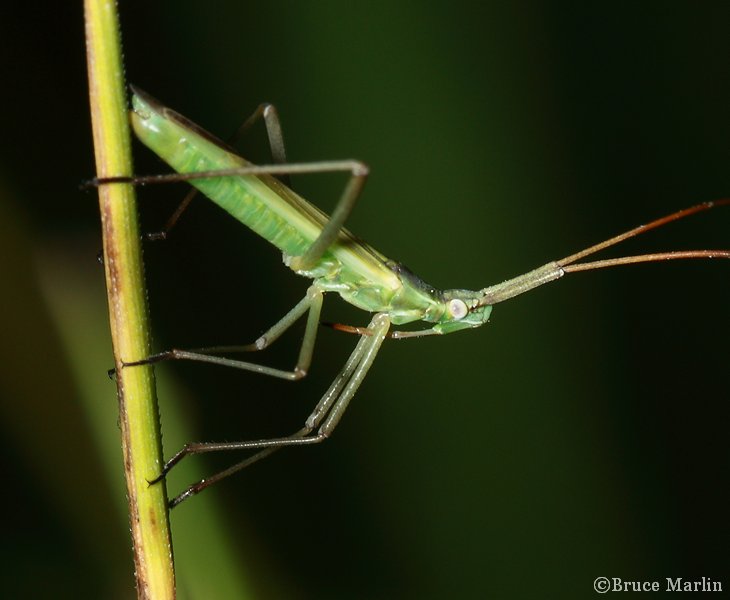 |
| Most plant bugs are phytophagous (plant-feeding), others are predatory and carnivorous. Megaloceroea recticornis |
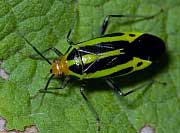 Four Lined Plant Bug |
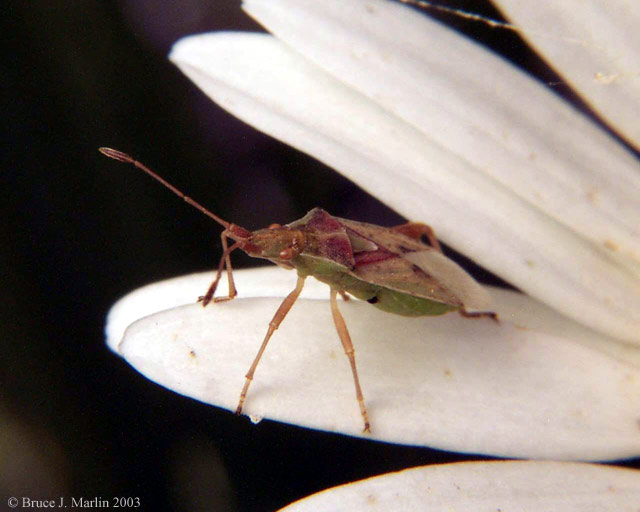
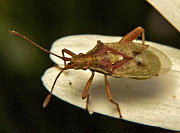 Scentless Plant Bug |
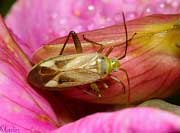 Alfalfa Plant Bug |
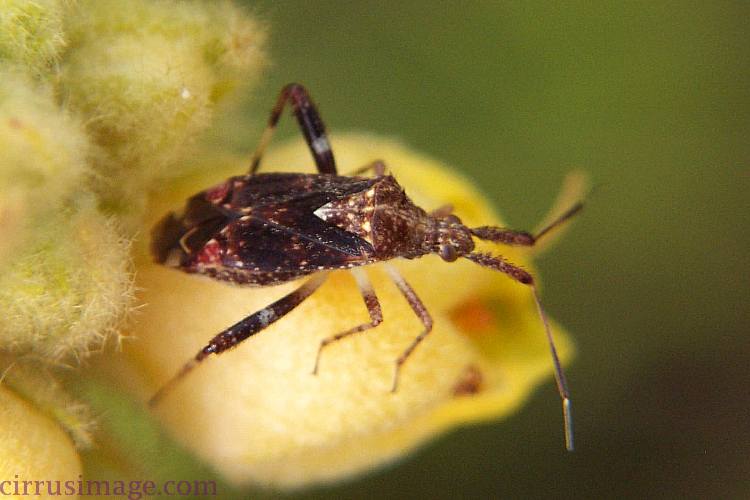
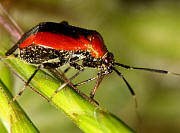 Plant Bug |
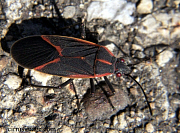
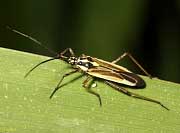
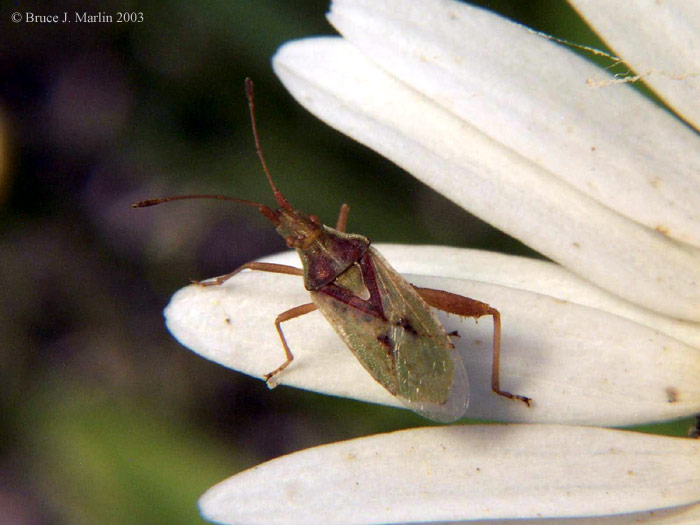 Scentless Plant Bug – Harmostes species |
|
The tarnished plant bug and fourlined plant bug are common sucking pests that attack a variety of bedding and perennial plants. The daisy and mint families are especially susceptible to attack. Both bugs are quick to fly and the nymphs quickly run to the under surface of leaves when approached. They damage plants by causing small, round, sunken spots on the leaves. These spots occur when the leaf bugs kill the leaf tissues during feeding. When these spots are numerous, the entire leaf may curl and wither. The tarnished plant bug has a light-green nymph and the adult has mottled brown colors. The fourlined plant bug has a bright red-orange nymph and the adults are lime green with four black stripes.
Damage to plants usually occurs in the late-spring and early-summer when the nymphs are active. If this activity is several weeks before flower bud initiation, no damage will be evident at the time of flowering. However, early flowering plants can be severely damaged. These are the plants that need protection. Since the plant bug nymphs cause most of the damage, control of this stage is suggested. Inspect plants early and try to detect the first signs of the sucking damage. Small numbers of nymphs can be dislodged from the plants into a container of soapy water. Higher populations are best controlled with a registered pesticide or insecticidal soap. Check the plants again in two weeks to catch any late emerging nymphs. The tarnished plant bug is one of the most serious pests of small fruits and vegetables in New England. No truly effective or reliable management options currently exist. Growers routinely make 3-5 applications of insecticides each year to control this insect. The cost is $200-$500/acre. Considering the narrow profit margin for today's farmers, these costs are significant. The research being conducted at the Entomology Research Laboratory represents the first step in developing insect-killing fungi for management of TPB.
|
References
|
|
Order Hemiptera: True Bugs number almost 5,000 species in North America, and 40,000 worldwide. They have mouthparts formed into a beak, adapted for sucking plant juices or the liquefied insides of their animal prey.
Suborder Auchenorrhyncha – Cicadas & Planthoppers Suborder Sternorrhyncha – Aphids, scales, mealybugs, jumping plant lice. |