Tortoise Beetles
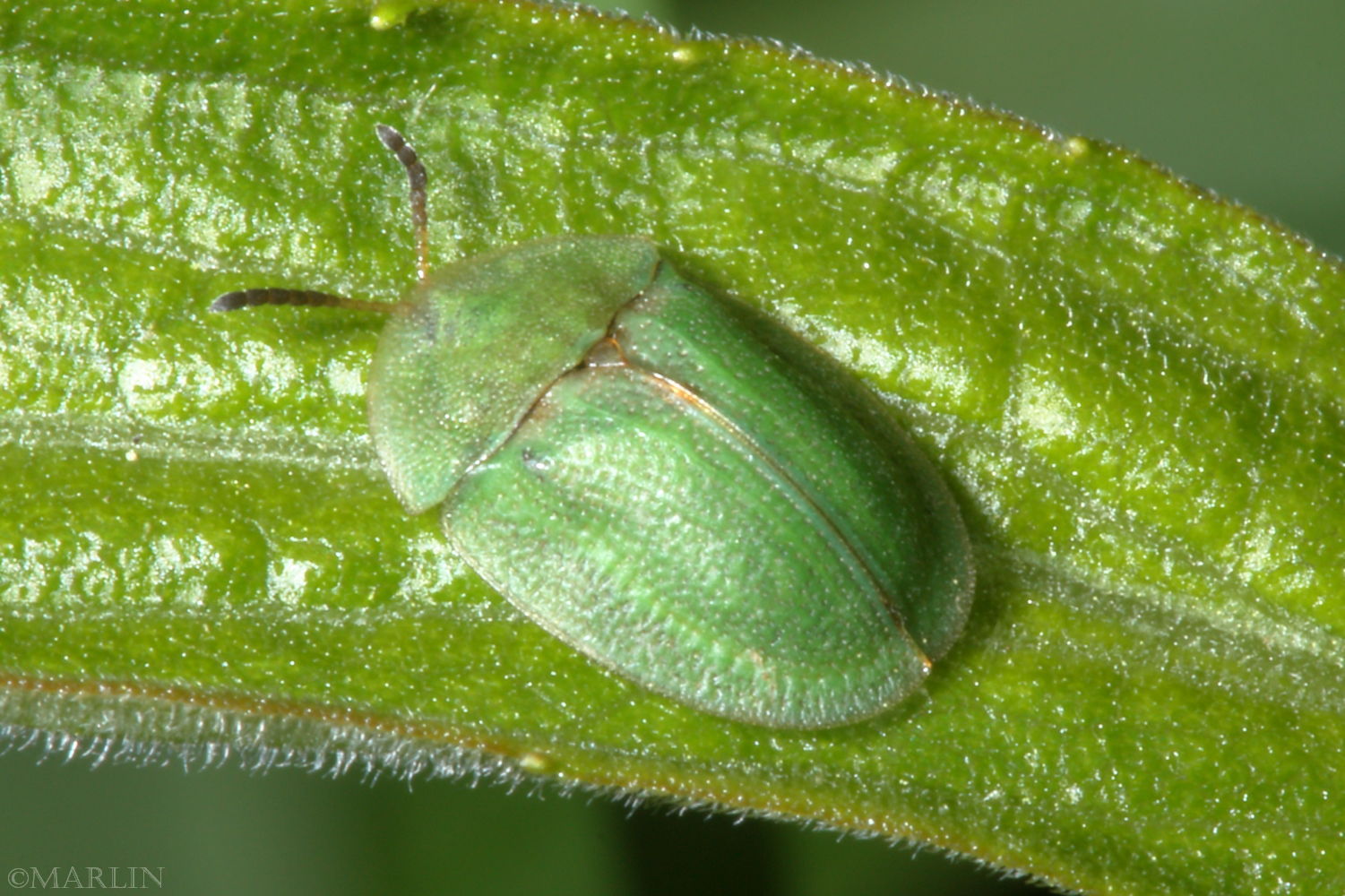
Cassida rubiginosa is commonly known as the “Thistle tortoise beetle” – larvae and adults feed mainly on several species of thistle (Carduus, Cirsium, Onopordum spp.) plus knapweed (Centaurea spp.) and a few other weedy composite plants. This is an invasive species, native to Eurasia; accidentally introduced in Quebec in 1901, has since spread east to New Brunswick, west to Alberta, and south to the northern United States. This beetle is said to have been used in biological control of thistles.
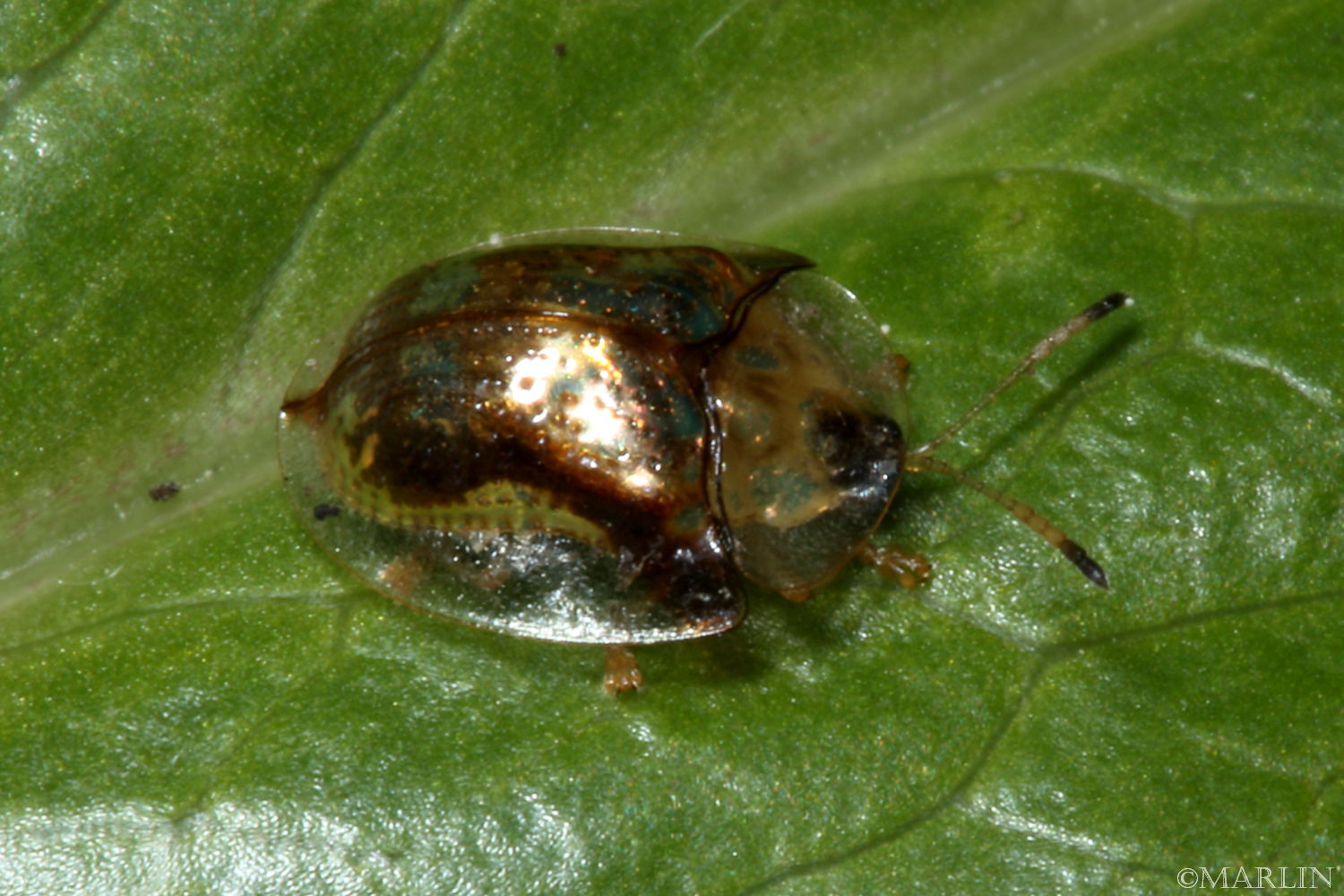 Deloyala guttata (Mottled Tortoise Beetle)
Leaf Beetles – Family Chrysomelidae is 2nd largest among the phytophagous (plant-eating) beetles, taking a back seat only to the weevils (Family Curculionidae). There are as many as 35,000 described species and perhaps up to 60,000 total species. Presently, the Chrysomelidae are classified in 195 genera and approximately 1,720 valid species and subspecies (plus 149 Bruchinae species) accepted as occurring in North America north of Mexico. [1]
Leaf beetles feed strictly on plant materials. The adults usually consume leaves, stems, flowers, and pollen. Most larvae are subterranean in habit, feeding on roots and rootlets, but others will consume foliage as well. Many chrysomelids are very specific to particular host plants, but most are able to live on a variety of plants; e.g. the so-called dogbane leaf beetle, which feeds on milkweed (Asclepias sp.) as well as the dogbane genus Apocynum. [2]
The larval stages of beetles in the subfamily Cryptocephalinae develop inside a case made of fecal material and plant debris, hence their common name “casebearer.” They are also known as “cylindrical leaf” beetles. There are approximately 345 species in 22 genera in North America.
Habitat: Meadows and forest clearings, roadsides / Food: Dogbane and other members of the milkweed family / Life cycle: Yellow eggs are laid on the host plant or on the ground; larvae tunnel through soil to roots, feed, and pupate in soil.
North American Insects & Spiders
Online since 2002