
Dogwood Twig Borer Beetle – Oberea tripunctata
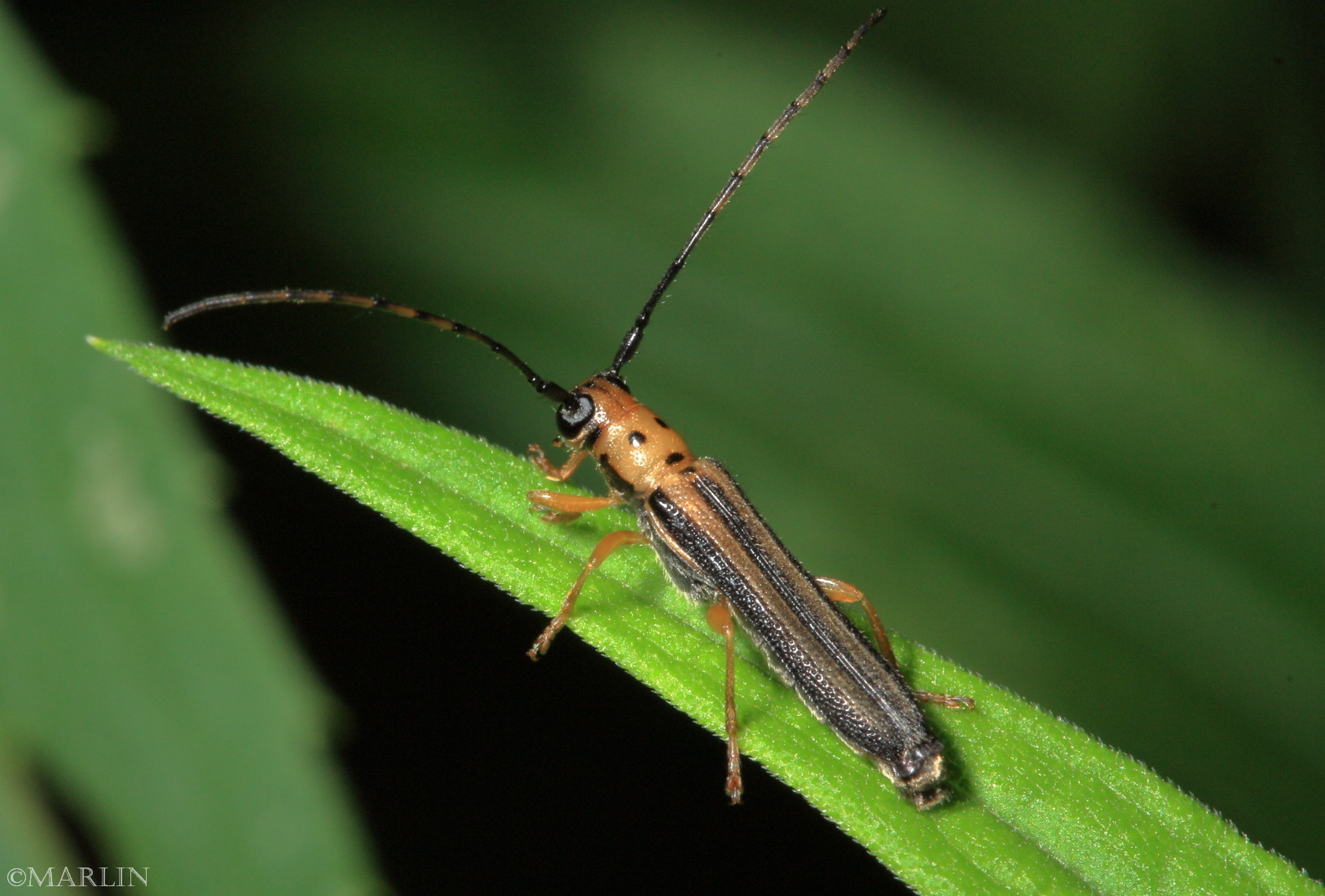
Family Cerambycidae – Longhorned Beetles / Subfamily Lamiinae (Flat-Faced Longhorns)
Dogwood twig borer beetle host plants include the family Cornaceae (dogwoods), viburnums, elm, sourwood, blueberry, rhododendron, azalea, laurel, poplar and willow (Salicaceae), and mulberries. Apples, cherries and other plants in the family Rosaceae are attacked as well [2].
Live beetles photographed at Forest County, Pennsylvania. Size: 15mm not including antennae.
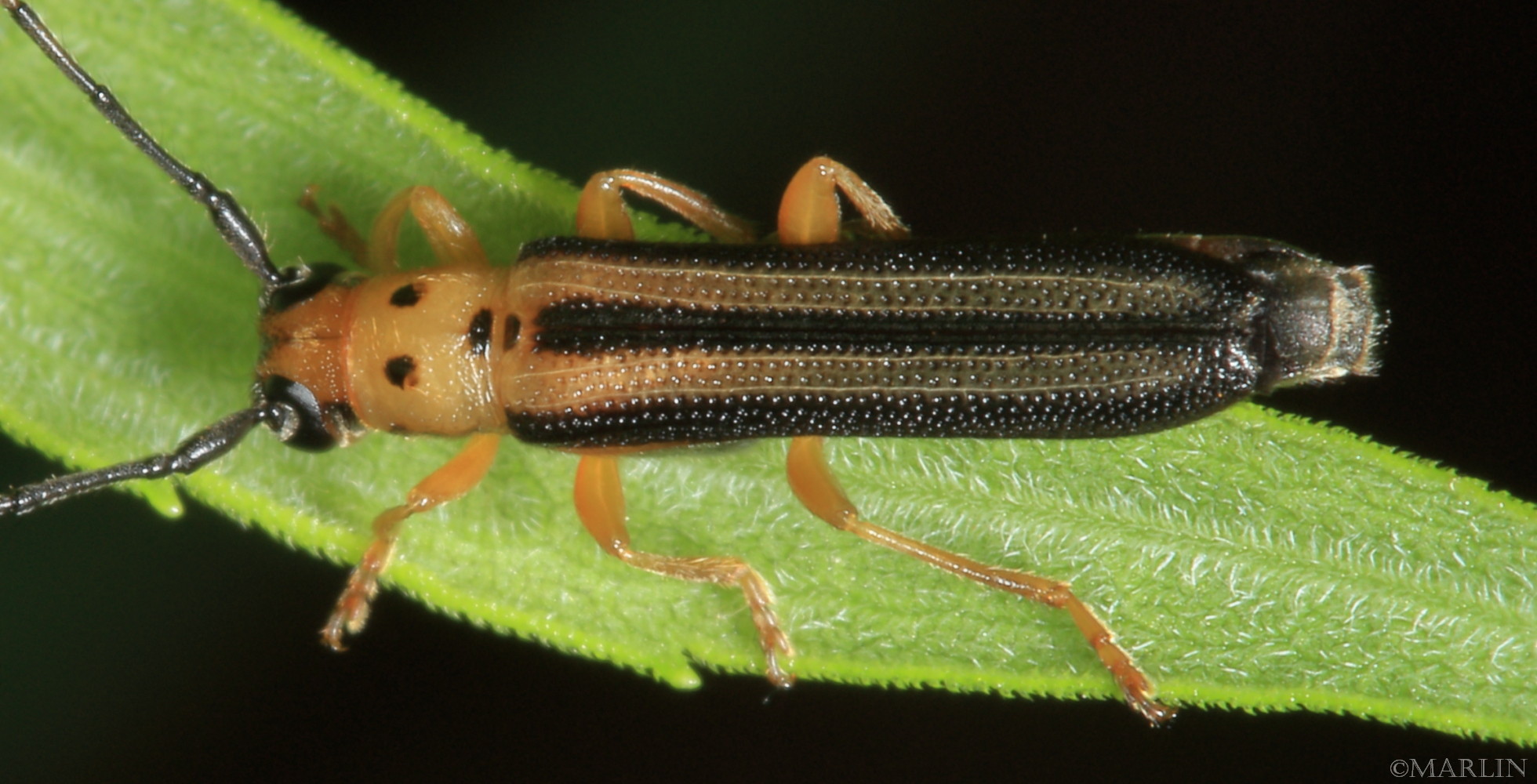
Adult beetles are elongate, up to 15mm long, displaying a characteristic “longhorn” geniculate antennae of 9 flagellomeres, frequently set into a notch in the compound eye. The pronotum is pale yellow, with two smooth, rounded black bumps and a matching black mark, and the elytra covered with rows of tiny embossed holes – “punctata.”
Egg-laying females make two rings of punctures around the stem of new plant growth. They slit the bark between the girdling wounds lengthwise and insert eggs singly under the bark flaps. Hatched larvae bore into the stem between the two girdles, tunnel short distances toward the twig tip, then reverse direction and bore down the center of the stem.
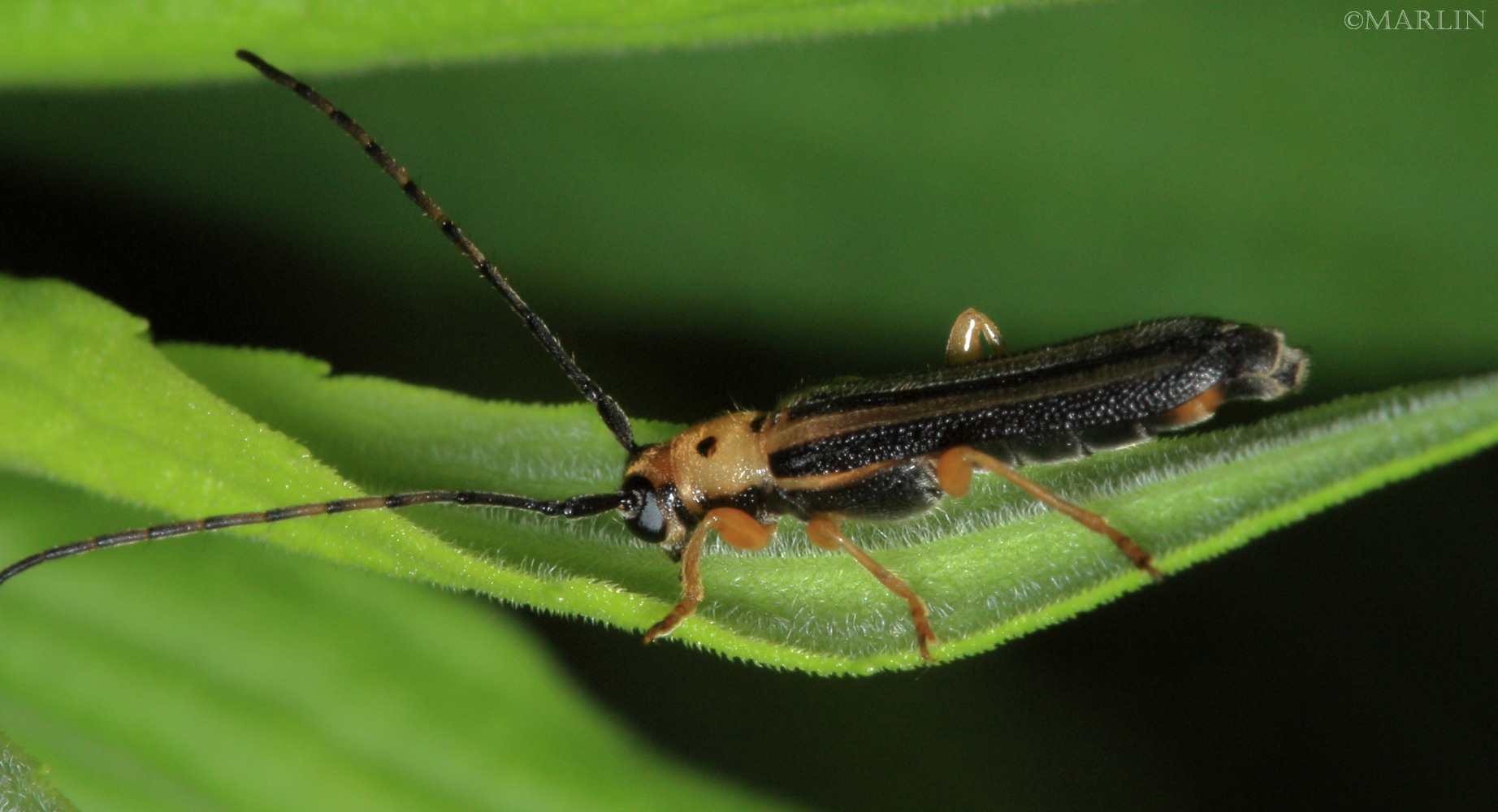
At intervals along the stem, larvae make small holes to the bark surface through which they expel frass (feces). Galleries in elm twigs have been measured up to 15 cm long. Pupation begins in April and occurs in small chambers behind fibrous frass plugs.
Adults emerge in April and May in north Georgia, and from May through July in Pennsylvania, and May to early August in Michigan.
Beetles Main | Beetles Index | Longhorns | Leaf Beetles | Soldier | Blister | Lady | Scarab