Hairy Flower Chafer Beetle – Trichiotinus piger
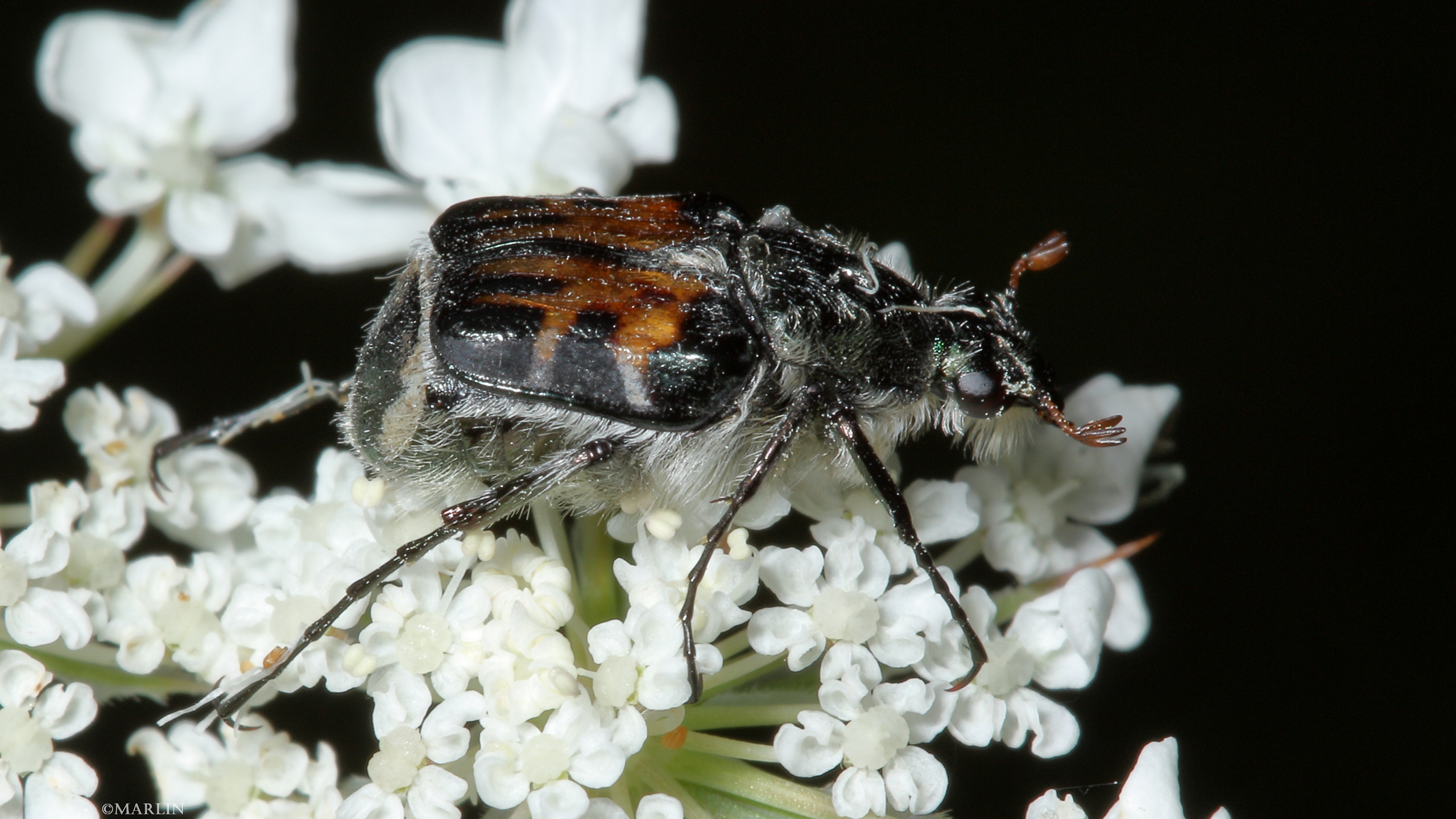
Family Scarabaeidae. Live adult beetles photographed at Illinois and near Marienville, Pennsylvania. Size: 15mm
Adult chafers eat the leaves and flowers of many deciduous trees, shrubs and other plants, but rarely cause any serious damage. However, their fat, white grubs (reaching 40-45 mm long when full grown) live in the soil and feed on plant roots, especially those of grasses and cereals, and are occasional pests in pastures, nurseries, gardens, and in grassy amenity areas like golf-courses. The injury to grassland and lawns results in poorly growing patches that quickly turn brown in dry weather; the grubs can be found immediately below the surface, usually lying in a characteristic comma-like position.

Scarab Beetle antennae have foldable, leaf-like plates called lamellae
The grubs sometimes attack vegetables and other garden plants, e.g. lettuce, rasberry, strawberry and young ornamental trees. Injury to the roots and rootstock causes small saplings and tender tap-rooted plants like lettuce, to wilt suddenly or to show stunted growth and a tendancy to shed leaves prematurely. Plants growing in rows are usually attacked in succession as the grubs move along from one plant to the next. Chafer grubs feed below ground for 3-4 years before changing into adult beetles.
One thing I find interesting about scarab beetles – they react to a camera flash by flinching and quickly furling thier antennae. Not many insects even notice a camera flash; some jumping spiders are notably flash-averse.
Beetles Main | Beetles Index | Longhorns | Leaf Beetles | Soldier | Blister | Lady | Scarab