Atlas Moth – Attacus atlas
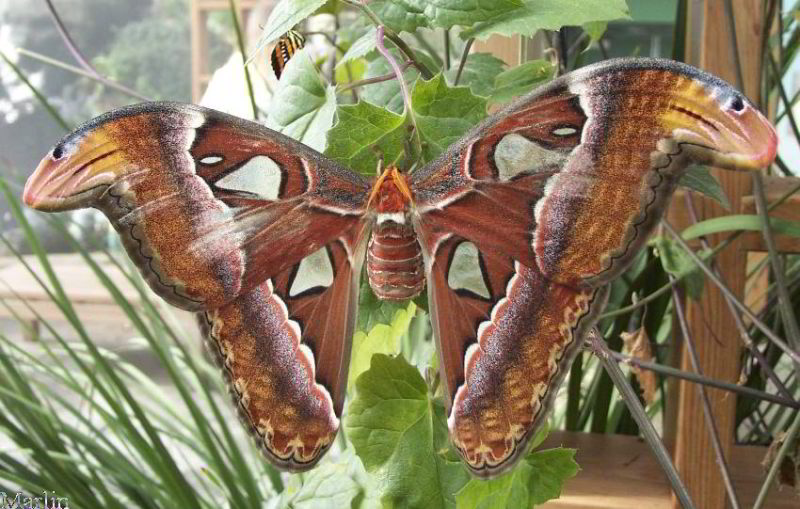
The Atlas moth is classified as a giant silkmoth in the family Saturniidae. Found in the tropical and subtropical forests of Southeast Asia, Atlas moths are the largest moths in the world in terms of total wing surface area (c. 400 square cm or 65 square inches). Their wingspan is also among the largest, from 25-30 cm (10-12 inches).
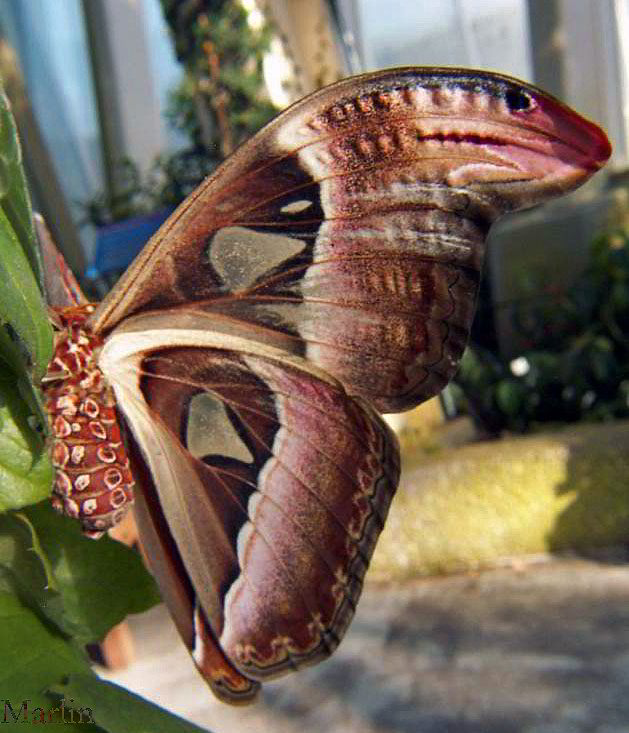 Females are appreciably larger and heavier than the male. The Chinese call this the “snake’s head moth”, referring to apical extension of the forewing, which bears an uncanny resemblance to a snake’s head seen in silhouette.
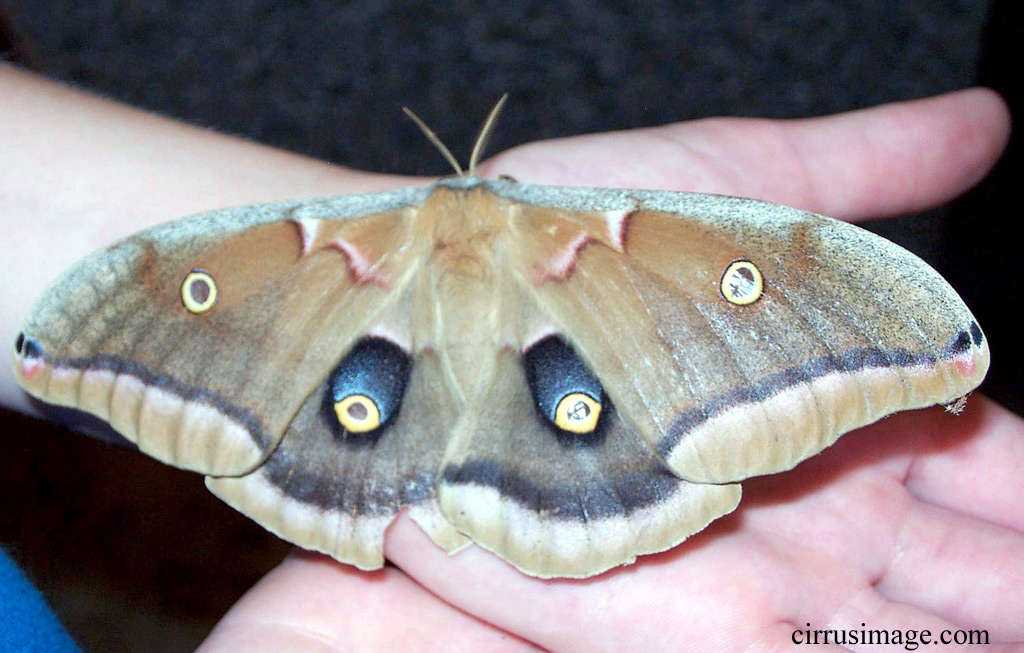
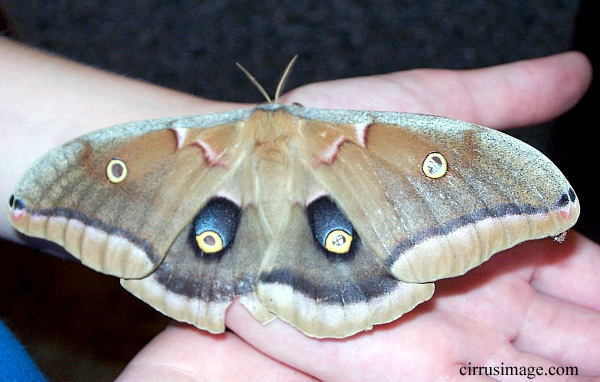 Another giant silkmoth: Polyphemus Moth Adult
Family Saturniidae – Giant Silkworm and Royal Moths. Range: Southeast Asia
Insects & Spiders | Moths Index | Moths | Butterflies Main | Butterflies Index | Skippers