Giant Robber Fly – Promachus species
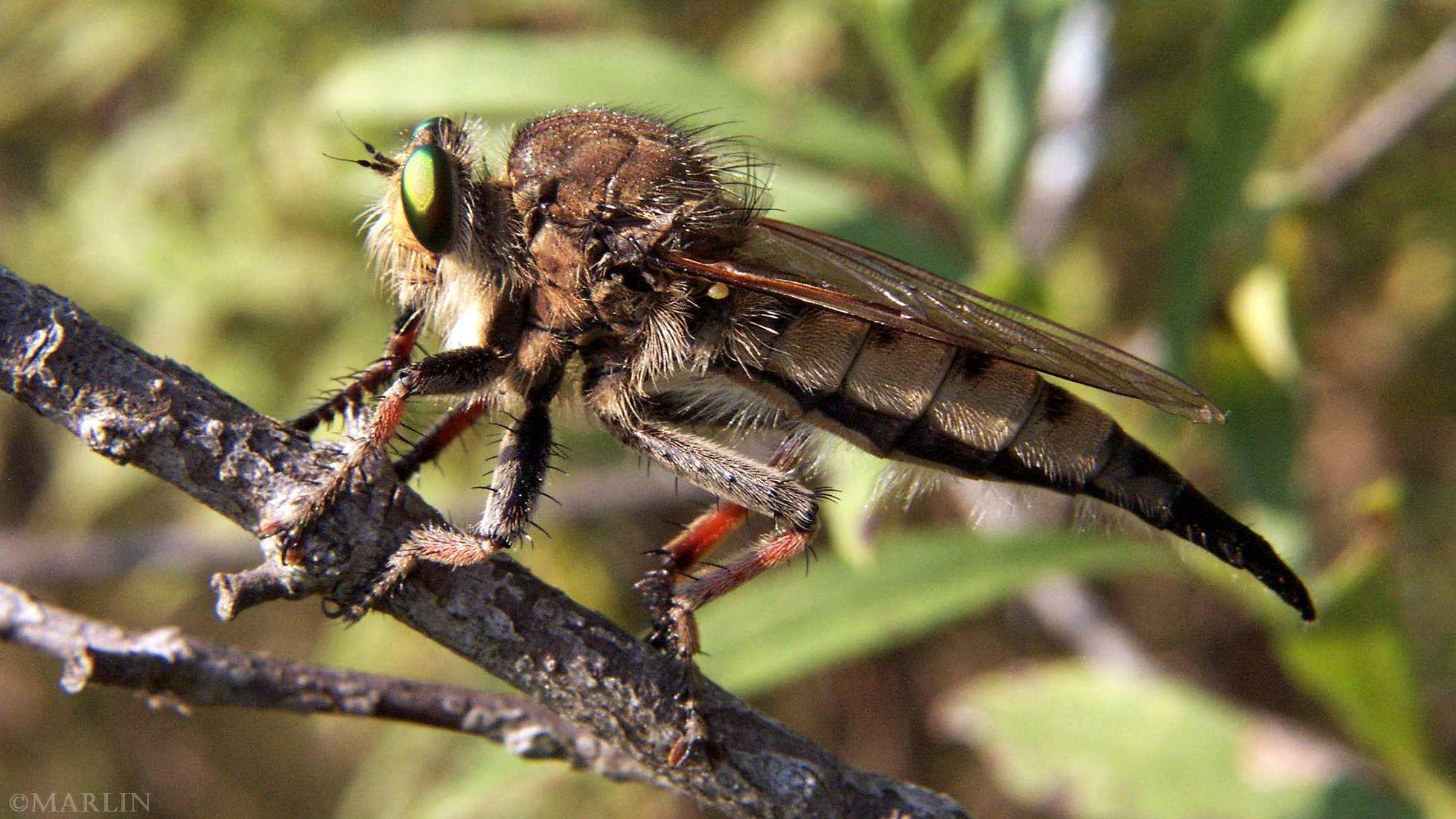
Family Asilidae – Robber Flies Live adult female robber fly photographed in the wild at Winfield, Illinois, USA.
I watched as this huge robber fly pounced on a honey bee that was busy gathering nectar. The next 10 minutes was spent following her around as she flew from perch to perch trying to eat her meal in peace. Finally, the unfortunate bee carcass was dropped, and off she flew.
Robber flies of this size (probably 30-35mm) do not fly so fast you cannot follow them – plus they have a low buzzing-rustling sound that greatly aids in pursuit. This is a truly awesome insect, and I relish each encounter I have with them.
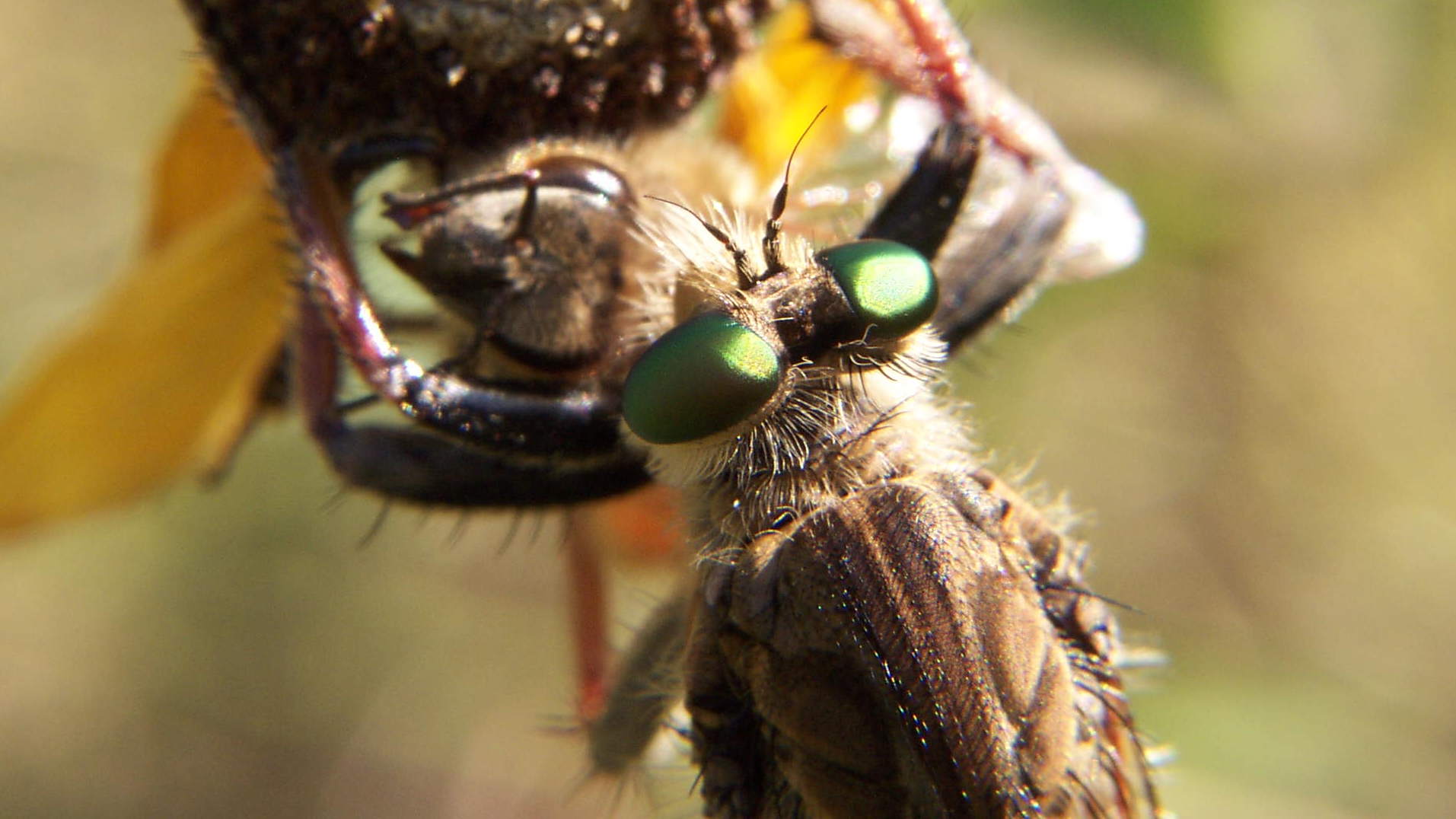
There are over 7,000 species of robber flies world wide; nearly 1,000 in North America. All robber flies have stout, spiny legs, a dense moustache of bristles on the face (mystax), and 3 simple eyes (ocelli) in a characteristic depression between their two large compound eyes. The mystax helps protect the head and face when the fly encounters prey bent on defense. The antennae are short, 3-segmented, sometimes with a bristle-like structure called an arista.
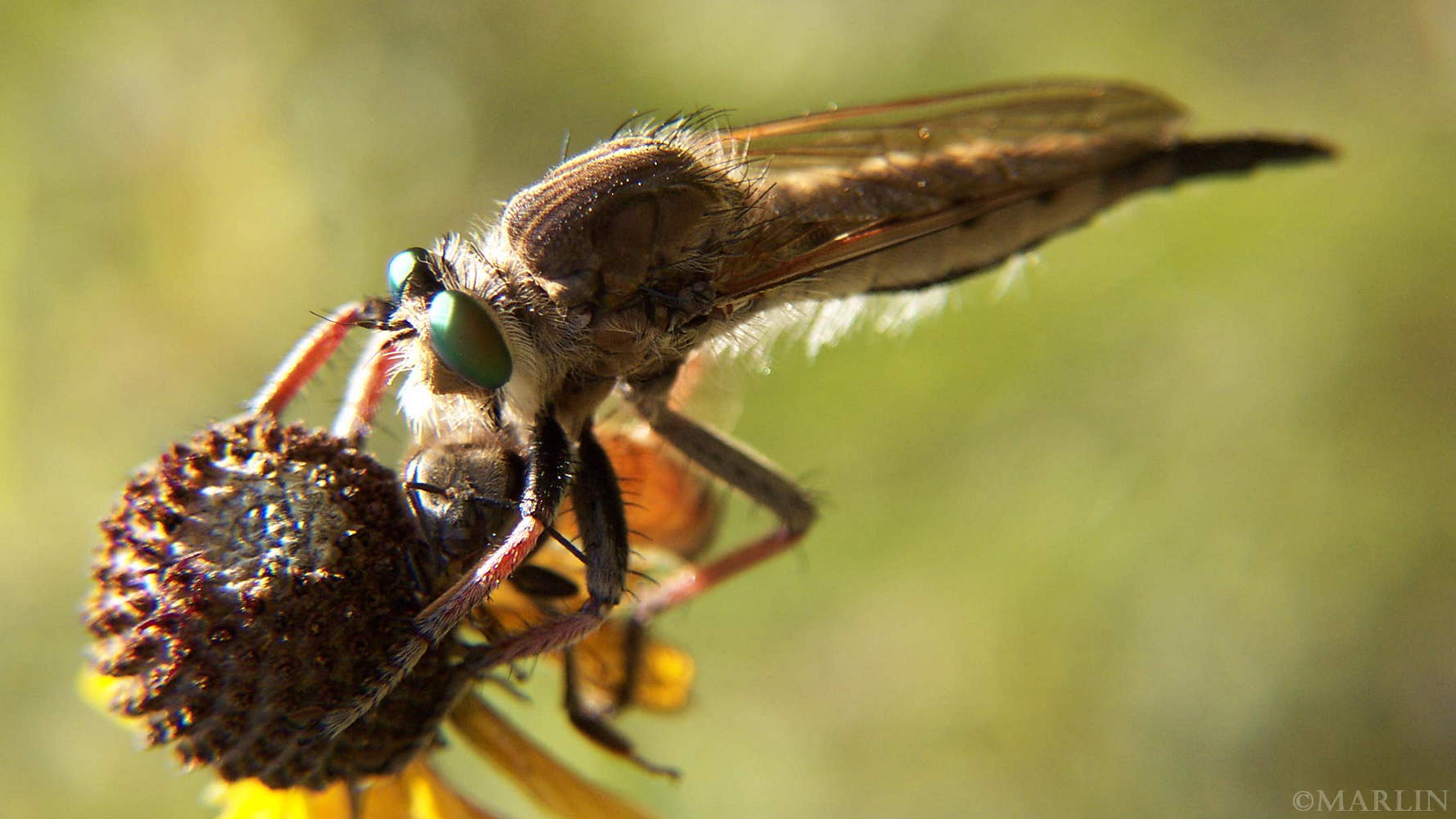
The short, strong proboscis is used to stab and inject victims with saliva containing neurotoxic and proteolytic enzymes which paralyze and digest the insides; the fly then sucks the liquefied meal much like we vacuum up an ice cream soda through a straw. Many species have long, tapering abdomens, sometimes with a sword-like ovipositor.
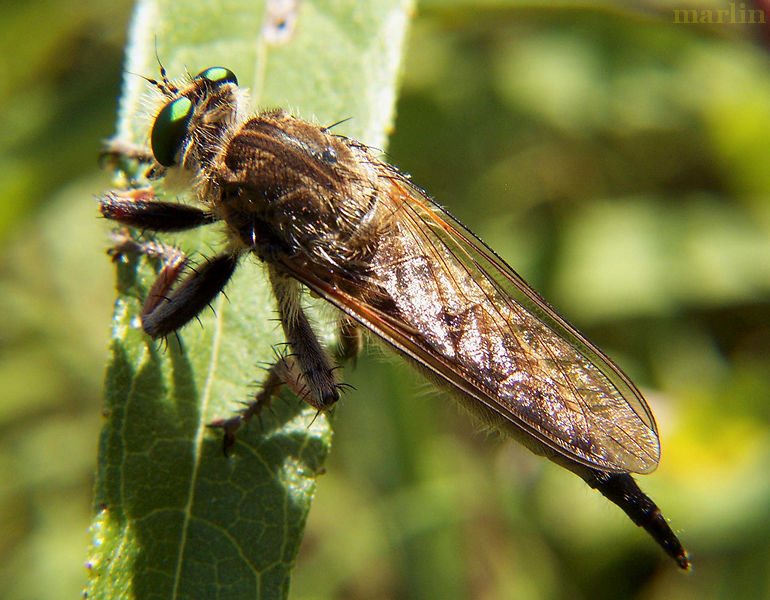
Flies of North America – Order Diptera. Flies are prevalent in virtually all habitats, with over 16,000 species in North America. Flies can be distinguished from all other insects in that they only have one pair of normal wings. Most flies have compound eyes and mouthparts adapted for piercing, lapping or sucking fluids.
Syrphidae | Flies Index | Tachinidae | Bee Flies | Robber Flies