Two-Spotted Tree Cricket – Neoxabea bipunctata
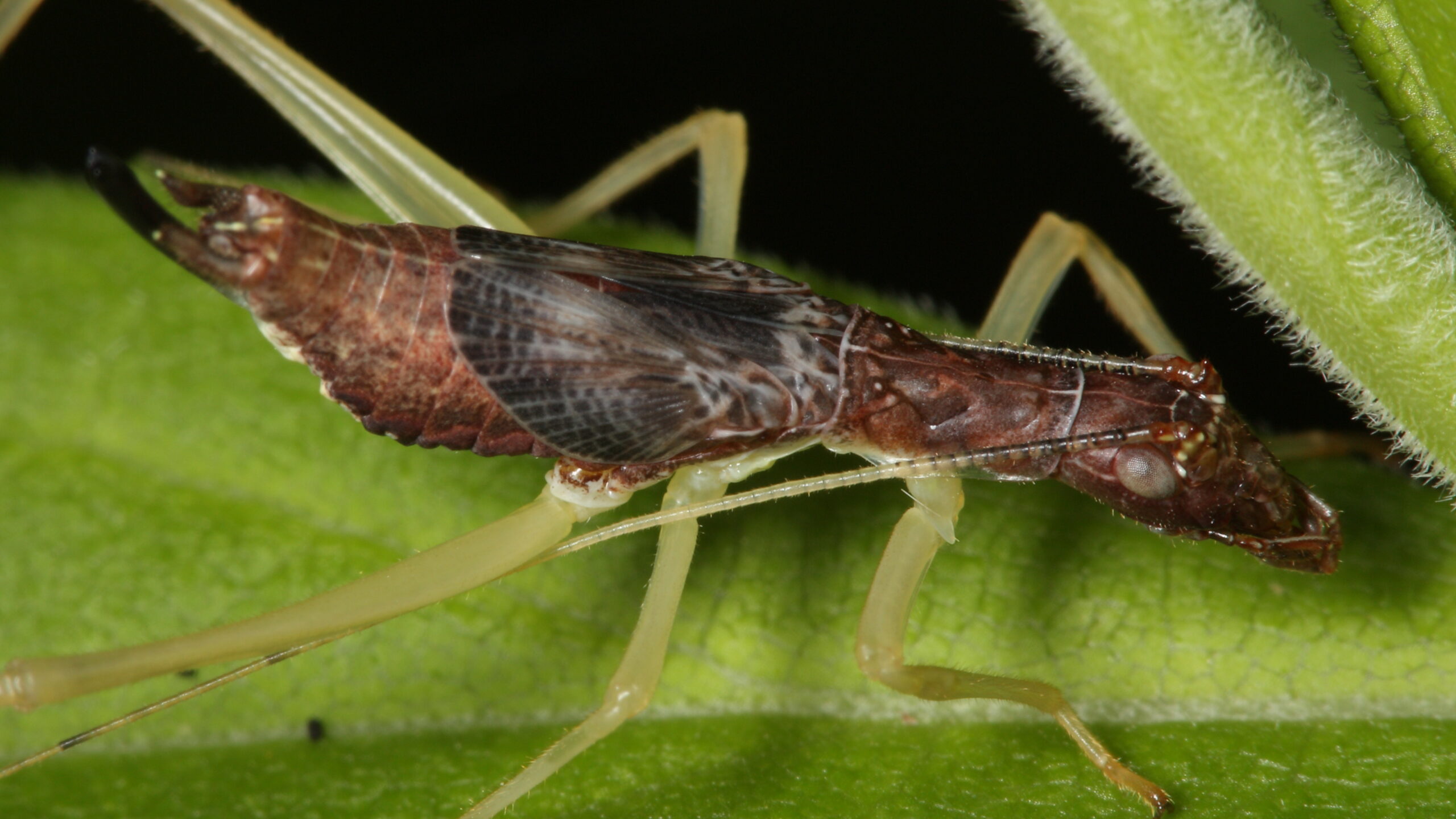 Fifth instar female nymph, about 15mm
Family Gryllidae (True Crickets). Live nymph cricket photographed at DuPage County, Illinois. Two-spotted male tree crickets chew holes into leaves, over which they place their wings while singing to attract mates. The wings become a drum membrane and greatly amplify the sound. [1] HERE is a great account of the cricket’s singing ability, with pictures of the musical instrument he creates to help attract mates.
Neoxabea bipunctata is found throughout much of eastern and central North America, from the Great Plains to the Atlantic coast, and from southern Canada into the Gulf states. It prefers woodland edges, shrubby thickets, and deciduous trees, often appearing in backyard gardens and forest margins where vegetation is dense but well-lit.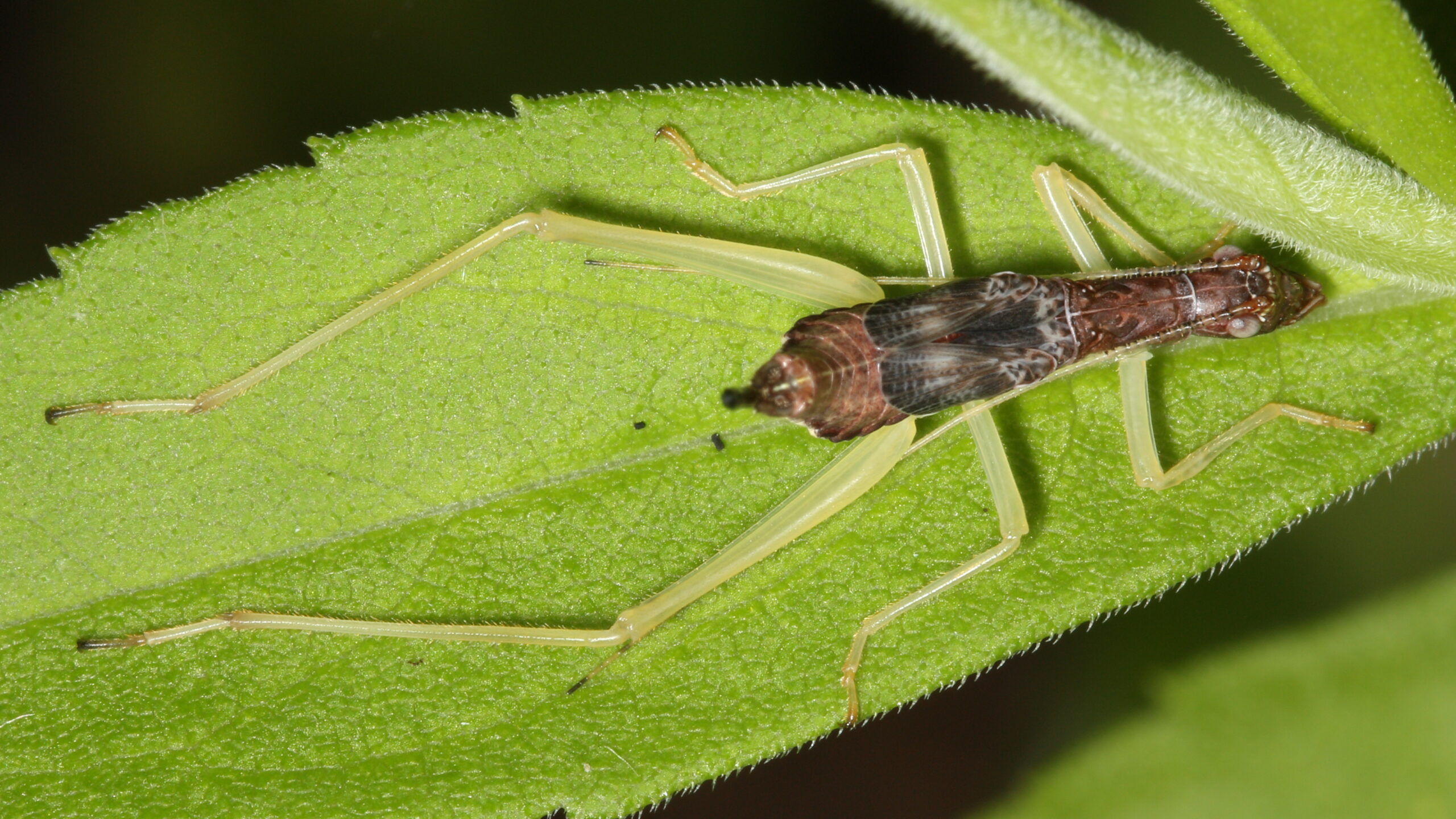 Females deposit eggs into live plant stems in autumn, using their sharp ovipositor to pierce the tissue. The eggs overwinter and hatch in spring, with nymphs progressing through five instars before reaching maturity in midsummer. They are active through autumn.
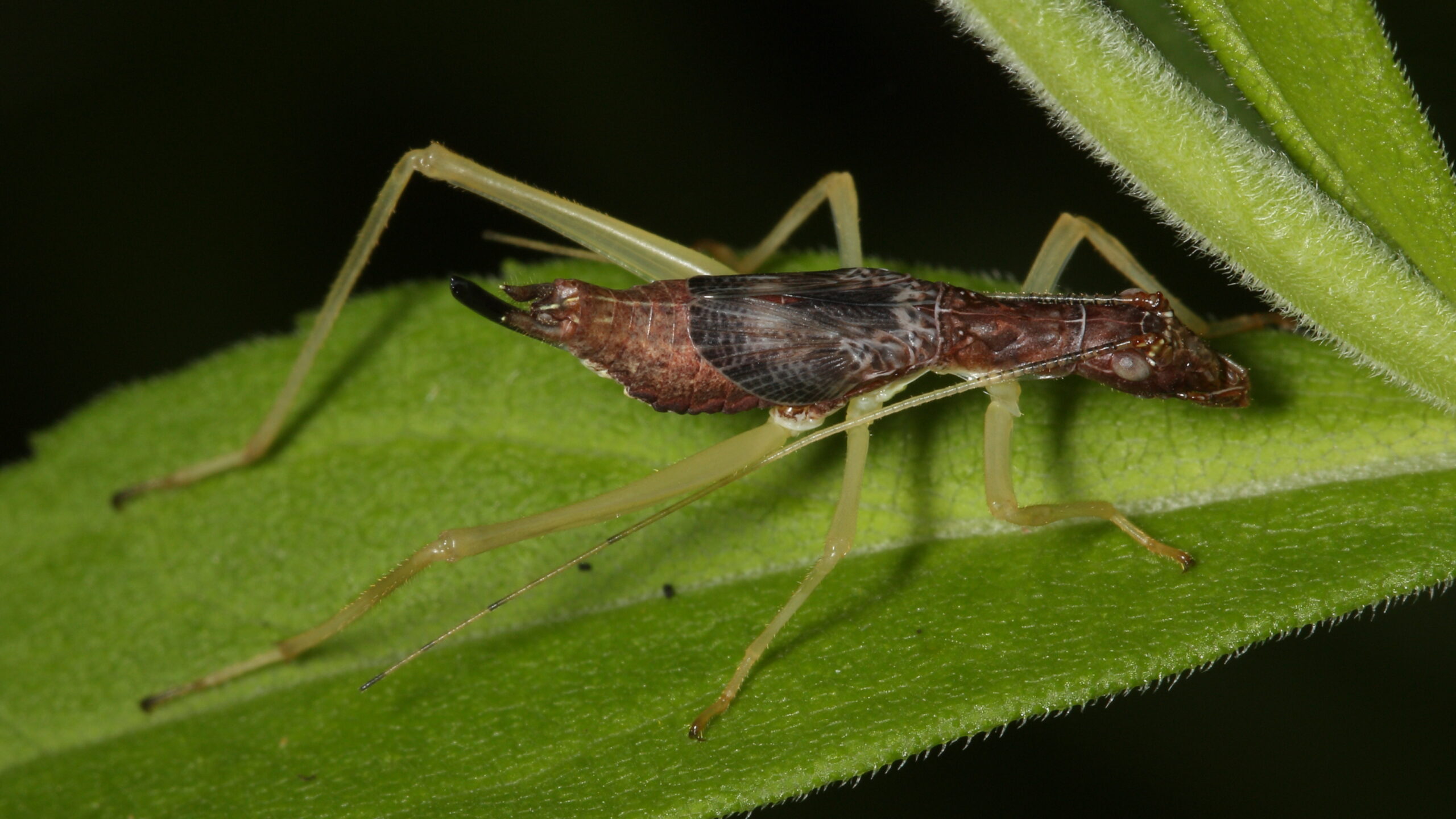 Curved ovipositor (above) is used to insert eggs into plant tissue.
Males produce a gentle, high-pitched trill at night to attract mates—a call that varies with temperature and is often heard before the insect is seen. Like other tree crickets, this species feeds on soft plant tissue and small insects, serving as both herbivore and occasional predator. It provides food for spiders, birds, and parasitic wasps, and plays a subtle but important role in the woodland soundscape.
References
- Cotinis, Robin McLeod, Wisconsin Oecanthinancy, Bugguide.net, “two-spotted tree cricket“
Order Orthoptera – Crickets, Grasshoppers & Katydids
There are more than 20,000 species in the order Orthoptera. These diverse insects are found worldwide, although their numbers are concentrated in the tropics.
Tree Encyclopedia / North American Insects & Spiders Online since 2002