Dainty Sulphur Butterfly – Nathalis iole
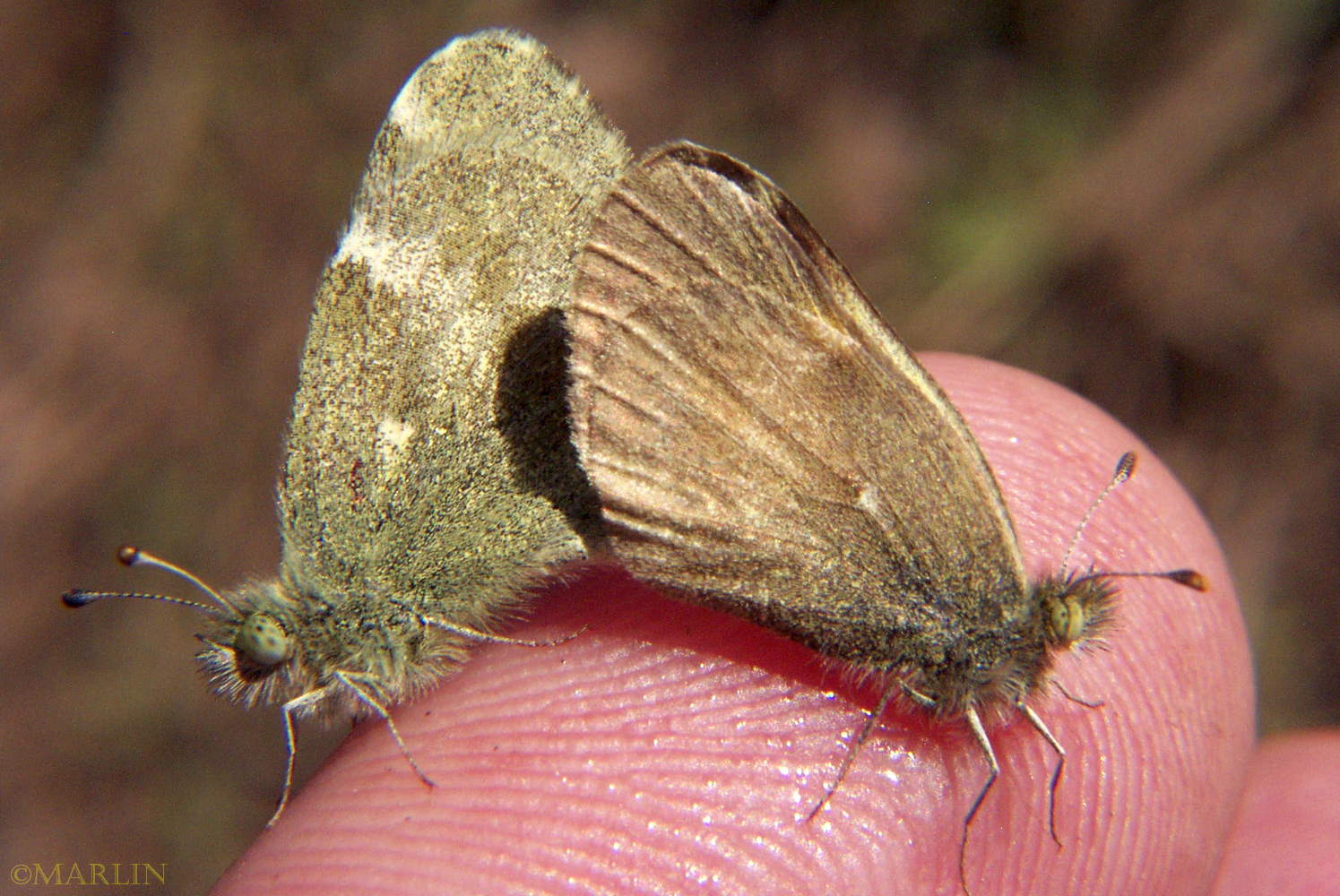
Early February near San Antonio, Texas – dainty sulphur butterflies mating. Male is on Left
Also commonly called Dwarf Yellow. Life Cycle: Caterpillar ranges up to 5/8″, dark green with purple stripes on its back, and parallel black and yellow stripes on the side. Caterpillars feed on sneezeweed, both bur and garden variety marigolds, pinks and chickweeds. Chrysalis is smooth, green [3].
Flight: Year-round in south, later northward. Habitat: Disturbed areas, grasslands, canyons, dry streambeds, watercourses, railroad rights-of-way. Range: Resident in southern California, Arizona and Gulf States, south into Mexico. Emigrants to Midwest and Manitoba; rarely into northwest or northeast U.S.
Dwarf Yellows emigrate northwards every spring following river corridors. They reproduce rapidly and can live in dry, weedy areas. Yet they cannot withstand cold weather, and die off every autumn. Photographed February 11, 2003 at San Antonio, Texas. Ambient temperature 65 degrees, sunny. This mating pair was found in a dry creek bed.
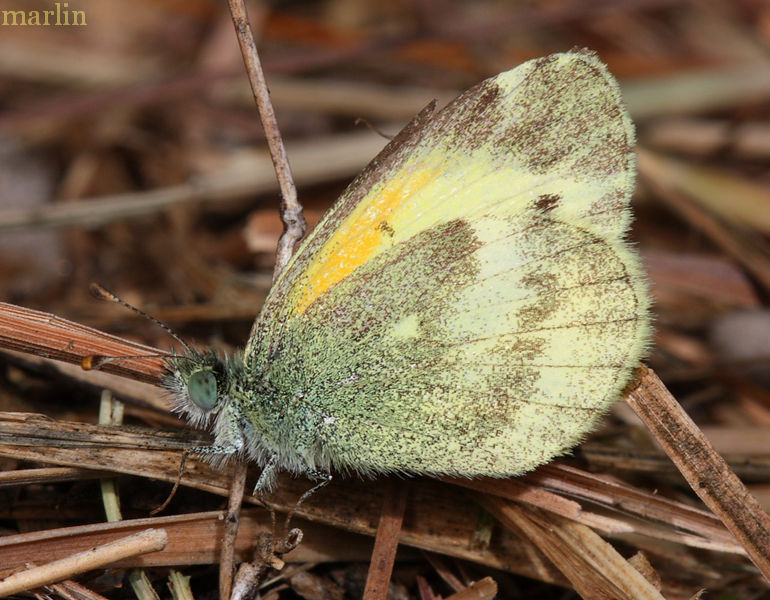
This dainty sulphur is still active at the end of October in northern Illinois. Size: 14mm
The dainty sulphur butterfly is the smallest North American Pierid [3]
References
- Bugguide.net, dwarf yellow butterfly
- National Audubon Society Field Guide to Insects & Spiders Chanticleer Press 1980
- Eric Eaton & Ken Kaufman, Kaufman Field Guide to Insects of North America
Order Lepidoptera, which contains both butterflies and moths, includes at least 125,000 known species including 12,000 in North America.
Learn to identify many of the American Midwest’s common species through descriptions and large diagnostic photos of live, wild specimens.
Butterfly Index | Moth Pictures | Moths Index | Skipper Butterflies