Cobweb Spiders – Family Theridiidae
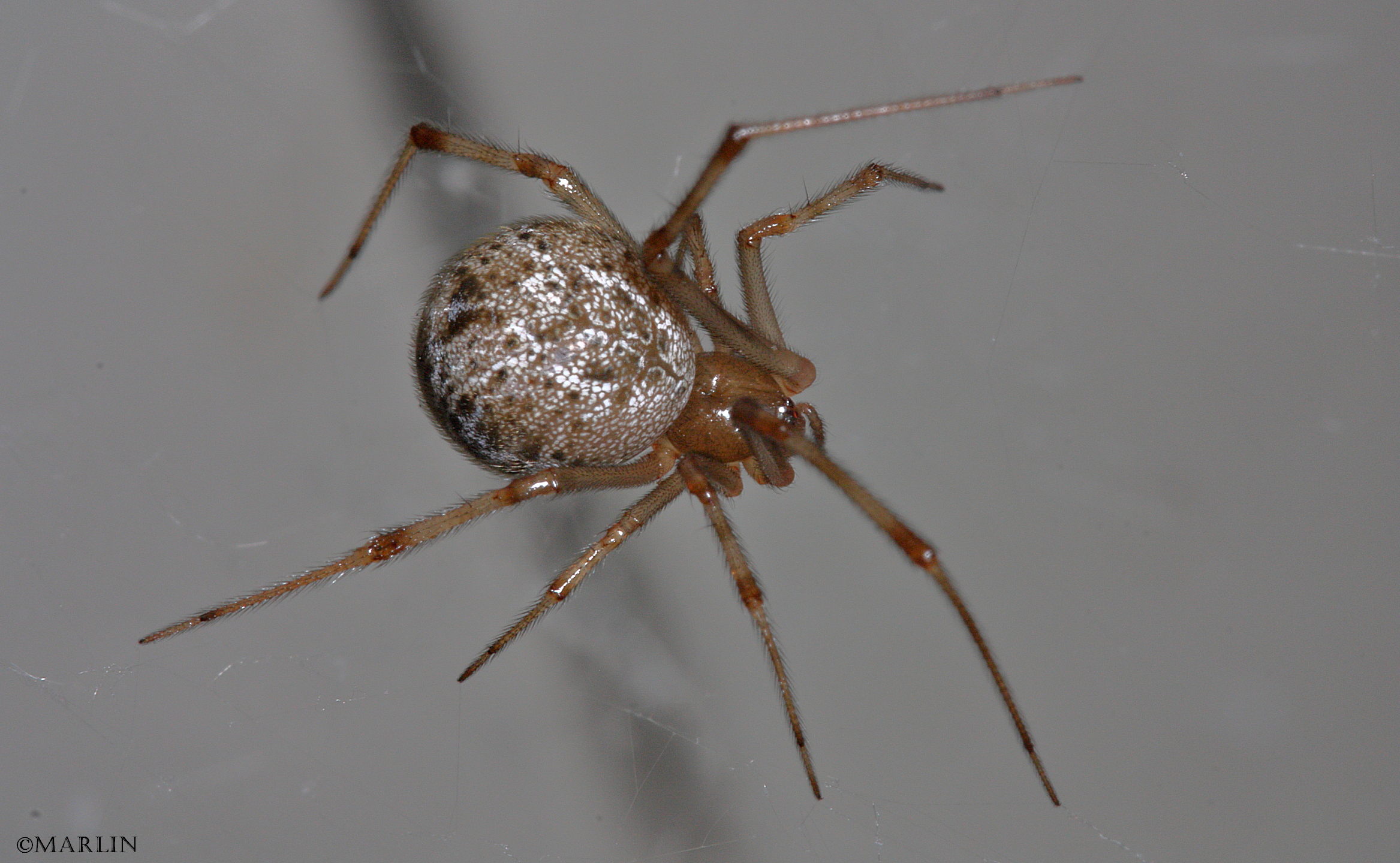
Female House Spider
There are more than 200 species in this family, which includes both brown and black widow spiders. Cobweb spiders are common in North America (and worldwide), and can be found almost anywhere that they can find weeds, fences, trees, walls, or other upright structures. Cobweb spiders are predators, and they will eat almost anything that is small enough to get trapped in their webs.
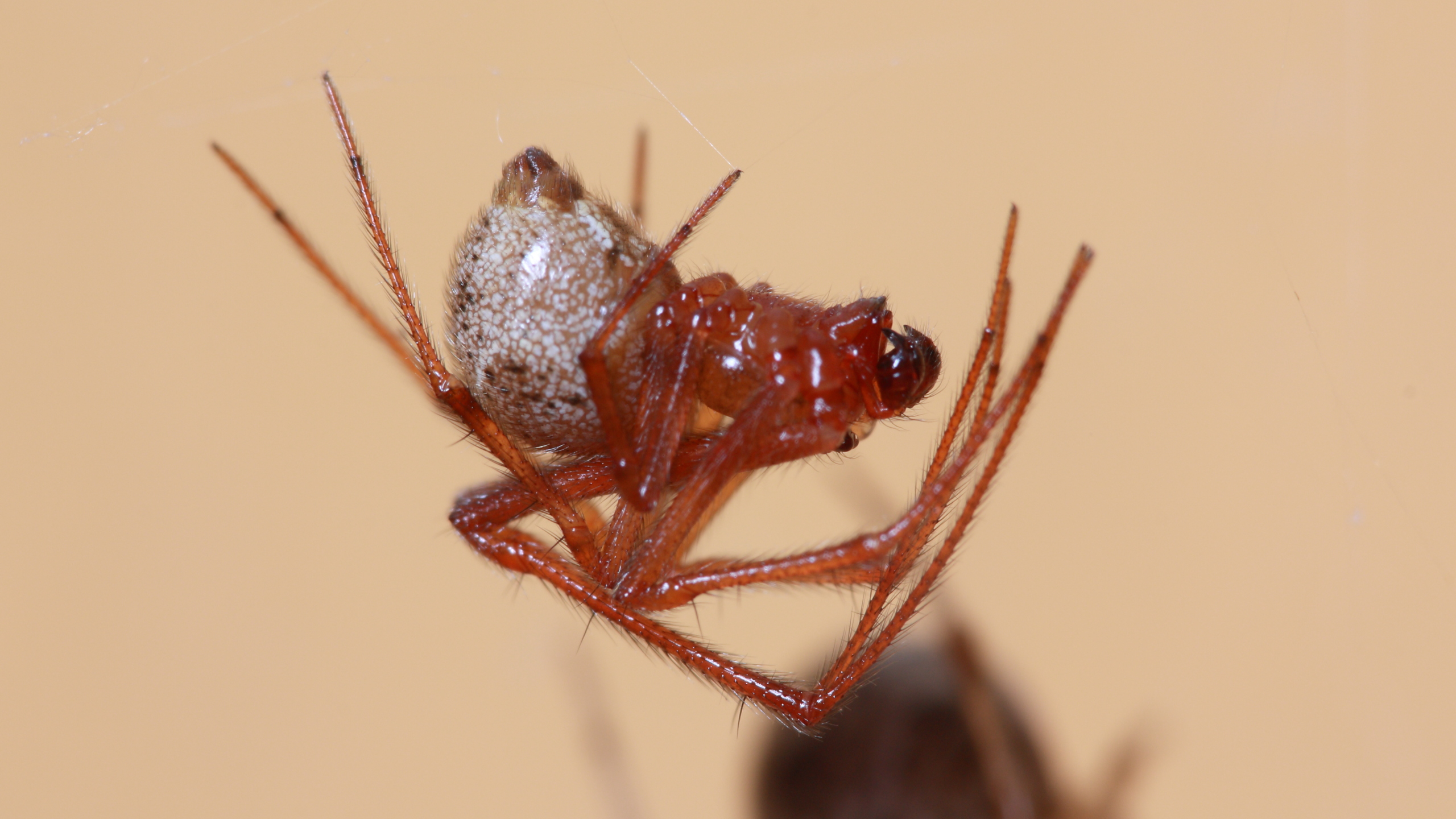
Male House Spider
Cobweb spiders’ webs are disorganized, unlike the circular webs made by orb-weavers and other web-building spiders. Cobweb spiders have 8 eyes and 8 legs, 2 body parts, and fang-like mouthparts called chelicerae. Most cobweb spiders live for less than 1 year. At the end of the summer, female cobweb spiders produce a large amount of eggs they wrap in an egg sac made of silk.
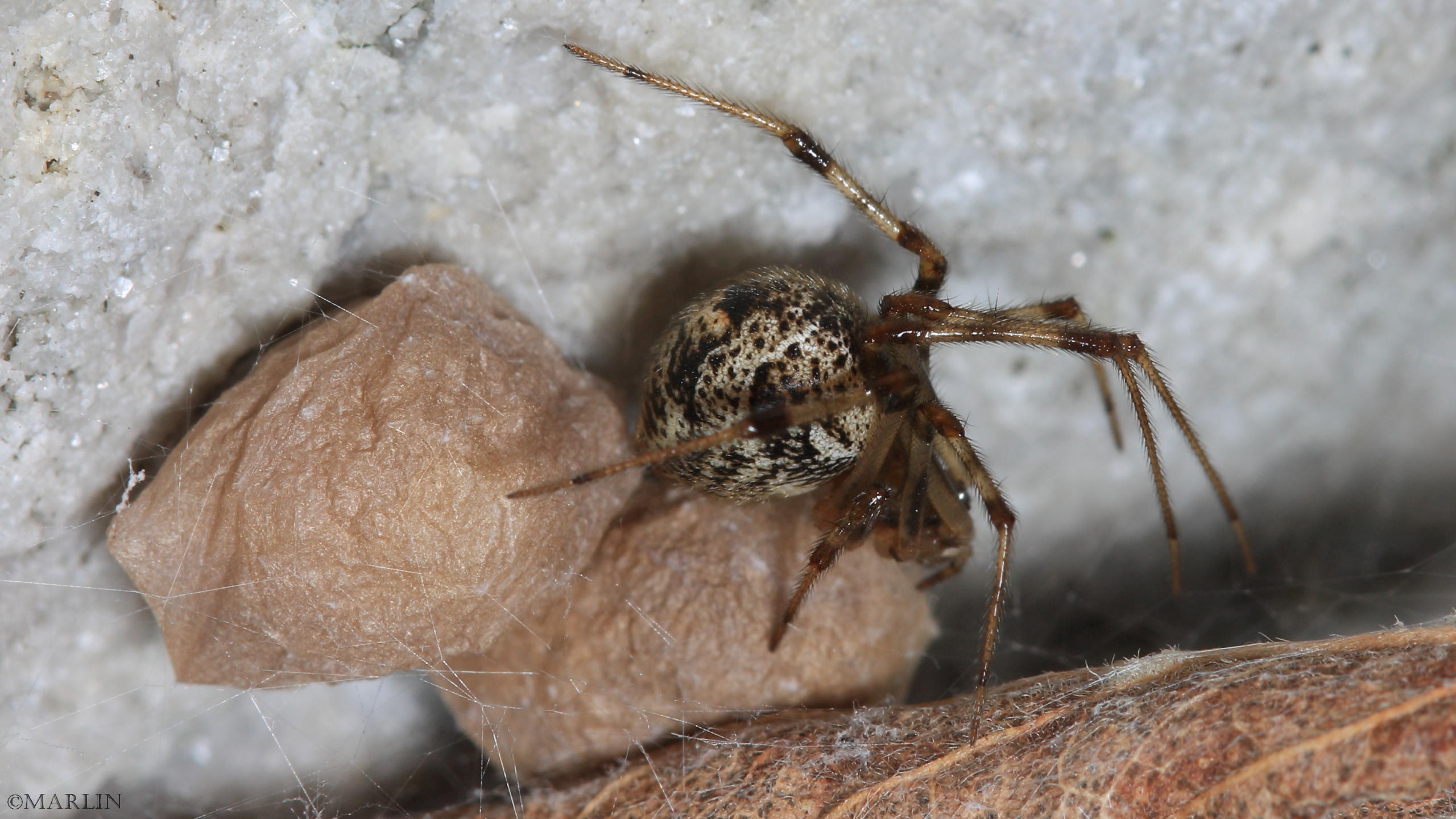
Female house spider with egg cases. Each papery case contains dozens of eggs
Like most web-building spiders, cobweb spiders tend to have poor vision – they don’t need to see very well because they can “feel” prey when it gets caught in their webs. Most cobweb spiders are considered beneficial to humans. They eat flies, mosquitoes, and other creatures. However, The black widow spider is a cobweb spider, and its bite can be dangerous.
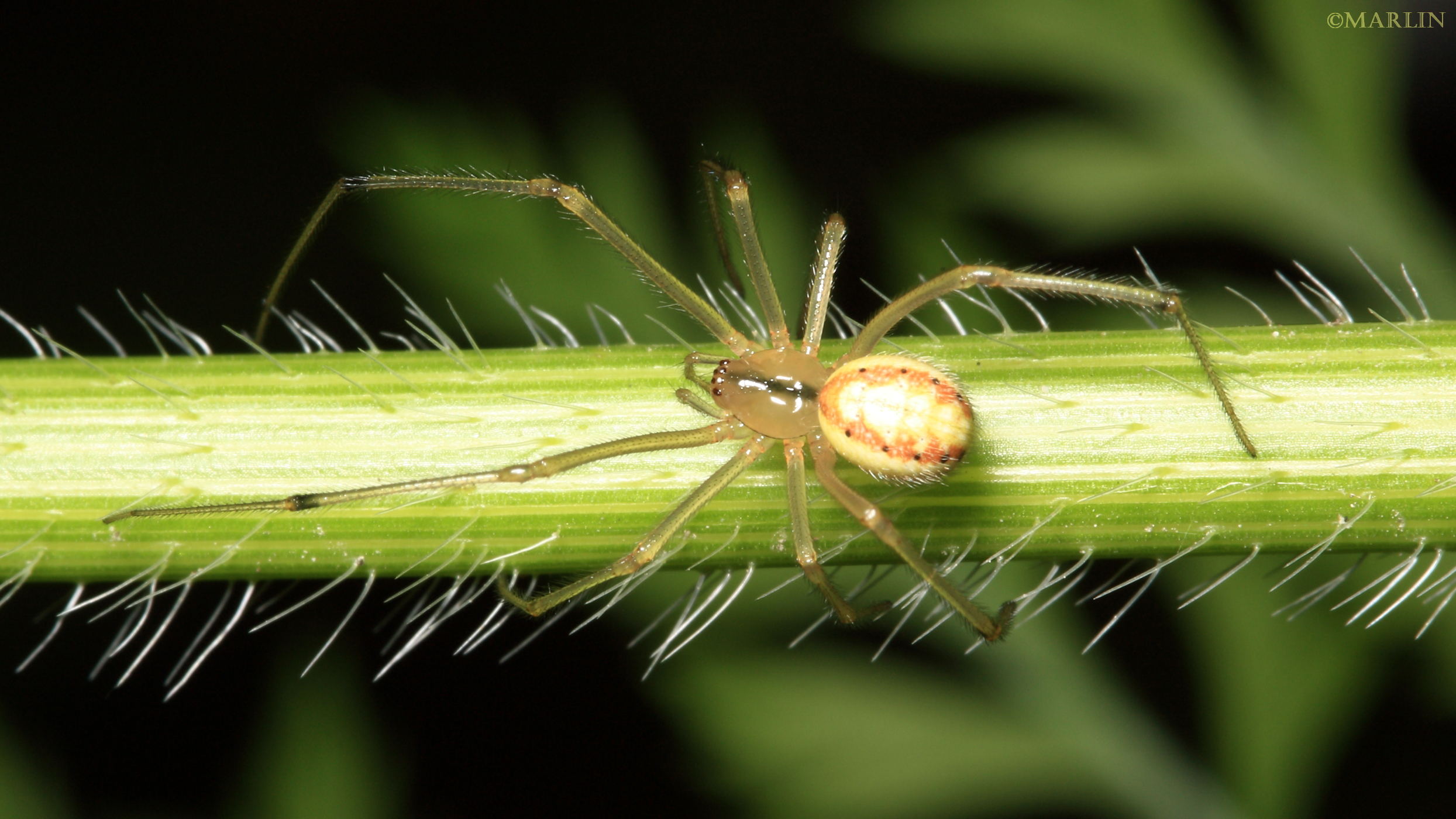
Cobweb Spider E ovata
Also called comb-footed spiders, after the inconspicuous comb like bristles on the hind tarsi of many species. These spiders spin irregular webs and use their combs to fling silk over any prey that gets caught. Thus swathed, the victim is then hauled to a rest site, injected with venom, and eaten.
Spiders Main | Spiders Index | Orb Weavers | Jumping Spiders | Nursery Web