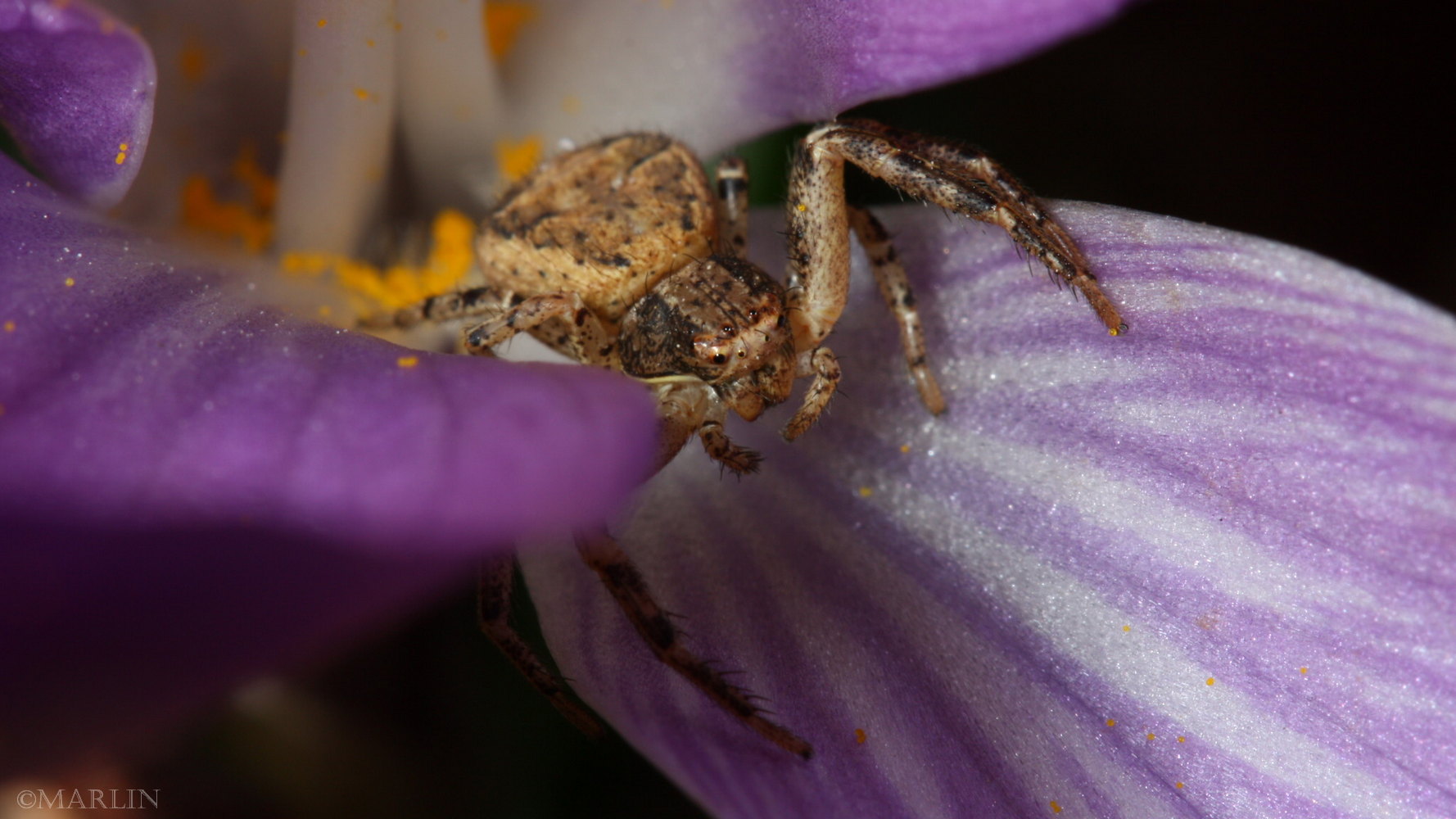
Crab Spider - Xysticus sp.
Family Thomisidae
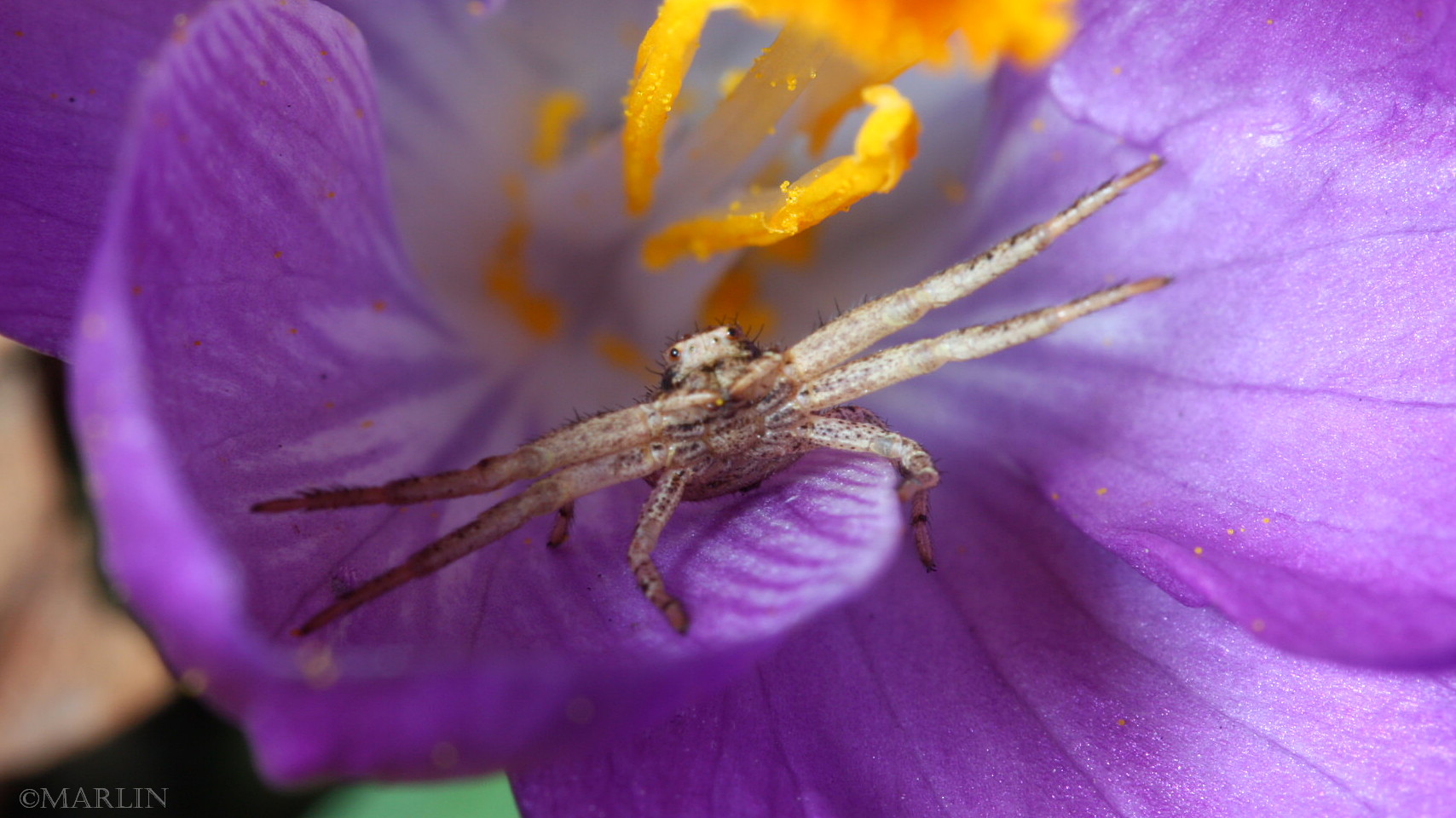
Crab spiders generally wait for their prey, sitting with their overdeveloped front legs held out to the sides, hence their common names. They are masters of camouflage, usually sitting on flowers of like color.
Cirrus Home | Spiders Table of Contents | Spiders Main Page | Jumping Spiders | Cirrus Index
 

Crab Spider - Xysticus sp.

Crab spiders (often called flower spiders) are known for their oversized front legs and resemblance to the familiar crustacean seafood item. The term flower spider comes from their habit of lying in wait on flowers, much like the assassin bug or numerous other opportunistic predators. This guy is small, only about 10mm across the outstretched front legs. He was hiding amidst the sprays of tiny flowers that make up a Queen Anne's lace bloom.

Other species in Thomisidae have brightly colored camouflage which makes them nearly invisible when lying in wait on or near flowers, where they snag unwary insects blundering within range while nectaring. Their prey includes butterflies, flies, beetles, and bugs.

Like all spiders, crab spiders go through a simple metamorphosis.  Young crab spiders hatch from eggs and look like tiny adults.  They shed their skin as they grow.  Most live for less than 1 year.  Females produce hundreds of eggs in the fall, and the offspring hatch in the spring.

Early spring crab spider in purple crocus flower
Early spring (April 3) crab spider hides in crocus flower.

Crab Spider - Xysticus sp.
This poor spider is missing one of her front legs

Crab Spider
Crab Spider Xysticus trails silken "lifeline"

Cirrus Home | Spiders Table of Contents | Spiders Main Page | Jumping Spiders | Cirrus Index

 
Custom Search


 Marbled Orbweaver Spider
Marbled Orb weaver
Araneus marmoreus
Orchard Spider
Venusta Orchard Spider
Leucauge venusta
Banded Argiope Spider
Banded Argiope
Argiope trifasciata

© Red Planet Inc.