|
The black widow spider (Latrodectus spp.) is noted for its neurotoxic
venom. It is found worldwide. There are three species commonly called
black widow in North America: The southern black widow (L. mactans), the
northern black widow (L. variolus), and the western black widow (L.
hesperus).
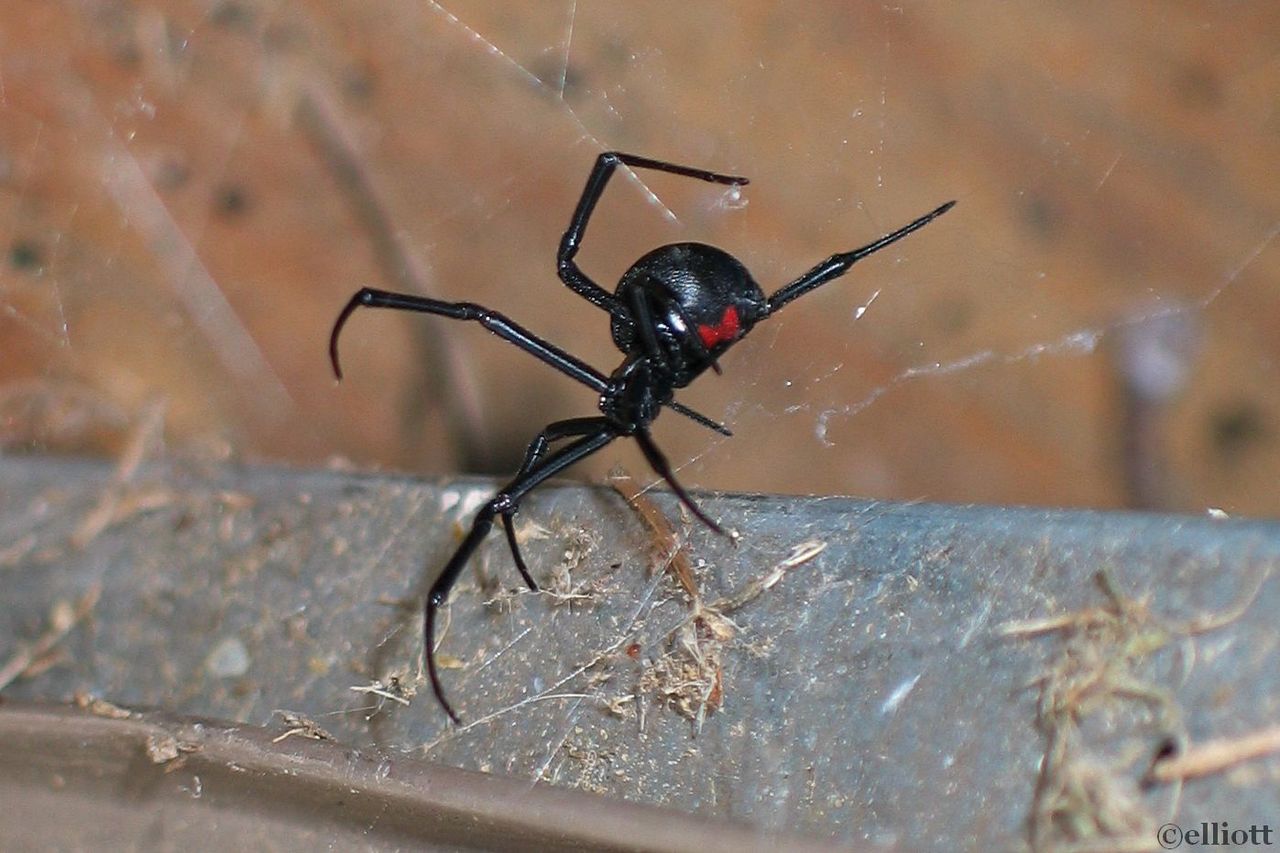
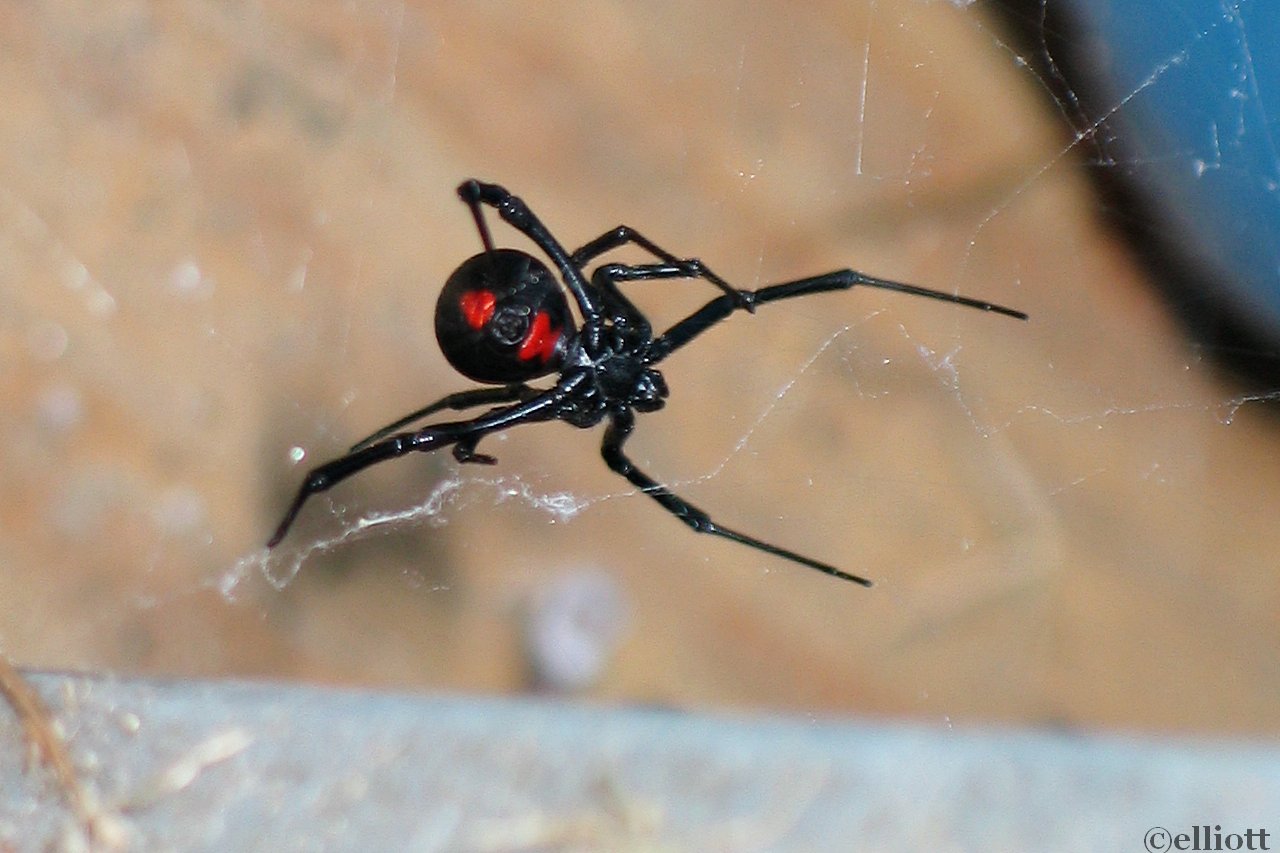
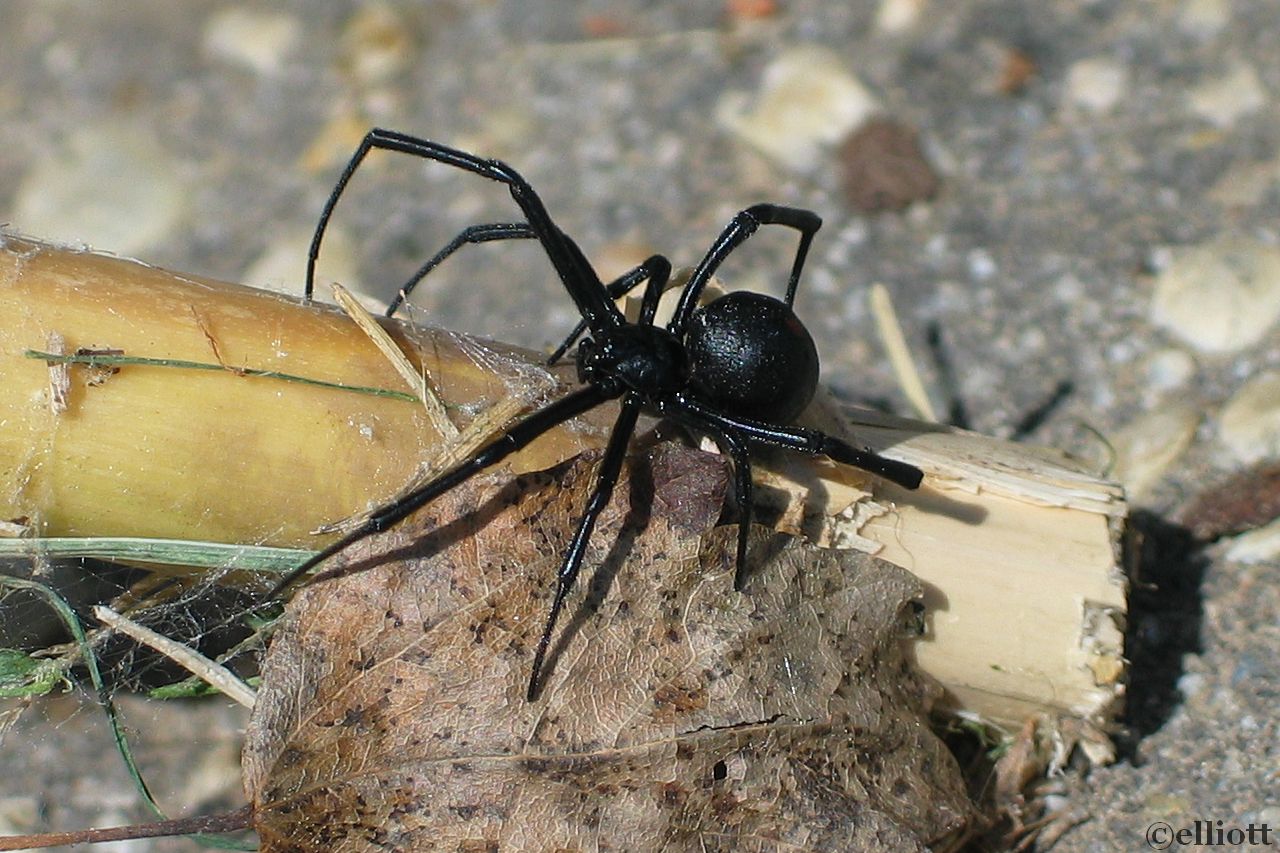
Adult female black widow spiders are gloss black with an hourglass
shaped marking on the underside of its abdomen which can range from
orange to red. They also bear a small, usually red (colors vary) dot
near the spinnerets, which is separate from the hourglass. In L.
variolus, the two halves of the hourglass shape may be separated into
two separate patches. A large female black widow spider can grow to
about 1.5 inches (37 mm), counting leg-span. The body is about 0.5-0.6
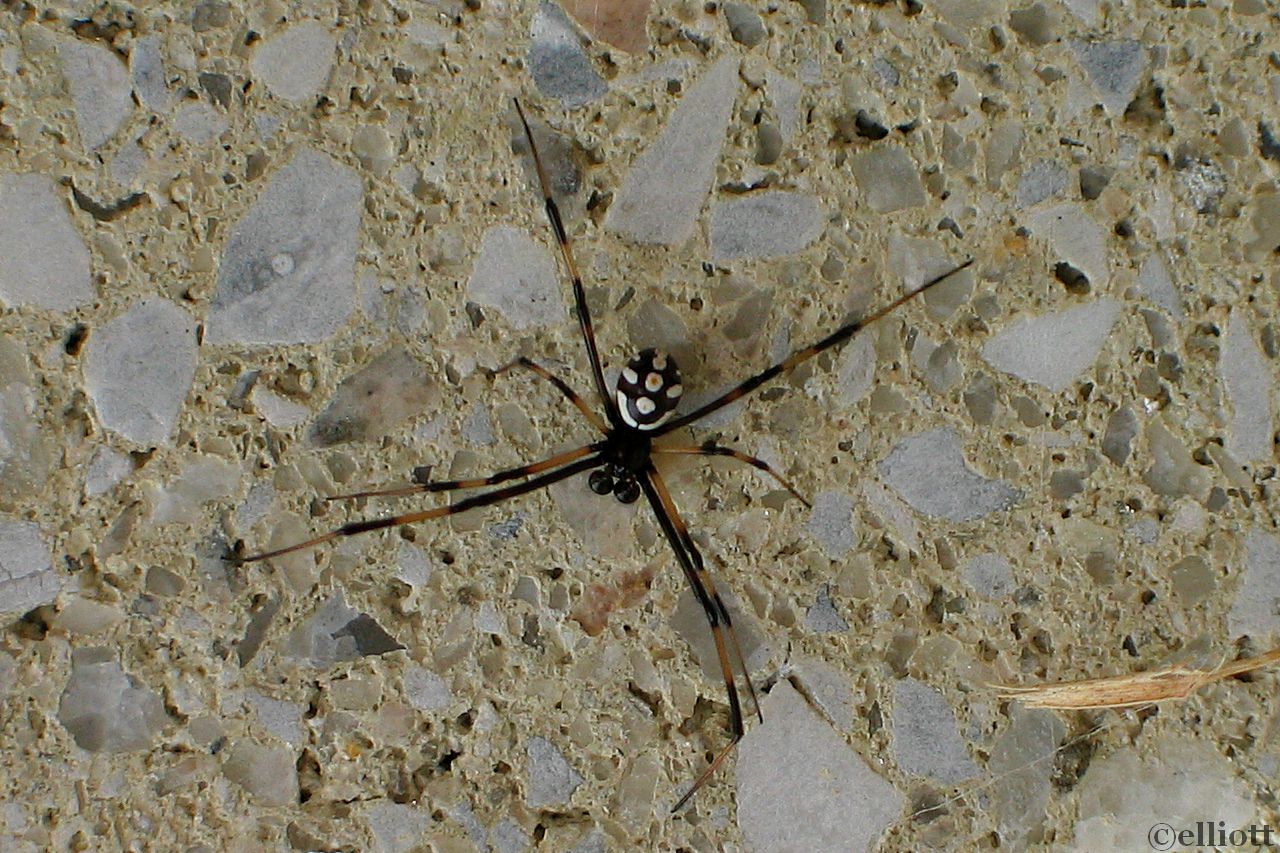
inches (12-15 mm). Male black widow spiders are half the size of the
female or smaller. They have longer legs and a smaller abdomen in
relation to their body size. They are also usually dark brown with
varying colors of stripes/dots, with no hourglass mark. Adult males can
be distinguished from juvenile females by their more-slender body,
longer legs and large pedipalps typical of most other male spiders.
As with many venomous creatures, the brightly colored markings serve as
a warning to predators. Eating a black widow will normally not kill a
small predator (birds, et cetera), but the sickness that follows
digestion is enough for the creature to remember that the bright red
marking means "do not eat." Because the adult female black widow
typically hangs and moves about its web upside down, and because the web
is typically close to the ground, its hourglass is visible to most
predators. Juvenile female widows spend a large quantity of time in
search of an optimal environment. Once an optimal location is found,
adult female widows often spend their entire lives in one place. Because
juvenile females must first find this optimal location, they bear
brightly colored marks upon their backs, so that they may be seen by
predators when walking using its legs. Males bear similar marks to the
females to serve as warning while they are searching for mates, however,
the marks are not as prominent (not as brightly colored, or as large).
Males, being less venomous, are less of a threat to predators, so having
less prominent but similar marks helps predators to better judge their
prey (some large birds can eat male widows without adverse effect, and
so only avoid female spiders; those who cannot eat any widow without
adverse effect eat nothing with the marks). Female juveniles develop an
hourglass before the dorsal markings are shed. As is characteristic of
all arthropods, black widow spiders have a hard exoskeleton composed of
chitin and protein. [2]
Black widow spiders typically prey on a variety of insects, but
occasionally they do feed upon woodlice, diplopods, chilopods and other
arachnids. When prey becomes entangled the web, the spider quickly comes
out of its retreat, wraps the prey securely in its strong web, then
envenomates it. The venom takes about ten minutes to take effect.
A sexually mature male spins a "sperm web", deposits semen on it, and
charges his palpi with the sperm. The male then inserts his palpus into
the female's spermathecal openings. The female deposits her eggs in a
globular silken container in which they remain camouflaged and guarded.
A female black widow spider can produce four to nine egg sacs in one
summer, each containing about 100-400 eggs. Usually, eggs incubate for
twenty to thirty days. Rarely, do more than one hundred survive through
this process. On average, thirty will survive through the first molting,
due to cannibalism, lack of food, or lack of proper shelter. It takes
two to four months for black widow spiders to mature enough to breed,
however full maturation typically takes six to nine months. The females
can live for up to five years, while a male's lifespan is much shorter.
Contrary to popular belief, the female only rarely eats the male after
mating, and L. mactans is the only black widow species for which this
form of sexual cannibalism has been observed in the wild.
|

Female black widow shows diagnostic red hourglass mark

|
Black widows build irregular webs of
coarse silk, usually near the ground in dark places, and
usually outdoors. Webs are often built among leaf litter on
the ground in deciduous forests. They are also found under
rocks or logs, in wood piles, in mammal burrows, and in dark
corners of sheds, garages, crawl spaces, cellars, and
basements. The spiders hang in an inverted position in these
webs, do not leave them voluntarily, and are clumsy and
completely out of their element away from them.
|
|
|
Habitat: Among fallen branches and among
objects of many kinds, including wood piles, barbeque grills,
sheltered places outdoors. Web: Irregular mesh with funnel
shaped retreat much like a
funnel weaver spider's retreat.
Range: Florida to Massachusetts, west to California. Texas,
Oklahoma and Kansas; more prevalent in the south. I've lived
near Chicago all my life, and I have never seen one here.
Life Cycle: Female does not leave web, is fiercely protective of
egg mass, biting defensively if disturbed. Pear-shaped egg sac
is pale brown. Female often eats the male after mating; hence
the name widow. She stores sperm to produce more egg sacs
without mating again. She may live more than 3 years.
Spiderlings disperse almost immediately after hatching.
|