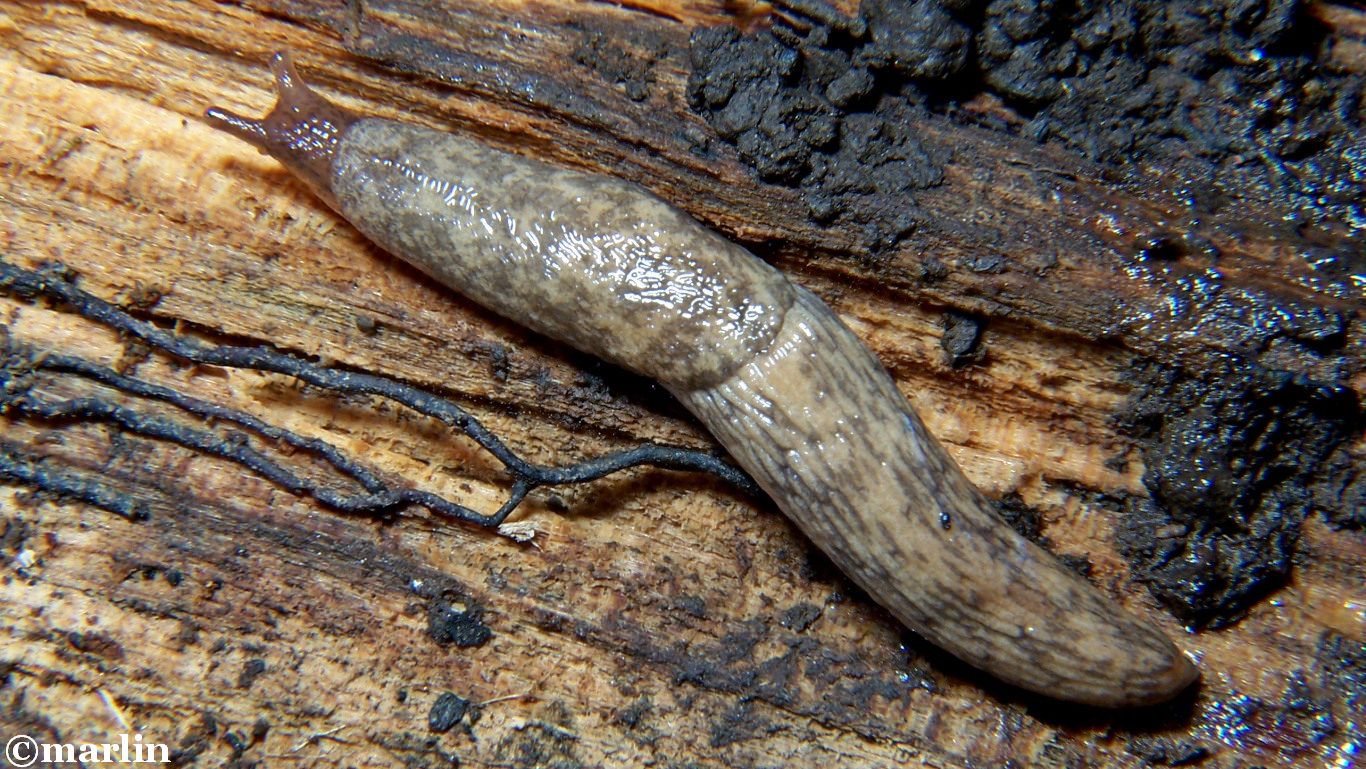
Gray Garden Slug – Deroceras reticultatum
You will find popular anecdotal evidence of the slug-killing abilities of beer, coffee, iron phosphate, human hair, citrus fruit, diatomaceous earth, vinegar, and even more fanciful suggestions. This is mostly wishful thinking. Controlling your slug population is really a matter of hard work and diligence destroying their eggs and trapping and killing adults. Insecticides do not work against slugs. They are not insects.
If the garden area is small, removing shelter for the slugs can help to control them. The gardener should remove debris, logs, and stones, and trim grass and weeds along the edge of the garden. It may be necessary to remove slugs by hand from plants at night. a daytime trap of boards or shingles on the ground near the most susceptible plants can be set. The slugs will crawl under the boards at night and can be removed in the morning.
Search for egg masses and destroy them; encircle the most susceptible plants with wood ashes, diatomaceous earth, or even screen to exclude slugs. Keep in mind: ashes and diatomaceous earth are only effective as dessicants if they remain perfectly dry. As any gardener knows, such conditions rarely prevail for long in any outdoor space. You’ll end up with a crust that slugs crawl over with impunity or the dust will scatter and lose its effectiveness.
Natural enemies of slugs include toads, ducks, geese, lightning bugs, rove beetles, and snakes.
Trapping
Trapping and handpicking helps lower slug numbers. To be effective, traps must be checked and cleaned out several times a week (more when slugs are abundant). Be sure to put out enough traps to adequately protect the entire garden. Traps containing beer or other fermenting food are popular, but are very inefficient. You can purchase commercially available slug traps or make your own. Sink jars, cans, pans or similar containers into the ground so the top is level with the ground. Pour beer or a water and yeast mixture (one teaspoon of yeast to three ounces of water) or similar fermenting liquid into the container. Slugs are attracted to the odors, and it’s a simple matter to collect the bodies and dispatch them in a humane manner.
More Environmentally Sound Control Methods
Rake your garden in early spring to remove leaves, plant debris and slug eggs. Avoid using large wood chips as they provide hiding places for slugs. Do not place mulch any thicker than three inches. This helps protect plants from weeds and helps maintain plant moisture while minimizing a favorable environment for slugs.
Water your garden only when necessary. Irrigate in the morning so plants are dry by evening. Prune lower leaves or stake large plants to reduce potential hiding places for slugs and to allow better air circulation that helps keep the soil surface drier. Thin or divide plants if they are too crowded. Some plants have been observed to be less affected by slugs. A list of those that do well in shaded areas includes Astilbe, Dicentra, Lobelia, Ranunculus, Vinca, and Viola. Plants resistant to slugs that grow well in partial shade include Phlox, Campanula, Hemerocallis, and Mentha.
All slugs lay eggs. Each species requires a different length of time for the development of its eggs and the maturing of its young. The number of eggs laid at one time by one slug may be up to 100, but average 20 to 30. Young adult slugs lay fewer eggs than older ones, so it’s important to pick off the adults as they age.
Though slug eggs may be found outdoors during any month of the year, most of the eggs are laid in the spring and early summer. Most species overwinter as adults or nearly mature young. In the spring, eggs are laid in moist areas and the new slugs normally reach maturity by fall. During periods of particularly warm and wet climatic conditions, the rate at which the slugs develop may allow for eggs to be laid in mid-summer, thus making possible a second generation. Mating usually takes place from August until mid-October and eggs are laid from 30 to 40 days after.
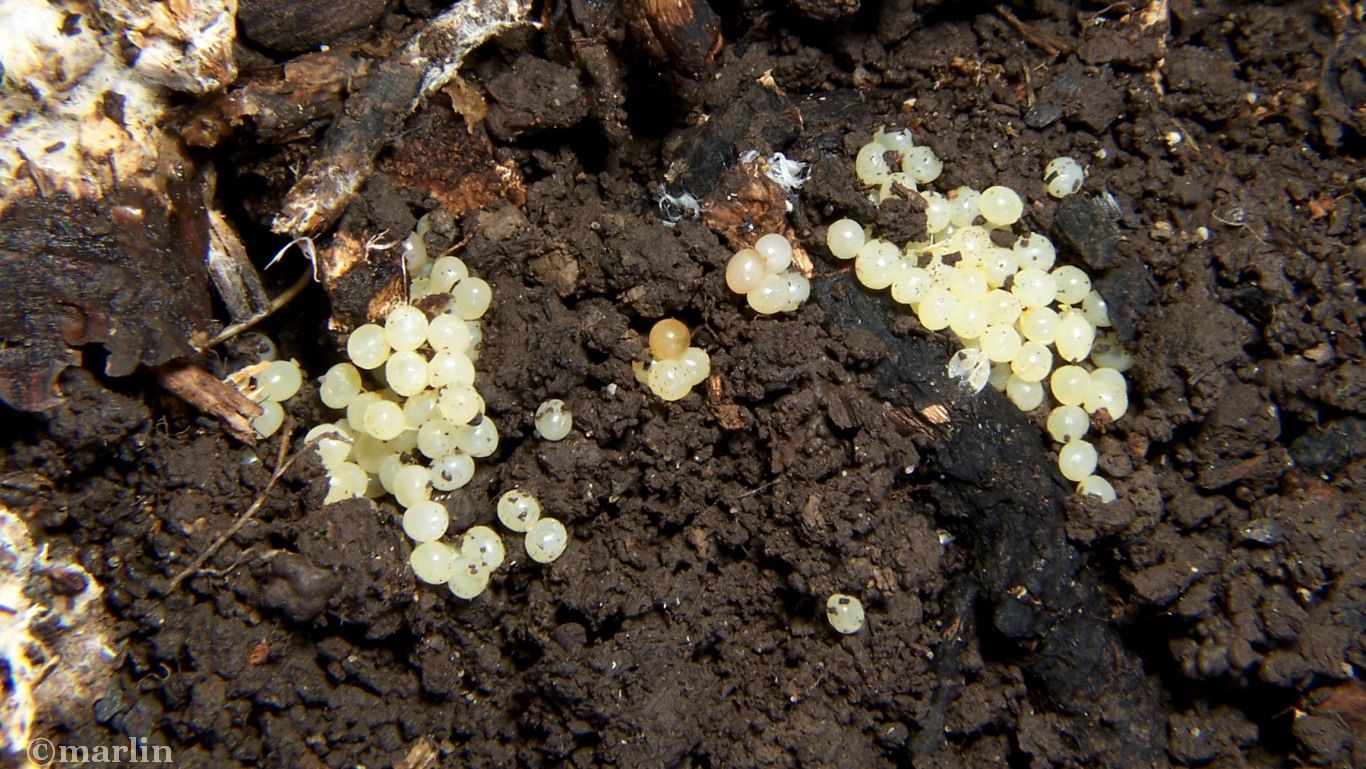
Eggs are laid on or near the soil surface, but are always deposited in places of concealment, such as underneath mulch, dead leaves, rocks, flower pots, trash, and boards. Particularly preferred are spots where the nature of the cover keeps the surroundings relatively cool and moist. These eggs were found underneath tree bark lying on the forest floor during the first week of April; they have overwintered and are near hatching. New slug eggs are transparent.
The gray garden slug was introduced to North America from Europe during the 1800s. Garden slugs attack seedlings of a number of crops, particularly no-tillage corn and alfalfa. But because they prefer succulent foliage or flowers, they primarily are pests of seedlings and herbaceous plants, and they are serious pests of ripening fruits that are close to the ground, e.g. strawberries, artichokes, and tomatoes. They will feed on foliage and fruit of some trees; citrus are especially susceptible. Look for the silvery mucous trails to confirm slugs or snails caused the damage and not earwigs, caterpillars, or other chewing insects.
In addition to the grey garden slug pictured here, other species cause damage, including the banded slugLehmannia poirieri, the three-band garden slug L. valentiana, the tawny slug Limacus flavus, and the greenhouse slug Milax gagates [1].
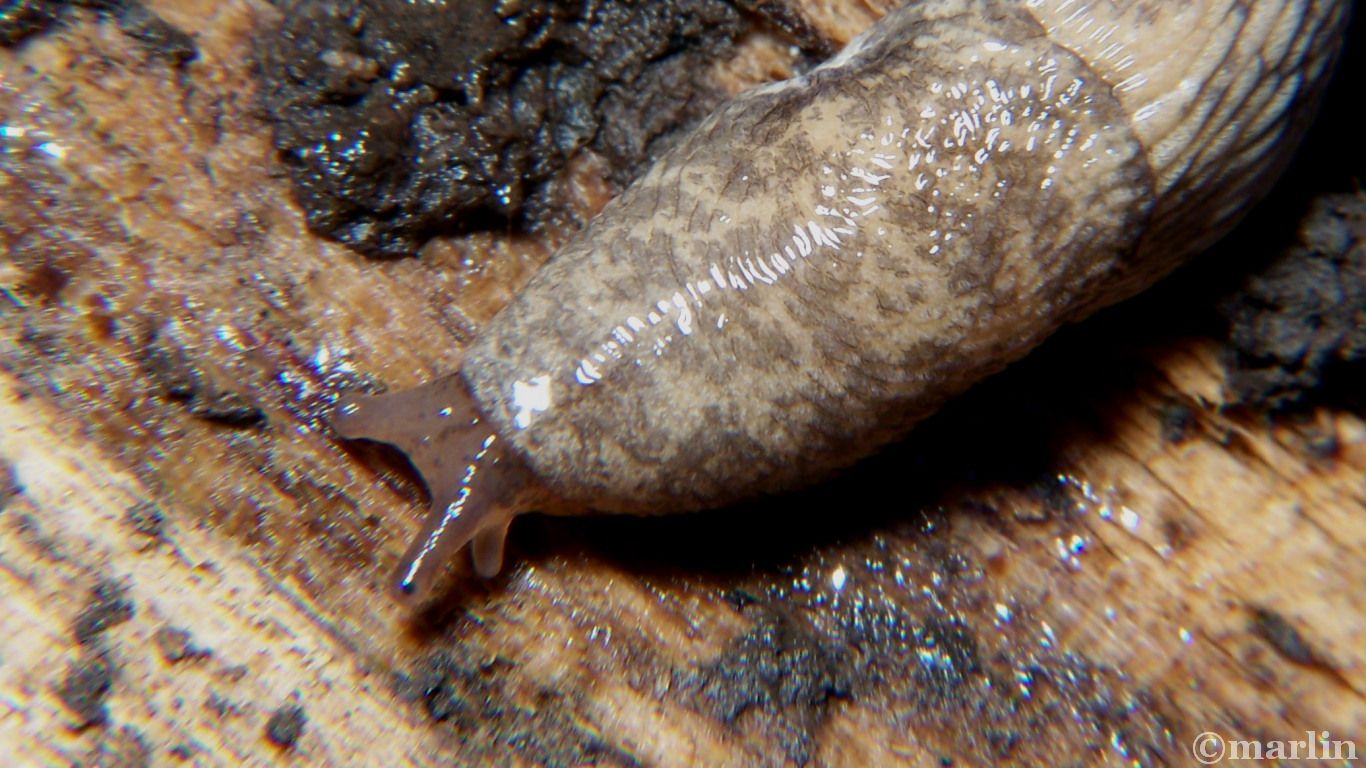
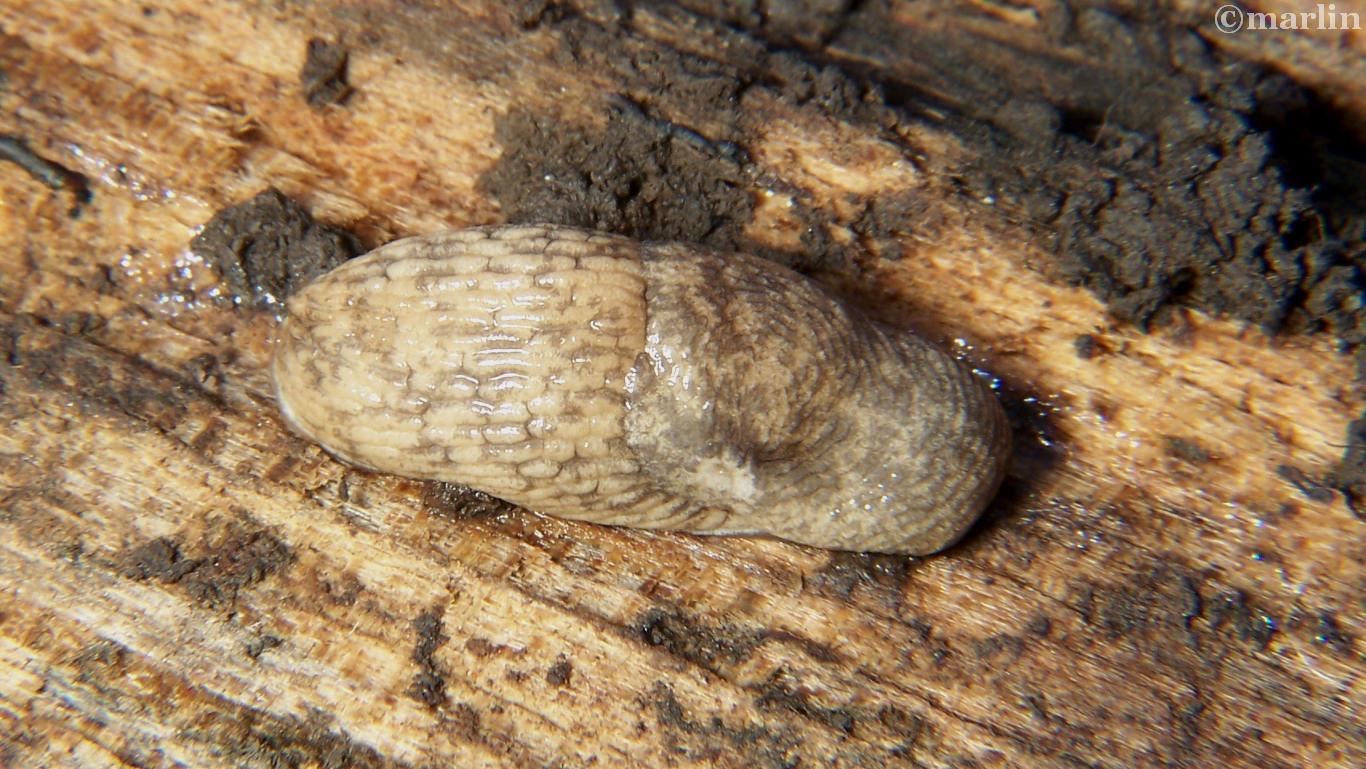
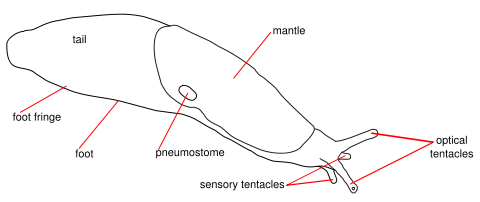
The gray garden slug is about 5 cm (2 in.) long when fully grown. It is variably colored, ranging from cream colored with irregular gray spots to dark brown with dark spots. The mantle is situated forward, near the head, and the respiratory pore is behind the mid-point of the mantle. The keel is located only at the tail. The gray garden slug produces a milky slime when disturbed; this slime distinguishes it from other species, many of which produce clear slime.
The head of the slug has two sets of tentacles; the eyes are on the tips of the upper tentacles, and the lower tentacles are used for tasting and smelling. The mouth is located between and below the lower tentacles, and is equipped with a radula, a tooth-covered rasp that the slug uses to grate plant tissue. The slug glides along a path of mucus that is secreted by the pedal gland, located just below the mouth. The mantle is a fold of skin on the back of the slug. At the edge of the mantle is an opening called the breathing pore, or respiratory pore, which can be seen opening and closing rhythmically as air passes in and out.
“If you pour salt on garden slugs, do they shrivel up and scream?” (A Straight Dope Classic)
References
- University of California, Integrated Pest Management, “Snails and Slugs“
- Morton Arboretum, Plant Health Care report
Spiders Main | Spiders Index | Orb Weavers | Jumping Spiders | Nursery Web