Crane Fly – Tipula paterifera
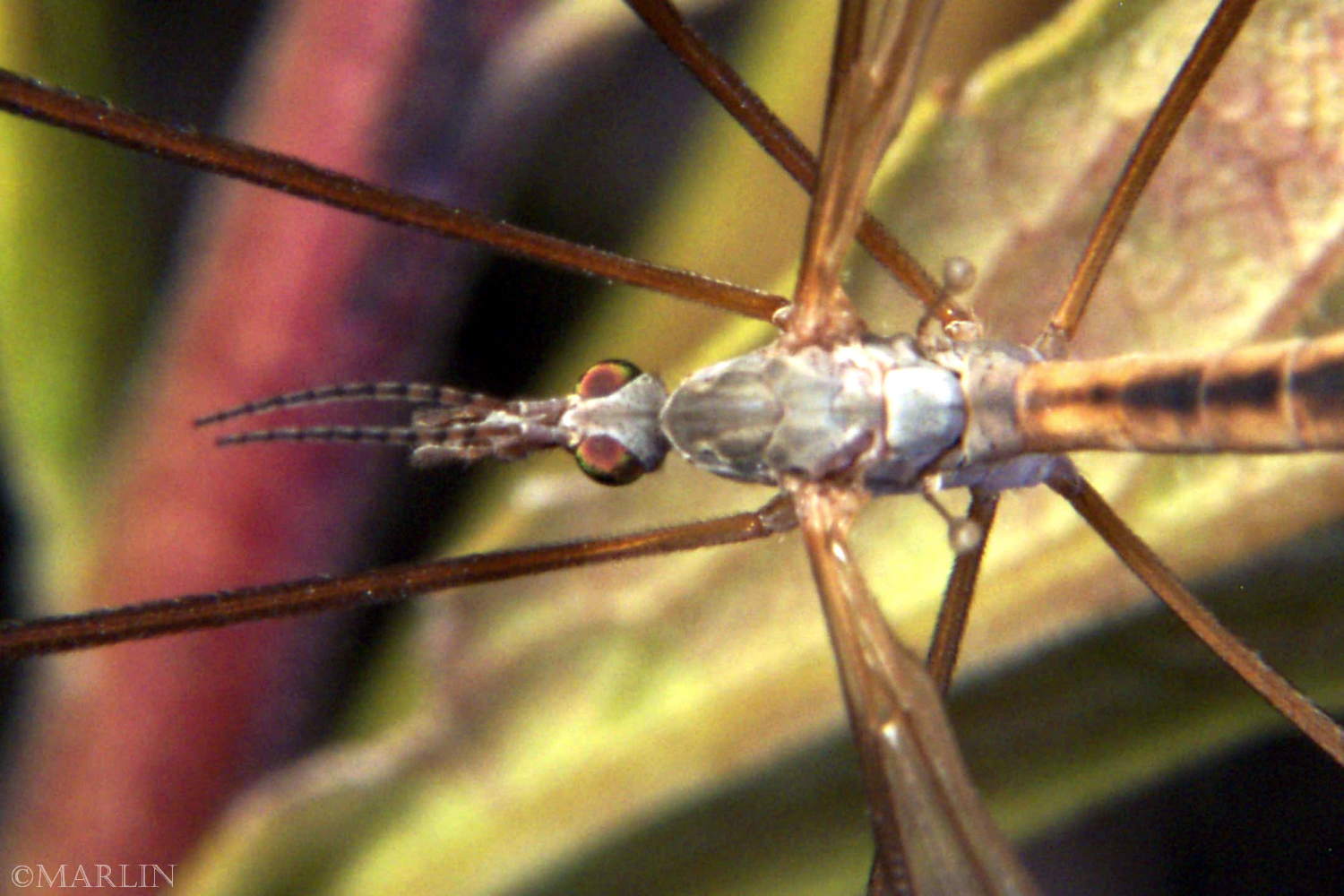
Crane Fly – Tipula paterifera
This species is a late autumnal species (16-19 mm) found especially in lawn, grassy areas, and humid areas along ponds, marshes, and streams. Head and thorax are gray, abdomen chiefly brownish-yellow, and the abdominal tergite with a median brown stripe. Wings tinged with brown and with costal margin darken. Adults are active in later afternoon and they come rather freely to light at night.
This largely midwest species (Kansas, Missouri, Ohio, Tennessee) has spread all the way to the east coast (New Jersey, Maryland) in the last two decades. This species has not previously been recorded from Pennsylvania; it represents a state record and is now widespread in Pennsylvania. Thanks to Dr. Chen Young of Carnegie Museum of Natural History for identification of these specimens.
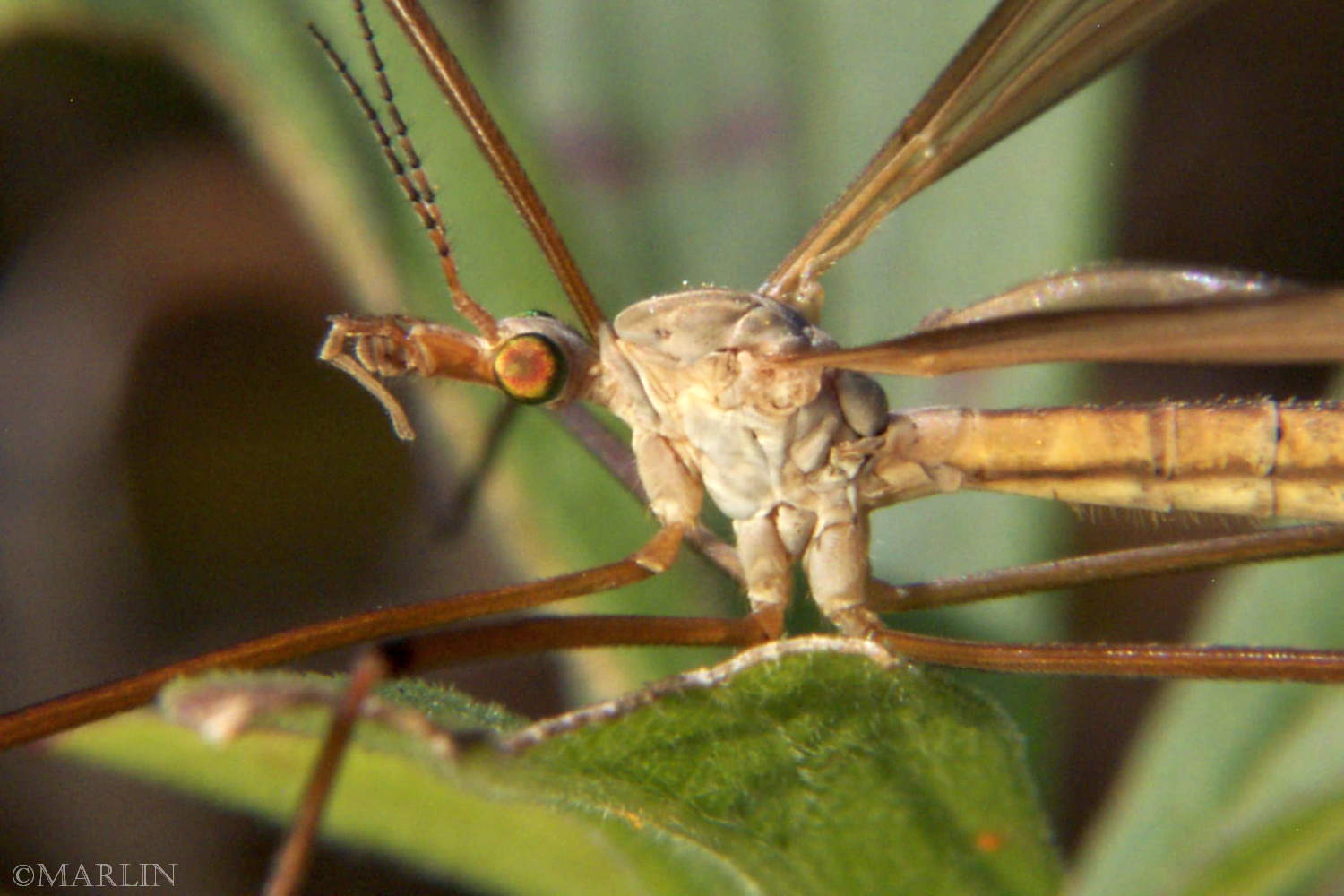
Habitat: Humid areas near ponds, streams, marshes. Range: Worldwide. Food: Adults do not feed.
Larvae feed on decaying vegetation, fungi and roots.
Life Cycle: Slender eggs are laid on moist soil near open water. Larvae develop, then pupate in the soil, emerging in spring.
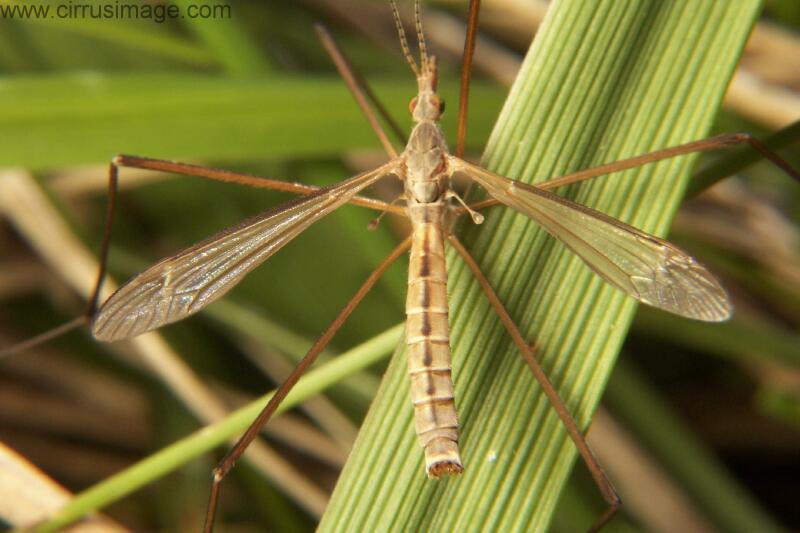
Around the pond where I took these pictures, there are thousands of these flies – they look like huge mosquitoes on steroids, but they cannot sting or bite. They are very clumsy fliers, their legs being twice as long as their bodies.
Family Tipulidae — crane flies, tipules
Flies Main | Flies Index | Tachinidae | Syrphidae | Bee Flies | Blow Flies | Flesh Flies
Live adult flies photographed in the wild at North American locations.