Bee Fly – Villa species
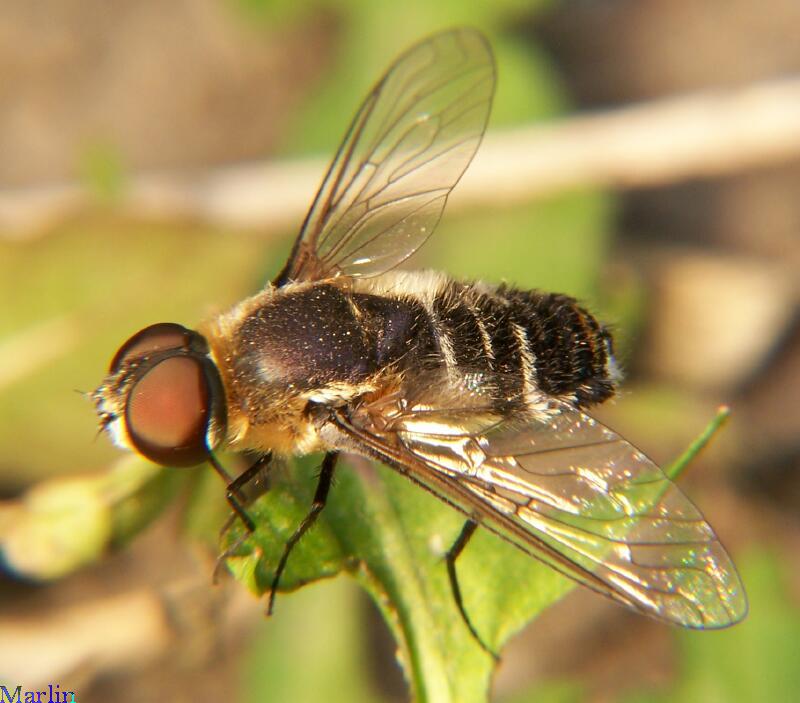
Live adult bee flies photographed at Winfield, Illinois, USA. Many bee flies have elongated mouthparts that form a conspicuous beak, used for sucking nectar long-distance while hovering over flowers. Bee flies much prefer to hover in midair while doing their nectaring, undoubtedly to avoid capture for those who lurk about flower blooms looking for an easy meal, such as the ambush bugs and the crab spiders.
Bee flies become active about the third week in April in northern Illinois.
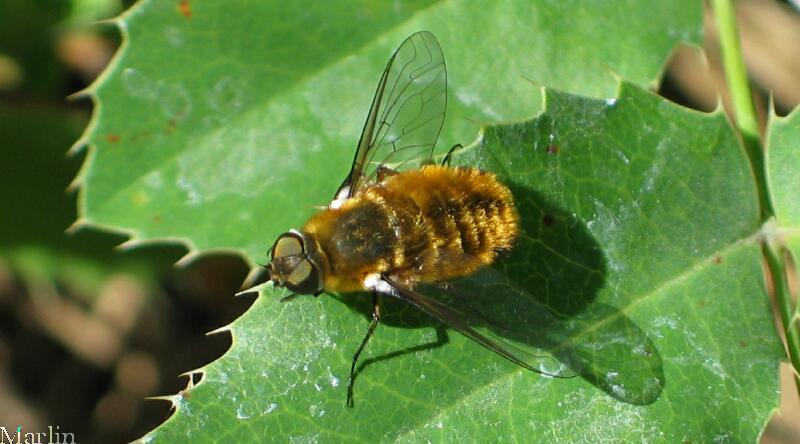
I most often see bee flies hovering around flowers, or if resting, usually on the ground, on bare soil. They are extremely wary and difficult to approach. No doubt their large compound eyes give them good vision, plus they have that air-motion sensing mechanism that helps the ordinary house fly avoid the swatter. Adult bee flies drink nectar, but the larvae are parasites of beetle larvae as well as the brood of solitary wasps and bees, the hole or burrow-nesting insects.
Flies Main | Flies Index | Tachinidae | Syrphidae | Bee Flies | Blow Flies | Flesh Flies