Alfalfa Plant Bug – Adelphocoris lineolatus
Family Miridae – Plant Bugs
Live adult plant bugs macro photographed at Forest County, Pennsylvania, USA. Size = 10mm
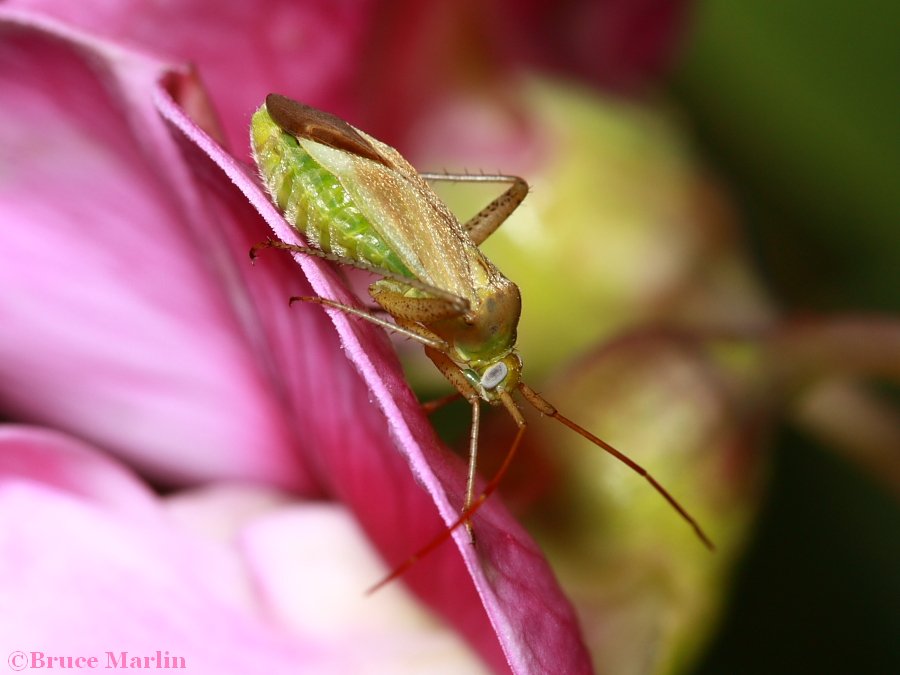
Plant bugs, stink bugs, and lacebugs use their sucking mouthparts to feed on plant sap. Damage ranges from many small white spots on the leaves to distortion or destruction of plant tissue, depending on the pest and host plant. Some feed on many different types of plants while others feed only on a narrow range or single species. [1]
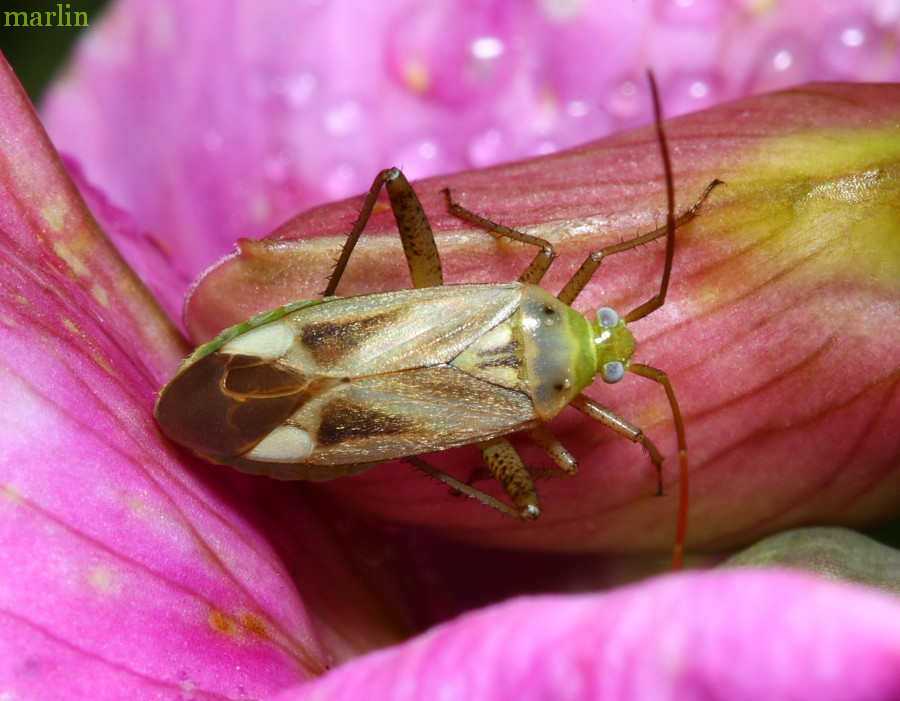
Most plant bugs are considered aesthetic nuisance pests since they rarely kill their host plants. However, leaf and flower distortion can be very severe and can greatly reduce the aesthetic value of landscape plants. Plant bugs insert their stylets into host plant tissues and inject a tissue dissolving saliva. They then suck out the liquefied plant tissues, much like other bugs suck the insides from their insect prey.
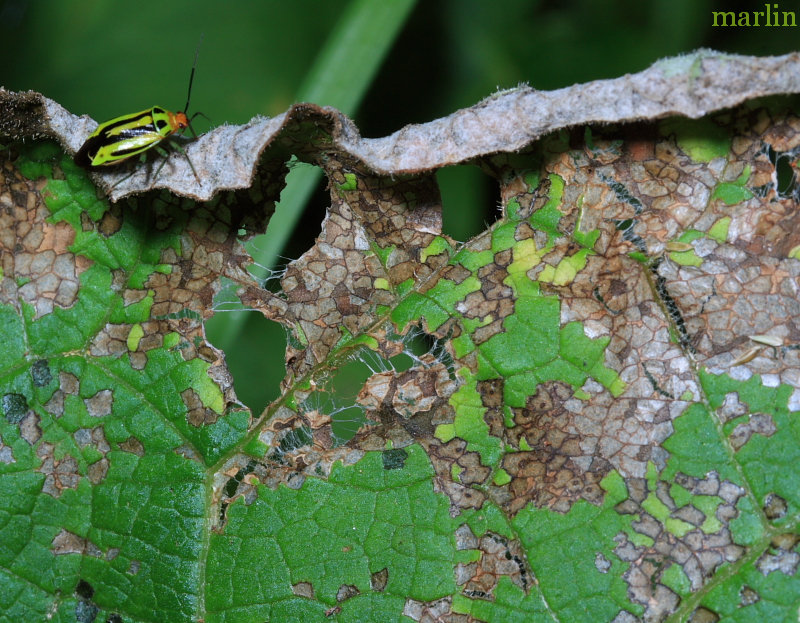
Four-lined plant bug and mosaic leaf damage
Plant bugs — Miridae, the largest family of the Heteroptera, or true bugs– are globally important pests of crops such as alfalfa, apple, cocoa, cotton, sorghum, and tea. Some also are predators of crop pests and have been used successfully in biological control. Certain omnivorous plant bugs have been considered both harmful pests and beneficial natural enemies of pests on the same crop, depending on environmental conditions or the perspective of an observer.
As high-yielding varieties that lack pest resistance are planted, mirids are likely to become even more important crop pests. They also threaten crops as insecticide resistance in the family increases, and as the spread of transgenic crops alters their populations. Predatory mirids are increasingly used as biocontrol agents, especially of greenhouse pests such as thrips and whiteflies. [3]
References
- Plant Bugs and Lacebugs | University of Kentucky Entomology
- v belov, Bugguide.net, Alfalfa Plant Bug – Adelphocoris lineolatus
- S. McNeil, Dept. of Zoology, Imperial College, “The Dynamics of a Population of L. dolabrata“
Order Hemiptera: True Bugs number almost 5,000 species in North America, and 40,000 worldwide. They have mouthparts formed into a beak, adapted for sucking plant juices or the liquefied insides of their animal prey.
Suborder Auchenorrhyncha – Cicadas & Planthoppers
Suborder Sternorrhyncha – Aphids, scales, mealybugs, jumping plant lice.