Four Lined Plant Bug – Poecilocapsus lineatus
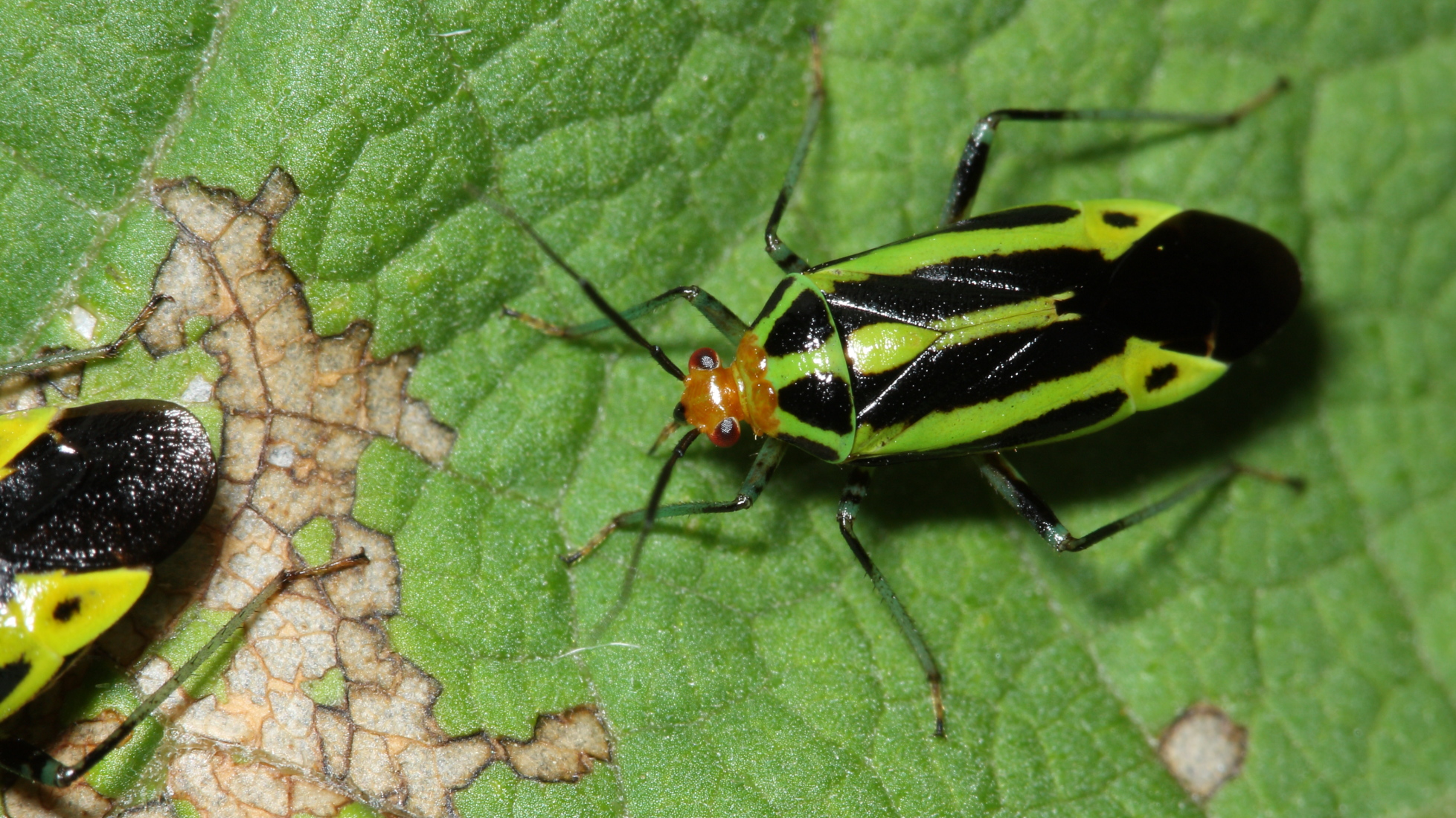
Family Miridae – Plant Bugs
Four-lined plant bugs have a piercing, sucking mouthpart which they use to break into plant cells. Four-lined plant bug nymphs have been found on many different kinds of plants including wild hydrangea (Hydrangea arborescens). This insect feeds on 250 species, including many kinds of perennials, vegetables, and shrubs such as bluebeard, forsythia, and sumac. Feeding injury is frequently mistaken for leaf spots. Four-lined plant bugs have a piercing, sucking mouthpart which they use to break plant cells and then flush the feeding wound with digestive juices.
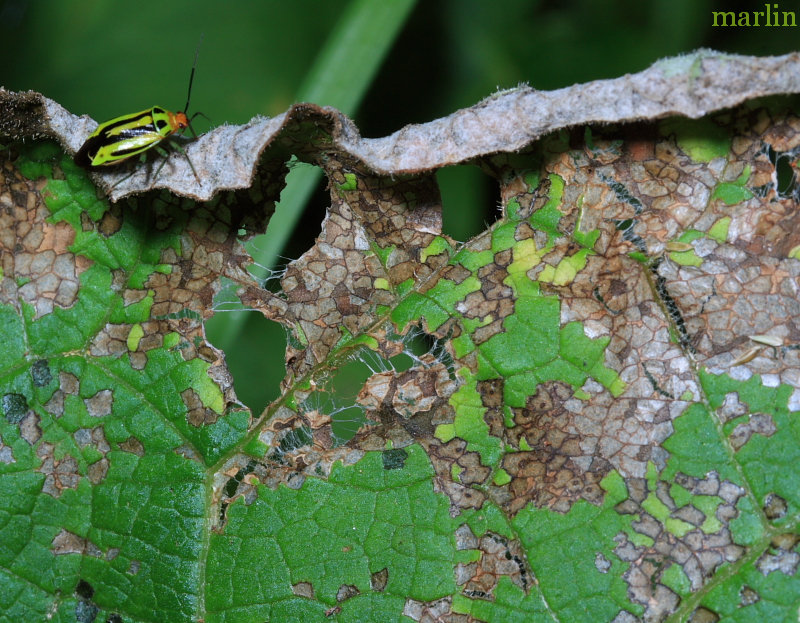 Four-lined plant bug and mosaic leaf damage
Both nymphs and adults feed on leaves, creating a distinctive mosaic-pattern of leaf damage, as each cell pierced dies, changes color and decays. Nymphs are bright yellow to red with rows of black spots on the abdomen. The adult stage is ¼ to 1/3 long and has four longitudinal black lines on its yellow or green back, thus the name. It’s quite a shy insect that scurries away when you try to find it. The insect overwinters as eggs laid in slits that are cut into plant shoots. There is one generation per year. [1]
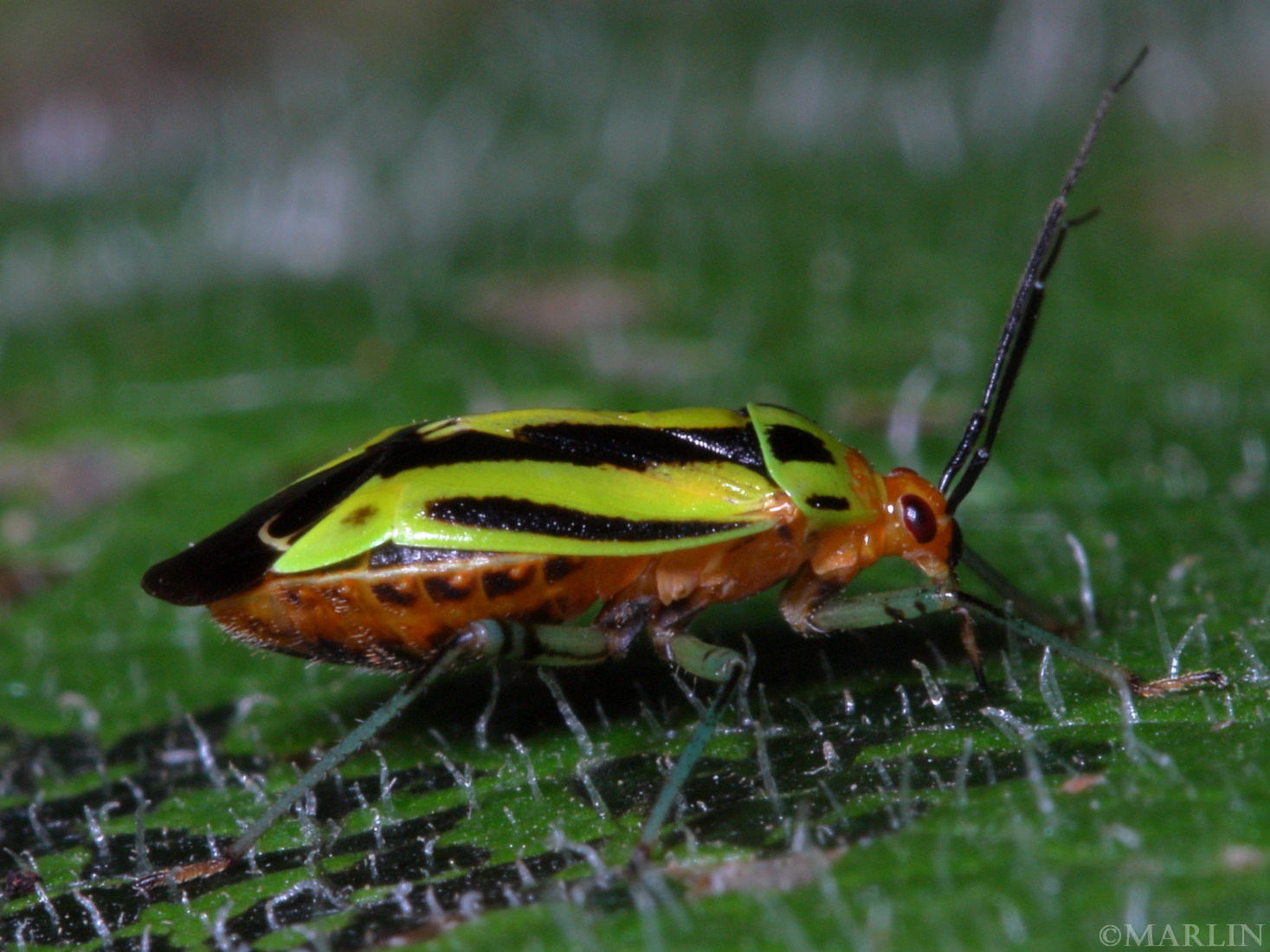
Most plant bugs are considered aesthetic nuisance pests since they rarely kill their host plants. However, leaf and flower distortion can be very severe and can greatly reduce the aesthetic value of landscape plants. Plant bugs insert their stylets into host plant tissues and inject a tissue dissolving saliva. They then suck out the liquefied plant tissues, much like other bugs suck the insides from their insect prey.
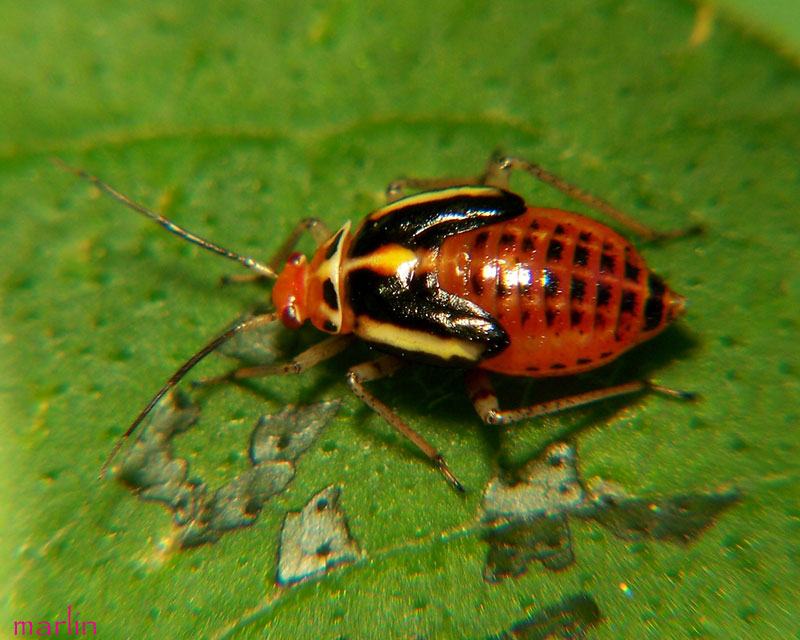
Four-lined plant bug nymph, about 5mm
The tarnished plant bug and four-lined plant bug are common sucking pests that attack a variety of bedding and perennial plants. The daisy and mint families are especially susceptible to attack. Both bugs are quick to fly and the nymphs quickly run to the under surface of leaves when approached. They damage plants by causing small (1/16 inch), round, sunken spots on the leaves. These spots occur when the leaf bugs kill the leaf tissues during feeding. When these spots are numerous, the entire leaf may curl and wither.
The tarnished plant bug has a light-green nymph and the adult has mottled brown colors. The four lined plant bug has a bright red-orange nymph and the adults are lime green with four black stripes.
Damage to plants usually occurs in the late-spring and early-summer when the nymphs are active. If this activity is several weeks before flower bud initiation, no damage will be evident at the time of flowering. However, early flowering plants can be severely damaged. These are the plants that need protection.
Since the plant bug nymphs cause most of the damage, control of this stage is suggested. Inspect plants early and try to detect the first signs of the sucking damage. Small numbers of nymphs can be dislodged from the plants into a container of soapy water. Higher populations are best controlled with a registered pesticide or insecticidal soap. Check the plants again in two weeks to catch any late emerging nymphs.
References
- Morton Arboretum, Four-lined Plant Bug
- Bugguide.net, Sehirus cinctus
Order Hemiptera: True Bugs number almost 5,000 species in North America, and 40,000 worldwide. They have mouthparts formed into a beak, adapted for sucking plant juices or the liquefied insides of their animal prey.
Suborder Auchenorrhyncha – Cicadas & Planthoppers
Suborder Sternorrhyncha – Aphids, scales, mealybugs, jumping plant lice.
Bugs Main | Bugs Index | Assassin Bugs | Plant Bugs | Ambush Bugs