Family Cleridae – Checkered Beetles
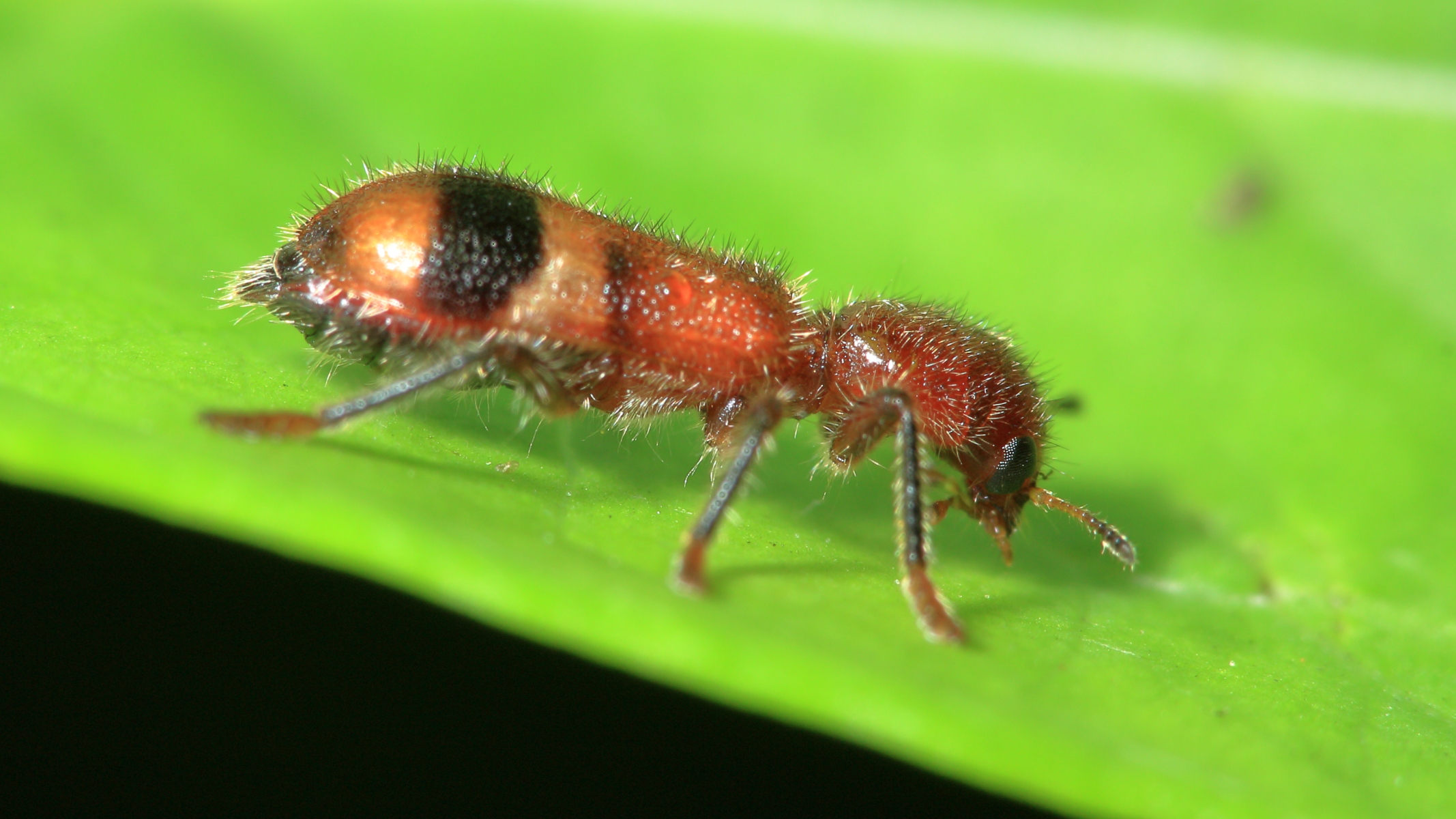
Enoclerus rosmarus Size= 8mm
The checkered beetles (Family Cleridae), are small insects found primarily in woodlands. The name “checkered beetle” refers to the conspicuous colorful bands across the back of the adults. Their rounded bodies are often covered with dense, short hairs (pubescence). Common species are between 10-15mm. There are about 250 described species in the U.S. and 2500 worldwide. The adults are fairly long-lived and can be seen for several months during the summer.
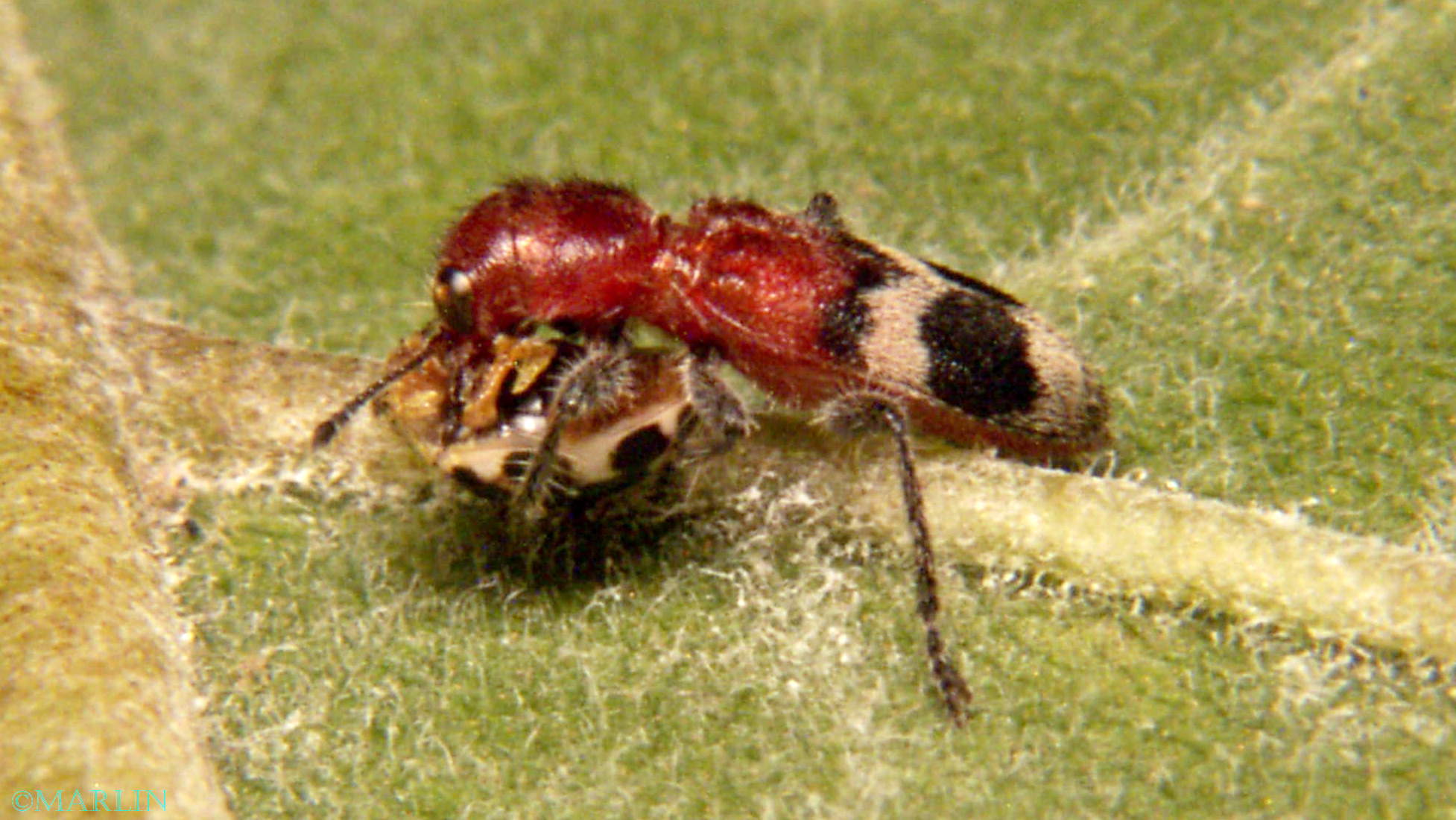
Enoclerus quadriguttatus attacks lady beetle
The majority of clerid beetles are predaceous on wood-boring beetles, especially bark beetles, and are very important natural controls of these forest pests. Adult clerid beetles feed on the adult wood-borers, while the larvae prey on the immature stages, including the eggs. Other species feed on grasshopper egg pods, a few have been reported as predators of gall insects, and one genus, Necrobia, has departed from the typical food habit of the family and are primarily scavengers.
Female beetles lay eggs on wood-borer-infested trees. The eggs are usually placed in the host entrance gallery or in cracks or crevices in the bark. The red or yellow, flat or rounded larvae that hatch from the eggs are covered with hairs and have horny projections on top of one body segment. The larvae search for prey in wood-boring insect tunnels, but they, too, can bore through dead wood themselves if necessary. After they have completed their larval development many species move to the base of the tree to pupate in earthen cells, created from soil and secretions from glands inside their mouths. Others remain in their hosts’ gallery or pupal cell. Development may take more than a year, or there may be one or more generations per year, depending on the life cycle of their prey. Depending on the species, the beetle may overwinter as adults, larvae or pupae.
*Footnote December 2025
Special thanks to Straight Dope Message Board members Tamerlane and Demostylus for identifying Enoclerus quadriguttatus for me in 2002. This was the very early internet era and insect ID photos were hard to come by. This page is one of the very first I posted on cirrusimage.com – Ed.
Beetles Index | Longhorns | Leaf Beetles | Soldier | Blister | Lady | Scarab
 Online since 2002