
 |
Family Magnoliaceae Index Magnolia Main | Tree Encyclopedia Being an ancient genus of about 210 species of flowering plants evolved before bees appeared. |
|
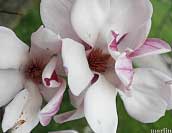 Saucer Magnolia |
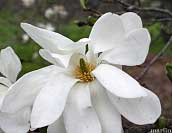 Green Star Magnolia |
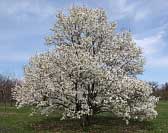 Anise Magnolia |
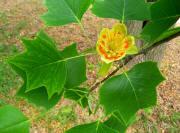 Tulip-Tree |
|
The earliest flowering plants date back about 130 million years. According to Cronquist Evolution and Classification of Flowering Plants, the most primitive of all living angiosperms belong to the subclass Magnoliidae. This subclass contains several primitive plant families, including the water-lily family (Nymphaeaceae), buttercup family (Ranunculaceae) and Magnoliaceae. Plants in the magnolia family have the following characteristics:
|
| Tree Encyclopedia / North American Insects & Spiders is dedicated to providing scientific and educational resources for our users through use of large images and macro photographs of flora and fauna. |
|
Magnoliaceae – Magnolia Family The earliest flowering plants date back about 130 million years. According to Cronquist Evolution and Classification of Flowering Plants, the most primitive of all living angiosperms belong to the subclass Magnoliidae. This subclass contains several primitive plant families, including the water-lilies (Nymphaeaceae), and buttercups (Ranunculaceae). Tree Encyclopedia | Tree Index | Magnolia Main |
