
American Plum – Prunus americana var. lantana
Family Rosaceae – Rose Family; Fruit Trees
American plum grows wild and as a cultivated fruit tree throughout its range.
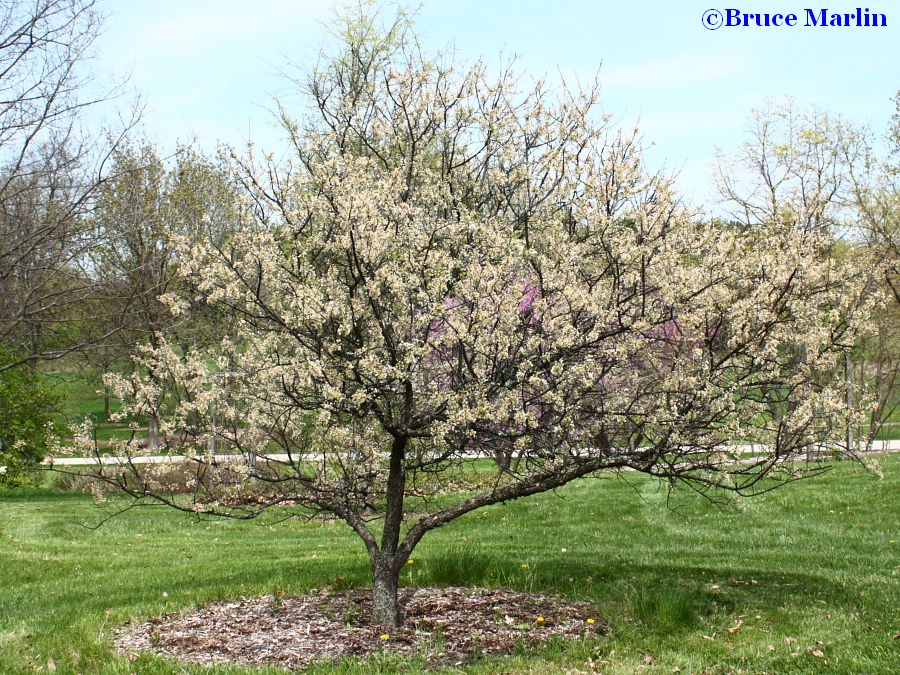 American Plum in bloom May 8th, near Chicago
American plum is a native, deciduous, sometimes thicket-forming, erect shrub or small tree. The growth habit of this species can vary considerably; plants range from shrubs approximately 3 feet (1 m) in height to arborescent individuals growing up to 32.8 feet (10 m). On the Great Plains this species typically grows from 9.8 to 26.2 feet (3 to 8 m) tall and is rarely treelike. In Utah, American plum forms thickets reaching heights of up to 16.4 feet (5 m), and treelike individuals are uncommon.
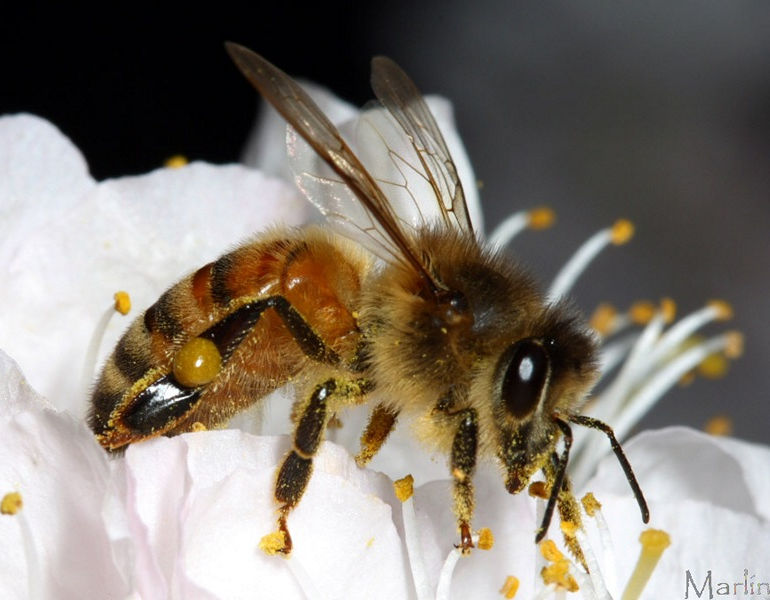 Honey bee on plum blossoms
American plum is distributed throughout much of northeastern Canada and a major portion of the United States, although it is less common west of the Great Plains. This native plum occurs from Massachusetts west to Manitoba and western Montana, south through the Rocky Mountains to New Mexico and Arizona, and eastward to northwestern Florida.
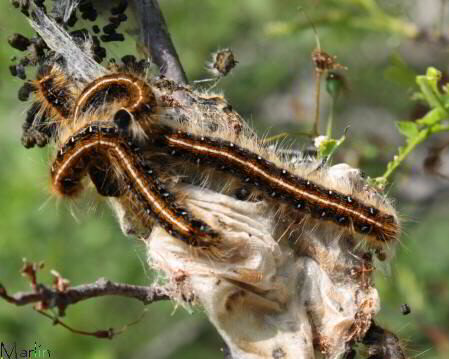 Plum is often infested with tent caterpillars in springtime. These pests can strip a tree of foliage in a matter of days. |
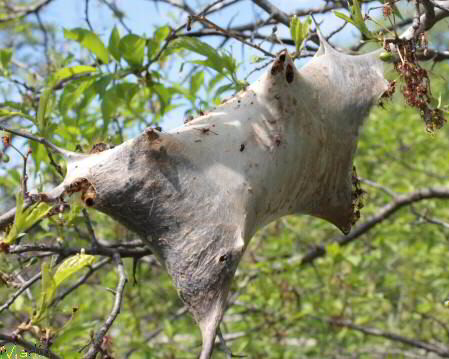 This tent was found on wild plum. It contained about 100 caterpillars and 2 lbs. of scat. |
Family Rosaceae – Rose Family; Fruit Trees
Containing Hawthorns, Apples, Pears, Cherries, Plums, Peach, Almond, Mountain-Ash and Whitebeam. Rosaceae is a large family of plants with about 3,000 species in ~100 genera. Crabapple and other fruit trees provide some of our most outstanding flowering ornamentals.