Subalpine Fir - Abies lasiocarpa
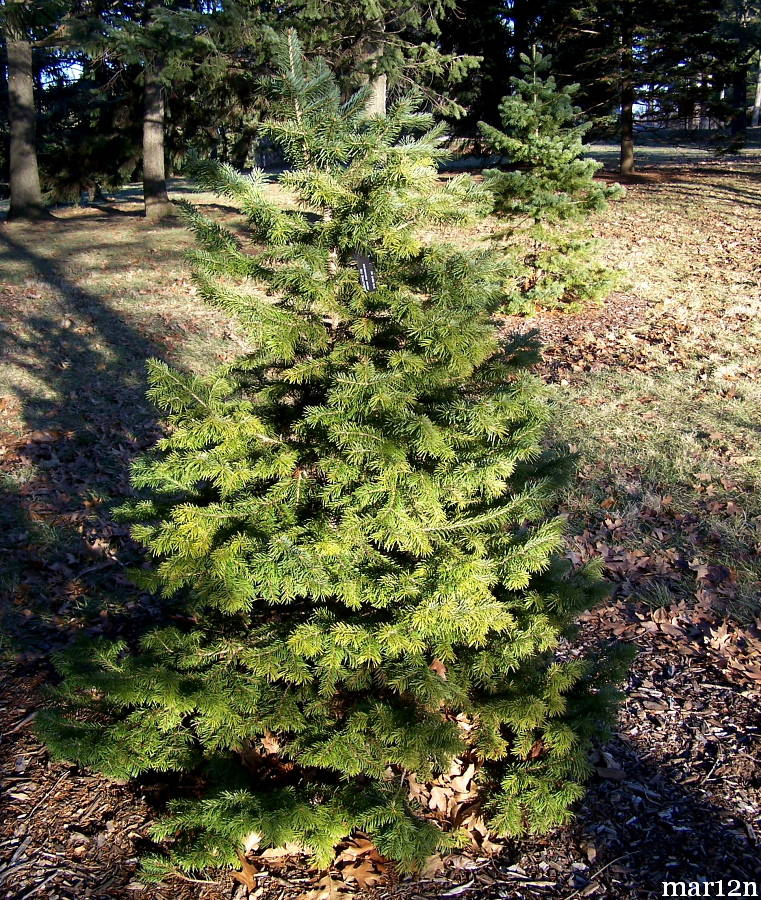
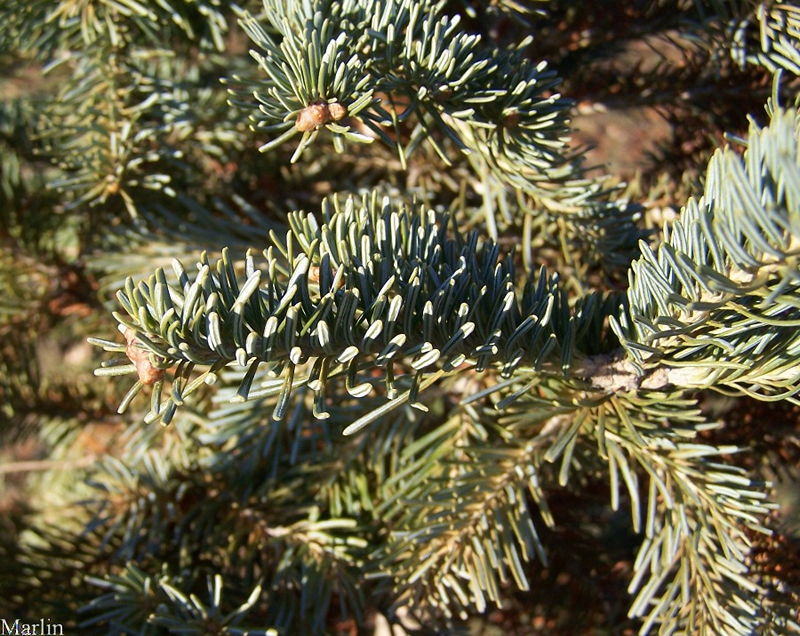
Subalpine fir is the smallest of eight species of true fir indigenous to the western United States. It is distinguished by the long, narrow conical crown terminating in a conspicuous spikelike point. It is a slow-growing tree living to 200 years. (2)


Subalpine Fir - Morton Arboretum Specimen started from seed

Camera location

41.812323° N, -88.066862° E

Google Maps - Live Maps - TopoZone - TerraServer-USA
Two varieties are recognized: the typical variety (Abies lasiocarpa var. lasiocarpa) and corkbark fir (Abies lasiocarpa var. arizonica). The latter, readily distinguished by its peculiar, whitish, corky bark, is restricted to the Rocky Mountains of southern Colorado and the Southwest. Other common names for the typical variety include balsam, white balsam, alpine fir, western balsam fir, balsam fir, Rocky Mountain fir, white fir, and pino real blanco de las sierras; corkbark fir, alamo de la sierra.

Subalpine fir is a widely distributed North American fir. Its range extends from 32° N. latitude in Arizona and New Mexico to 64° 30 N. in Yukon Territory, Canada. Along the Pacific coast, the range extends from southeastern Alaska, south of the Copper River Valley (lat. 62° N.), the northwestern limit; east to central Yukon Territory (lat. 64° 30' N.), the northern limit; south through British Columbia along the east slopes of the Coast Range to the Olympic Mountains of Washington, and along both slopes of the Cascades to southern Oregon. It is not found on the west slopes of the Coast Range in southern British Columbia or along the Coast Range in Washington and Oregon, but it does occur on Vancouver Island. It is also found locally in northeastern Nevada and northwestern California. Except where noted above, subalpine fir is a major component of high elevation Pacific Northwest forests.(2)
 

Flowering and Fruiting- Subalpine fir flowers are monoecious. Male flowers, usually abundant, are borne in pendulous clusters from the axils of the needles on the lower branchlets. Female flowers are fewer, borne erect and singly on the uppermost branchlets of the crown. Male flowers ripen, and pollen is wind-disseminated, during late spring and early summer. Cones are indigo blue when they open in mid-August to mid-October. Seed ripens from mid-September to late-October.

Seed Production and Dissemination- Subalpine fir may begin to produce cones when trees are 1.2 to 1.5 m (4 to 5 ft) tall and 20 years old, but under closed-forest conditions, seed production is not significant until trees are older and taller. Corkbark fir does not begin to bear cones until about 50 years old. Maximum seed production for subalpine and corkbark fir occurs in dominant trees 150 to 200 years old.

Subalpine fir is a good seed producer in the Pacific Northwest and in the Rocky Mountains of Idaho and Montana, with good to heavy crops borne every 3 years, and light crops or failures in between. It is as good a seed producer as most associated true firs, but not as good as the hemlocks and Engelmann spruce. In one 11-year study at four locations in the Cascades, subalpine fir cone crops, based on the following criteria, were rated medium to very heavy in 6 years and very light to failure in the other 5.


A number of cone and seed insects of subalpine fir have been identified but their relative importance, frequency of occurrence, and the magnitude of losses are not known. Some seed is lost from cutting and storing of cones by pine squirrels (Tamiasciurus hudsonicus fremonti), and, after seed is shed, small mammals, such as deer mice (Clethrionomys gapperi), mountain voles (Microtus montanus), and western chipmunks (Eutamias minimus), consume some seeds. However, the amount of seed lost to mammals, birds, and other causes are not known.

Cones disintegrate when they are ripe. Scales fall away with the large, winged seeds, leaving only a central, spikelike axis. Dissemination beginning in September usually is completed by the end of October in the Rocky Mountains. In the Pacific Northwest, seed dissemination begins in October and usually continues into November, but pitched-up cones may extend dissemination into December. Nearly all seed is dispersed by the wind.

Although subalpine fir grows under nearly all light intensities found in nature, establishment and early survival are usually favored by shade. In the absence of Pacific silver fir, grand fir, and mountain hemlock, subalpine fir will survive under closed-forest conditions with less light than Engelmann spruce, noble fir, and white spruce. When grown with Pacific silver and grand fir, and/or mountain hemlock, subalpine fir does not compete successfully under closed-forest conditions. It does not compete well with the spruces, lodgepole pine, or interior Douglas-fir when light intensity exceeds 50 percent of full shade.

Damaging Agents- Subalpine fir is susceptible to windthrow. Although, this tendency is generally attributed to a shallow root system, soil depth, drainage, and stand conditions influence the development of the root system. The kind and intensity of cutting and topographic exposure to wind also influence the likelihood of trees being windthrown.

Subalpine fir is attacked by several insects. In spruce-fir forests, the most important insect pests are the western spruce budworm (Choristoneura occidentalis) and western balsam bark beetle (Dryocoetes confusus). The silver fir beetle (Pseudohylesinus sericeus) and the fir engraver (Scolytus ventralis) may at times be destructive locally (25). In the Cascades, the balsam woolly adelgid (Adelges piceae), introduced from Europe, is the most destructive insect pest. This insect has caused significant mortality to subalpine fir, virtually eliminating it from some stands in Oregon and southern Washington.

Fir broom rust (Melampsorella caryophyllacearum) and wood rotting fungi are responsible for most disease losses. Important root and butt rots are Gloeocystidiellum citrinum, Coniophora puteana, Armillaria mellea, Coniophorella olivaea, Polyporus tomentosus var. circinatus, and Pholiota squarrose. Important trunk rots are Haematostereum sanguinolentum, Phellinus pini, and Amylostereum chailletii. Wood rots and broom rust weaken affected trees and predispose them to windthrow and windbreak.

Subalpine fir bark is thin, especially on young trees, and lower limbs persist after death. These characteristics make subalpine fir susceptible to death or severe injury from fire.

Special Uses
Throughout much of the Rocky Mountains, subalpine fir has no special or unique properties. In the high Cascades and in the Rocky Mountains of Idaho and Montana, it is a forest pioneer on severe and disturbed sites. By providing cover, subalpine fir assists in protecting watersheds and rehabilitating the landscape. Forests in which subalpine fir grows occupy the highest water yield areas in much of the West.

The species also provides habitat for various game and nongame animals, forage for livestock, recreational opportunities, and scenic beauty. However, these properties are indigenous to the sites where subalpine fir grows rather than to any special properties associated with the species.

Fir is used as lumber in building construction, boxes, crates, planing mill products, sashes, doors, frames, and food containers. It has not been widely used for pulpwood because of inaccessibility, but it can be pulped readily by the sulfate, sulfite, or groundwood processes. (2)


References:
1. NATIVE PINES OF EASTERN NORTH AMERICA / Karen R. Hall and Richard R. Braham / Department of Forestry / North Carolina State University
2. USDA Forest Service Silvics Manual Abies lasiocarpa
 

MORE TrEES


       web       www.cirrusimage.com

[Cirrus Home]    [Butterflies]    [Bugs]    [Beetles]    [Mantids]    [Spiders]    [Bees & Wasps]    [Dragon & Damselflies]    [Moths]   [Wildflowers]
[Fungi & Mushrooms]    [Flies]   [Butterflies of the World]  [Tree Encyclopedia]  [Invasive Species]   [Ticks & Mites]


© Red Planet Inc.