Olga Bay Larch – Larix gmelinii var. ‘olgensis’
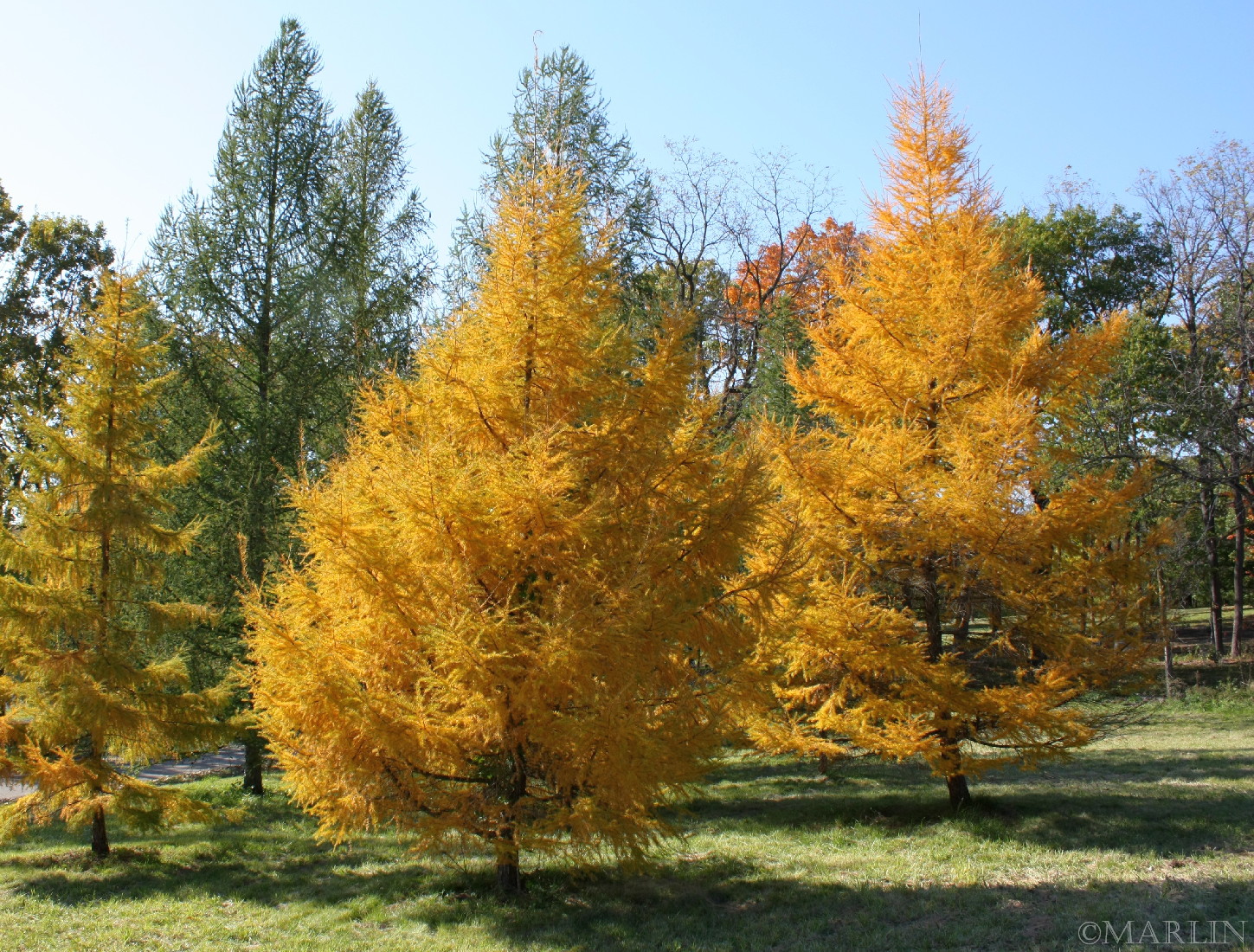
A charming trio of Olga Bay Larch in brilliant yellow fall colors at The Morton Arboretum
Family Pinaceae: Pine, Cedar, Spruce, Fir
Native to Siberia, this lovely conifer sheds its leaves, as all deciduous trees do.
Tree to 30 m tall and 80 cm dbh. In coastal areas, it usually has a twisted trunk and deformed crown. Young shoots are reddish-brown, covered with dense reddish dawn. Leaves to 3 cm long. Cones to 3 cm long, on short shoots with leaves. Each cone has up to 50 scales. Seed scales rounded, velvety. Pollination in spring, seeds mature in late summer (Harkevich and Kachura 1981). (1)
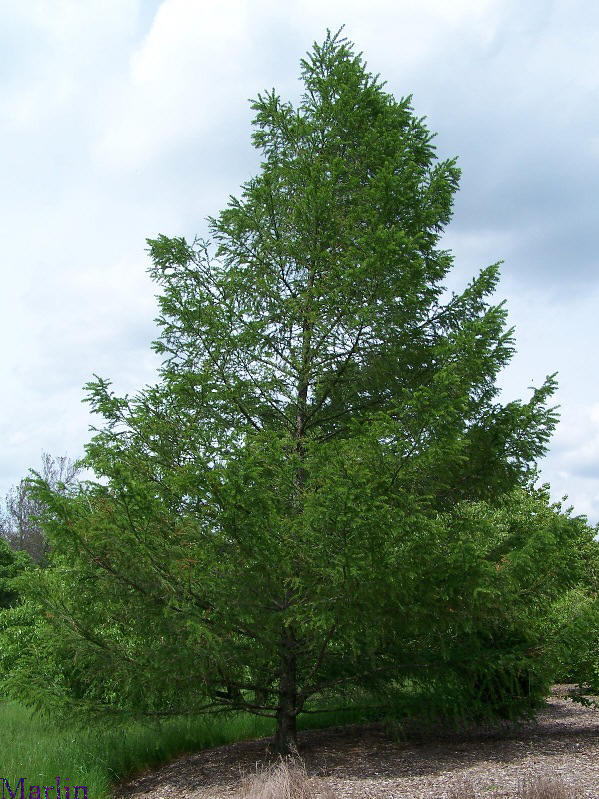 Olga Bay larch, from seed, is 15 years old [2]
The male and female cones are borne separately on the same tree; pollination is in early spring. The male cones are solitary, yellow, globose to oblong, 4-8 mm diameter, and produce wingless pollen. The mature female cones are erect, ovoid-conic, 2-4 cm long, with 30-70 erect or slightly incurved (not reflexed) and downy seed scales; they are green variably flushed red when immature, turning brown and opening to release the winged seeds when mature, 4-6 months after pollination. The old cones commonly remain on the tree for many years, turning dull grey-black. 
Because of its rot resistance, larch wood is especially valuable for posts, poles, railroad ties, and mine timbers. It is also used in many velodrome tracks, including the Manchester Velodrome and the Velodrome Krylatskoye in Moscow. [1]
References:
1. The Gymnosperm Database Larix gmelinii var. olgensis
2. USDA, ARS, National Genetic Resources Program. Germplasm Resources Information Network
3. National Audubon Society Field Guide to North American Trees
Trees Index | Pine Family | Beech, Oak | Nut Trees | Birch Family | Magnolias
Tree Encyclopedia / North American Insects & Spiders is dedicated to providing family-friendly educational
resources for our friends around the world through large images and macro photographs of flora and fauna.
Online since 2002