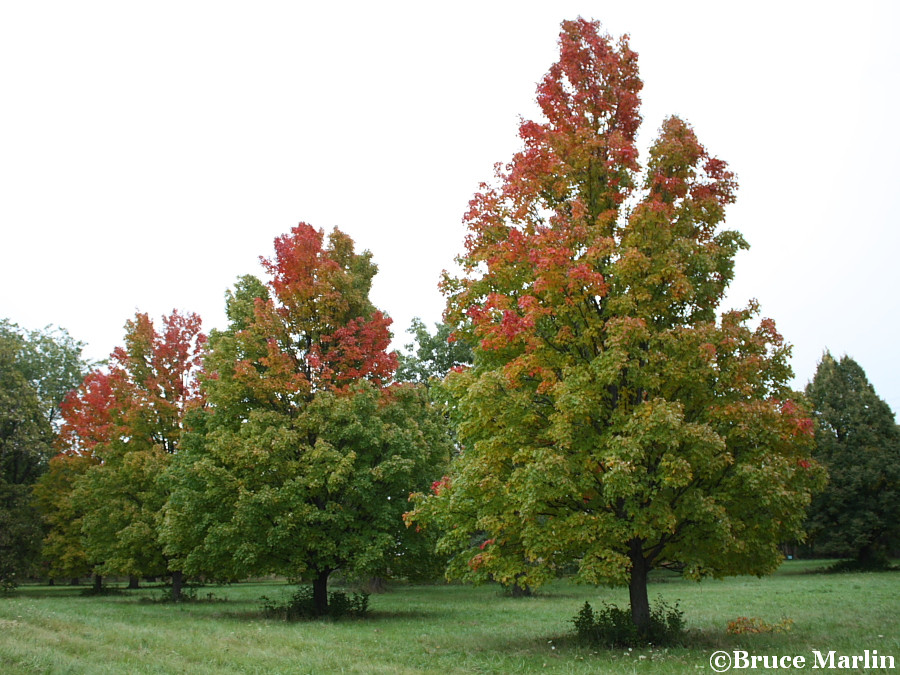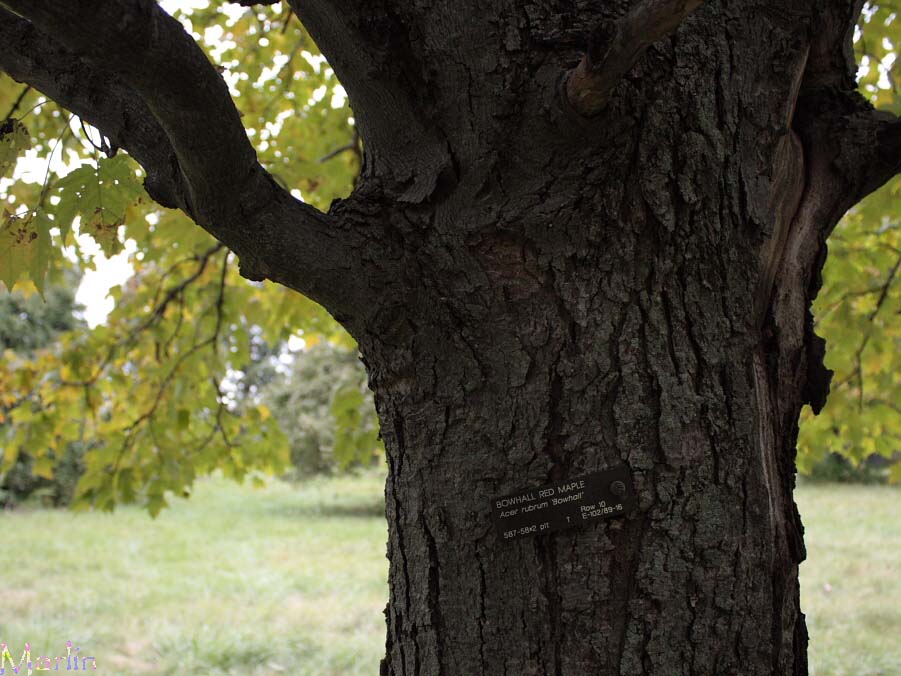
Red Maples A number of other cultivars are listed. Due to graft-incompatibility problems which cause the tree to break apart, preference should be given to cultivars produced on their own roots. In the northern and southern end of the range, choose cultivars with regional adaptation. Some cultivars are: `Armstrong' - upright growth habit, almost columnar, somewhat prone to splitting branches due to tight crotches, 50 feet tall; `Autumn Flame' - 45 feet tall, round, above average fall color; `Gerling' - densely branched, broadly pyramidal, about 35 feet tall when mature; `October Glory' - above average fall color, excellent tree, retains leaves late, 60 feet tall; `Red Sunset' - above average orange to red fall color, does well in the south in USDA hardiness zone 8, probably the best cultivar for the deep south, oval, 50 feet tall; `Scanlon' - upright growth habit; `Schlesinger' - good fall color, rapid growth rate; `Tilford' - globe-shaped crown.
Pests Leaf stalk borer and petiole-borer cause the same type of injury. Both insects bore into the leaf stalk just below the leaf blade. The leaf stalk shrivels, turns black, and the leaf blade falls off. The leaf drop may appear heavy but serious injury to a healthy tree is rare. Aphids infest maples, usually Norway Maple, and may be numerous at times. High populations can cause leaf drop. Another sign of heavy aphid infestation is honey dew on lower leaves and objects beneath the tree. Aphids are controlled by spraying or they may be left alone. If not sprayed, predatory insects will bring the aphid population under control. Scales are an occasional problem on maples. Perhaps the most common is cottony maple scale. The insect forms a cottony mass on the lower sides of branches. Scales are usually controlled with horticultural oil sprays. Scales may also be controlled with well-timed sprays to kill the crawlers.
If borers become a problem it is an indication the tree is not growing well. Controlling borers involves keeping trees healthy. Chemical controls of existing infestations are more difficult. Proper control involves identification of the borer infesting the tree then applying insecticides at the proper time. Twig borers can cause die-back of the terminal 8 to 12 inches of small-diameter branches. This is usually not serious and does not require control measures, but it can be a problem on young trees in the nursery.
Diseases Scorch may occur during periods of high temperatures accompanied by wind. Trees with diseased or inadequate root systems will also show scorching. When trees do not get enough water they scorch. Scorch symptoms are light brown or tan dead areas between leaf veins. The symptoms are on all parts of the tree or only on the side exposed to sun and wind. Scorching due to dry soil may be overcome by watering. If scorching is due to an inadequate or diseased root system, watering may have no effect.
Nutrient deficiency symptoms are yellow or yellowish-green leaves with darker green veins. The most commonly deficient nutrient on maple is manganese. Implanting capsules containing a manganese source in the trunk will alleviate the symptoms. Test soil samples to determine if the soil pH is too high for best manganese availability. Plants exposed to weed killers may also show similar symptoms. [2] |