Manchurian Crabapple - Malus baccata var. mandshuria [2]
Rose Family: Rosaceae
Cirrus Home | Trees Graphics | Trees Table of Contents | Rosaceae Table of Contents | Rosaceae Graphics]
  Manchurian Crabapple Fall Foliage
Manchurian crab fall foliage, near Chicago. The tree is hardy in zones 2-7 *

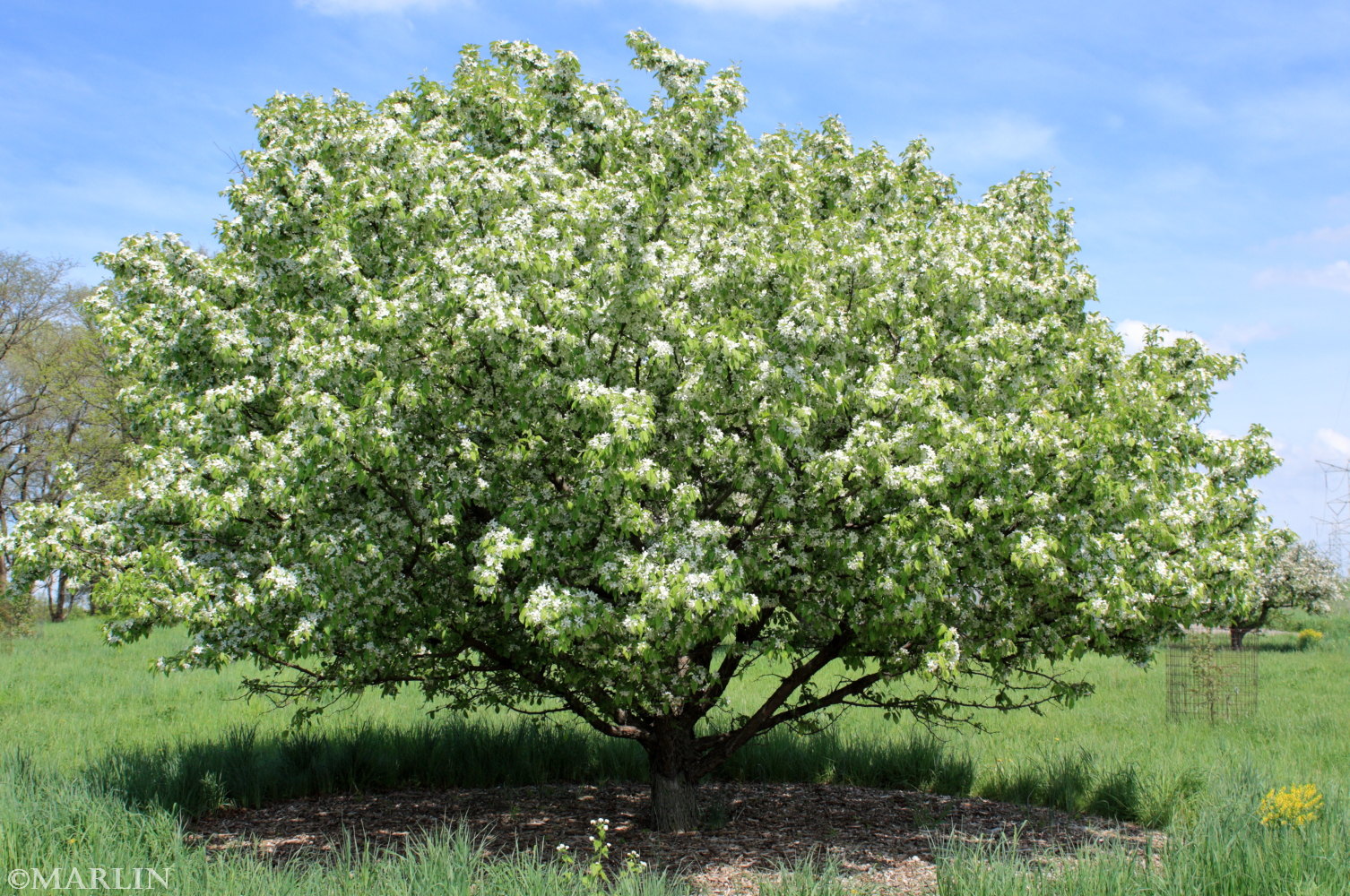
An outstanding flowering crab, Manchurian Crabapple is a deciduous tree with a rounded canopy of spreading branches, ultimately reaching 20 to 50 feet in height (Fig. 1). The very fragrant blooms appear in great abundance. Blooms are followed in fall by persistent fruits which are very popular with the birds. Some crabapples make a mess of a walk or driveway when the fruit falls.  [5]
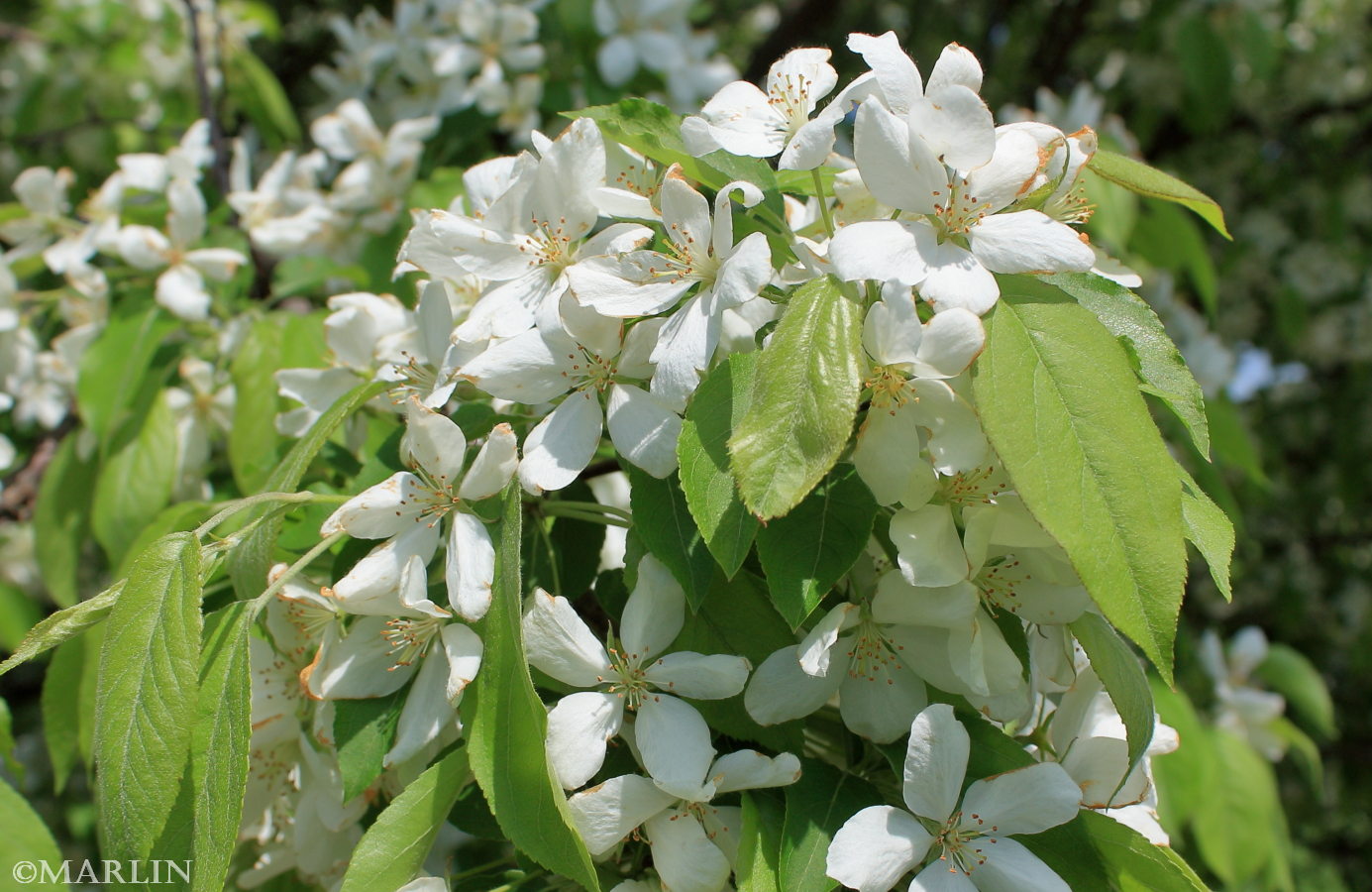
Siberian Crab is native to:
ASIA-TEMPERATE: Siberia: Russian Federation - Eastern Siberia [s.], Russian Far East: Russian Federation - Amur, Khabarovsk, Primorye, Mongolia, Manchuria, China: China - Gansu, Hebei, Heilongjiang, Jilin, Liaoning, Nei Monggol, Shaanxi, Shandong, Shanxi, Xinjiang, Xizang, Korea  [5]

Manchurian Crabapple - Malus baccata var. mandshuria, Morton Arboretum acc. 422-83*5

Foliage
Leaf shape: elliptic (oval)
Leaf type and persistence: deciduous
Leaf blade length: 2 to 4 inches
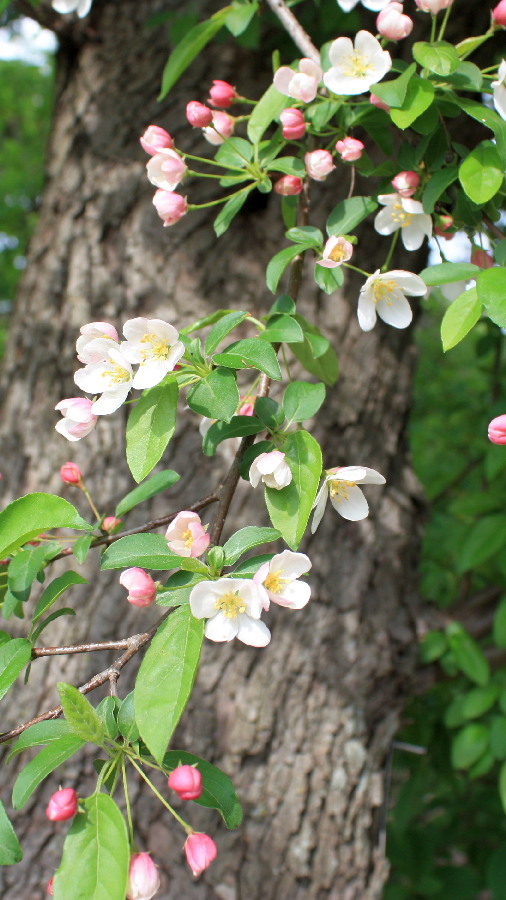
Leaf color: green / Fall color: yellow / Flower color: white
Flower characteristics: very showy, pleasant fragrance; spring flowering
Fruit shape: round / Fruit length: < .5 inch / Fruit covering: fleshy
Fruit color: red
Fruit characteristics: attracts birds; attracts squirrels and other huge monsters with gnashing teeth.
Trunk/bark/branches: droop as the tree grows, and will require pruning for vehicular or pedestrian clearance beneath the canopy.

Light requirement: tree grows in full sun. Drought tolerance: moderate. Aerosol salt tolerance: low. [5]

Siberian Crabapple - Malus baccata
Figure 1. Siberian Crabapple - Malus baccata, Morton Arboretum acc. 366-88*1  [2] 

Crabapples are versatile, small, ornamental trees used in the urban landscape. Crabapples bloom in spring, usually in May, bearing flowers that vary a great deal in color, size, fragrance, and visual appeal. It is common for flower buds to be red, opening to pink or white flowers. The fruit ripens between July and November, and varies in size from ¼”to 2” long or wide. Crabapples thrive in full sun and grow best in well drained, slightly acidic soils (pH 5.5-6.5); however, they will grow well in many soil types.

 No single cultivar can fulfill every landscaping need. Consider the following information when choosing a crabapple cultivar for your landscape. 

DISEASE
Disease resistance should be an important consideration. Many resistant cultivars avoid the most common disease problems. Before making a selection, keep in mind that not all crabapples do well in every location. Disease intensity varies from region to region, and disease strength can vary from year to year. There are four diseases that seriously affect crabapple:

Apple scab is one of the most serious diseases from an aesthetic standpoint, but usually not a serious threat to the health of the tree. It is a fungal disease, which develops in cool, wet springs. On susceptible crabapples, apple scab causes spotting of the leaves, premature defoliation, and unsightly spots on the fruit. Cedar- apple rust is a less serious leaf-spotting disease common to our native crabapple cultivars. It is usually a problem in areas where native junipers (Juniperus) are planted. Selecting resistant cultivars can control this disease.

Powdery mildew is a fungal disease that can cause considerable damage to leaves and fruit of susceptible cultivars without threatening the health of the tree. Poor air circulation, close association with susceptible apple cultivars, and wet, humid weather conditions will greatly influence disease incidence and severity. [3]

Fire blight, caused by the bacterium Erwinia amylovora, is a common and frequently destructive bacterial disease of pome fruit trees and other related plants. Pear and quince trees are extremely susceptible. Apple, crabapple, and Pyracantha species are also frequently damaged. Fire blight most commonly attacks blossoms, but it can also infect succulent tissues of shoots and water sprouts (root suckers). Infections may extend into scaffold limbs, trunks, or root systems, and may kill highly susceptible hosts. Less susceptible varieties may be severely disfigured.

Fire blight occasionally attacks hawthorn (Crataegus species), Spiraea, Cotoneaster, toyon (Photinia species), juneberry or serviceberry (Amelanchier species), loquat, mountain ash (Sorbus species), and other related plants. Fire blight infections can destroy limbs and even entire shrubs or trees. [5]

References
  1. Morton Arboretum, Crabapple: A Tree For All Seasons
  2. Manchurian Crabapple - Malus baccata var. mandshuria, Morton Arboretum acc. 422-83*5, photographed by Bruce Marlin
  3. Morton Arboretum, Crabapples for the Home Landscape
  4. USDA, ARS, National Genetic Resources Program. Germplasm Resources Information Network - (GRIN), Malus baccata
  5. B. L. Teviotdale, Pest Notes "Fire Blight" UC ANR Publication 7414
 
Custom Search

[Cirrus Home]  [Tree Encyclopedia] [Trees Alphabetic Table of Contents] [Family Rosaceae Table of Contents]

© Red Planet Inc.