Hedge Maple – Acer campestre
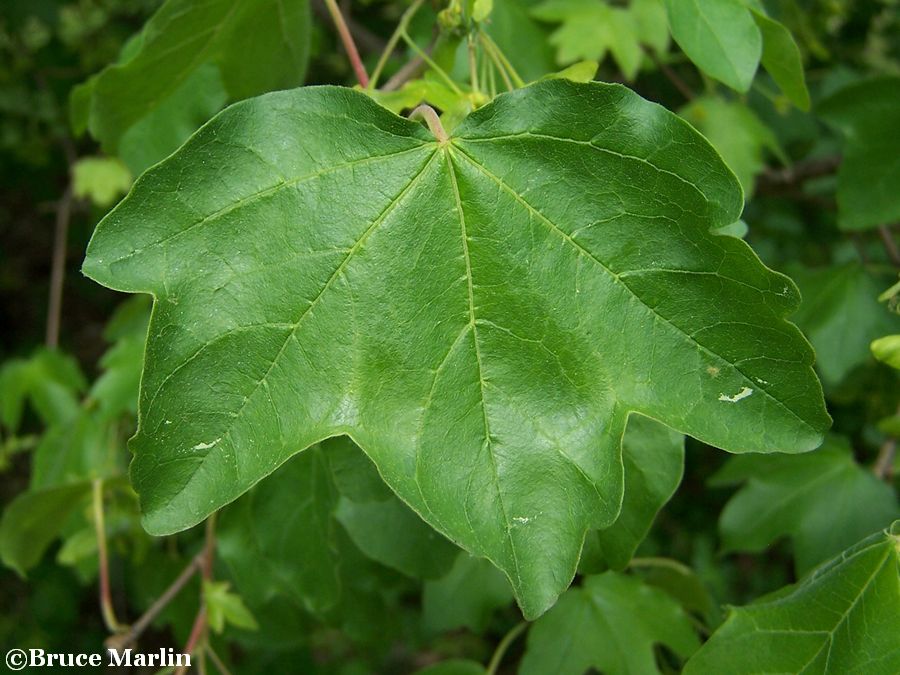
Family Aceraceae – also called field maple or common maple. Grows to 35 feet. Native to Europe, Near East, and Africa
Hedge Maple is usually low-branched with a rounded form, but there is considerable variability from one tree to the next. The branches are slender and branch profusely, lending a fine texture to the landscape particularly during winter. Lower branches can be removed to create clearance beneath the crown for vehicles and pedestrians.
The tree eventually reaches a height and spread of 30 to 35 feet but it grows slowly. The small stature and vigorous growth make this an excellent street tree for residential areas, or perhaps in downtown urban sites. However, it grows a little too tall for planting beneath some power lines. It is also suitable as a patio or shade tree because it stays small and creates dense shade. [2]
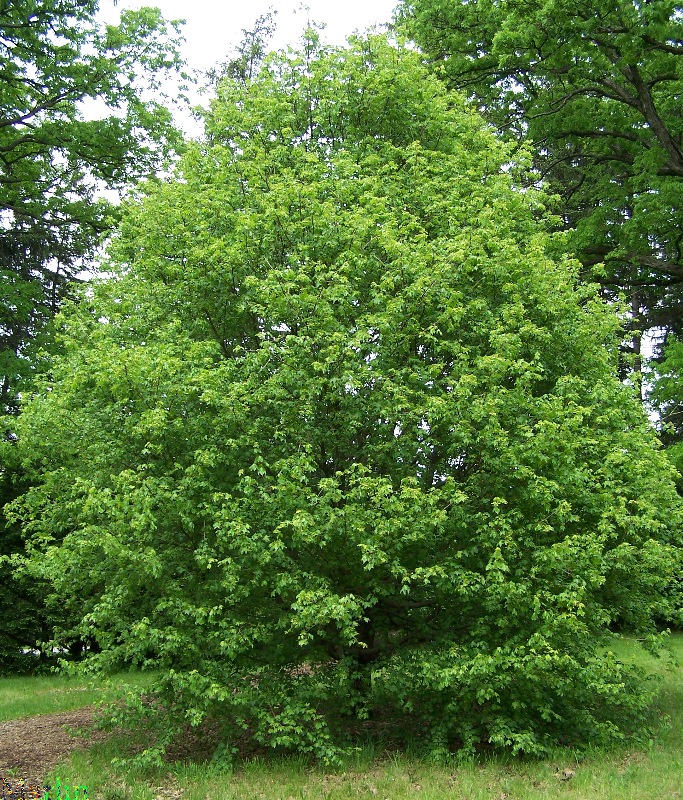
Hedge Maple Morton Arboretum acc. 257-81*2 is 28 years old
The tree excels in its ability to tolerate dry, alkaline soil but some protection from open winds is helpful. Not for highly compacted soil. It is well suited for and looks great during drought in a partially shaded location or on the north side of a building. The common name alludes to the plants tolerance of severe pruning, and it will make a dense, tall screen, whether pruned or not.
Branches are arranged closely on the trunk and some pruning is usually desirable to create a well-formed tree. The main ornamental feature is the bright yellow fall color. Prune early in the life of the tree to develop several major branches well-spaced along a central trunk. This will improve the durability of the tree compared to trees with branches originating from one point on the trunk.
ests
Pests are usually not serious, but there are some potential problems. Leaf stalk borer and petiole-borer cause the same type of injury. Both insects bore into the leaf stalk just below the leaf blade. The leaf stalk shrivels, turns black, and the leaf blade falls off. The leaf drop may appear heavy but serious injury to a healthy tree is rare.
Aphids infest maples, usually Norway maple, and may be numerous at times. High populations can cause leaf drop. Another sign of heavy aphid infestation is honey dew on lower leaves and objects beneath the tree. If not sprayed, predatory insects will usually bring the aphid population under control. Scales are an occasional problem on maples. Perhaps the most common is cottony maple scale. The insect forms a cottony mass on the lower sides of branches. Scales are controlled with horticultural oil sprays. Scales may also be controlled with other well-timed sprays to kill the crawlers. If borers become a problem it is an indication the tree is not growing well. Controlling borers involves keeping trees healthy. Chemical controls of existing infestations are more difficult. Proper control involves identification of the borer infesting the tree then applying insecticides at the proper time. [2]
References
1. Mark Brand, University of Connecticut Database
2. USDA Forest Service Fact Sheet ST-10, Acer campestre Hedge Maple
Family Aceraceae – Maples
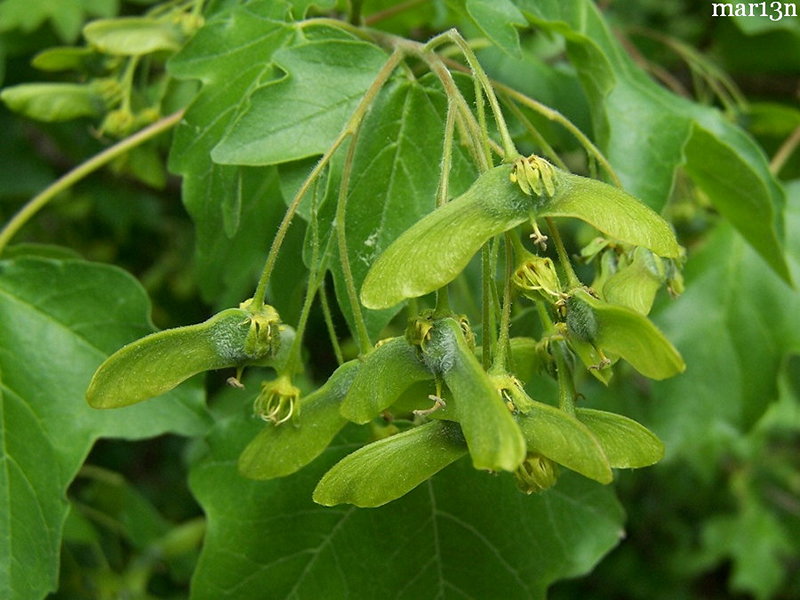
The Maples are some of our most familiar and beloved trees. Most are native to the far east: China, Japan, Korea, Manchuria. Maples produce a distinctive winged fruit called a samara, also commonly known as helicopters or whirlybirds.
Tree Encyclopedia | Tree Index | Maple Index | Elms & Zelkovas