Dwarf Japanese Garden Juniper – Juniperus procumbens ‘Nana’
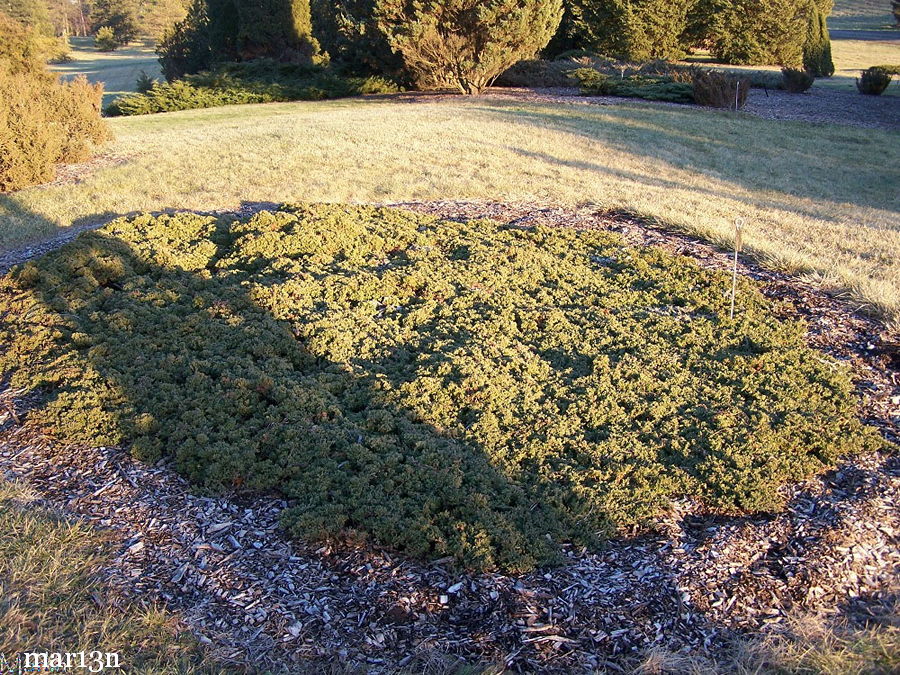
Juniperus procumbens is a low-growing juniper native to the southern Japan. A recumbent plant, it usually grows to 8″ if given adequate space, will bunch to 2 feet if crowded. The branches intertwine and form a dense mat. The leaves are arranged in decussate whorls of three; all the leaves are juvenile form, needle-like, 6-8 mm long and 1-1.5 mm broad, with two white stomatal bands on the inner face. It is dioecious. The cones are berry-like, globose, 8-9 mm in diameter, dark blackish-brown with a pale blue-white waxy bloom, and contain two or three seeds. They mature in about 18 months. The male cones are 3-4 mm long, and shed their pollen in early spring.
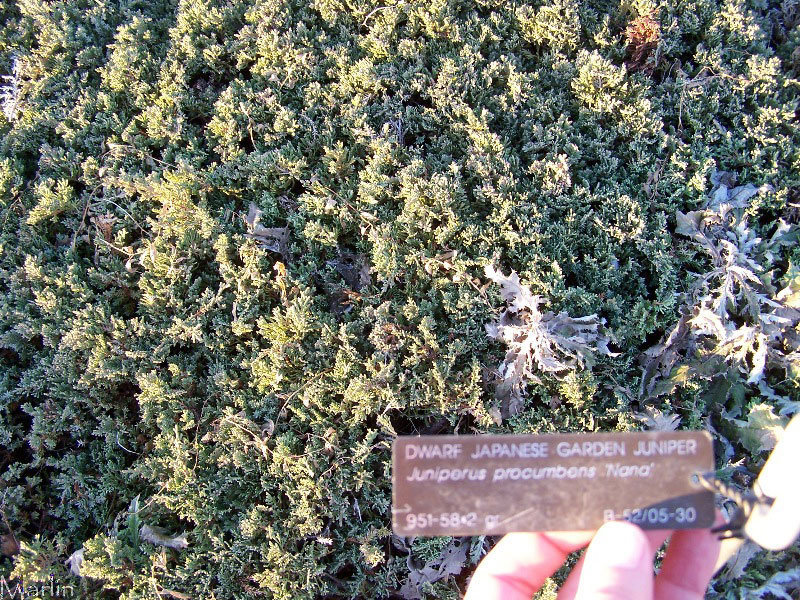
It is very a popular ornamental plant in Japan, and also occasionally elsewhere in temperate regions, used for ground cover in rockeries and as bonsai. “Nana’ – One of the finest groundcover junipers, this old favorite grows similar to the species, but is more dwarfed. Plants appear as a neat, mounded mat of small branchlets 2′ tall and up to 10′ wide. The plant mounds on itself with age and develops a slight purple cast in winter.” [2]
References
1. USDA, ARS, National Genetic Resources Program. Germplasm Resources Information Network
2. Mark Brand, UConn Plant Database
Family Cupressaceae – Redwood, Cypress, Arborvitae, Juniper
There are thirty (many monotypic) genera and 142 species in the family Cupressaceae, now widely regarded as including the Taxodiaceae, previously treated as a family. The Cupressaceae are found in the fossil record as far back as the Jurassic Period, about 210 million years ago. Cupressaceae Index | Tree Encyclopedia | Trees Index