Durmast Oak – Quercus petraea
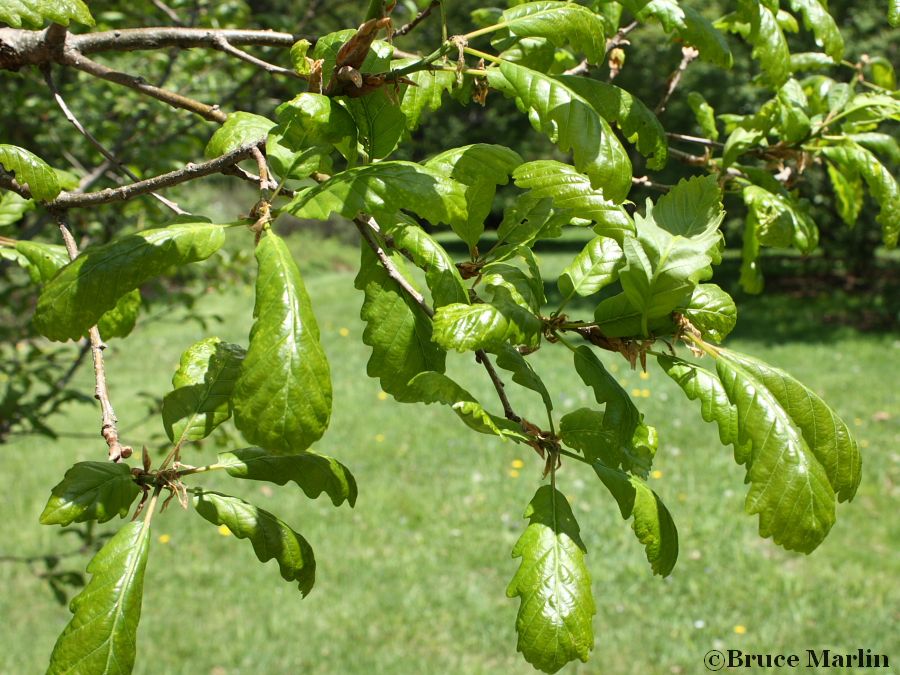
Syn. Quercus sessiliflora. Also called Sessile Oak, this tree can reach 40 meters.
Sessile Oak is a deciduous tree growing 40 m. Leaves are 7-14 cm long and 4-8 cm broad, evenly lobed with 5 to 8 lobes on each side, and a 1-2 cm petiole. Acorn 2-3 cm long and 1-2 cm broad, maturing in about 6 months. Sessile and English, or pedunculate oak (Quercus robur) hybridize naturally with each other, producing trees of intermediate characteristics, and this can make it difficult to accurately identify a tree to the species level.
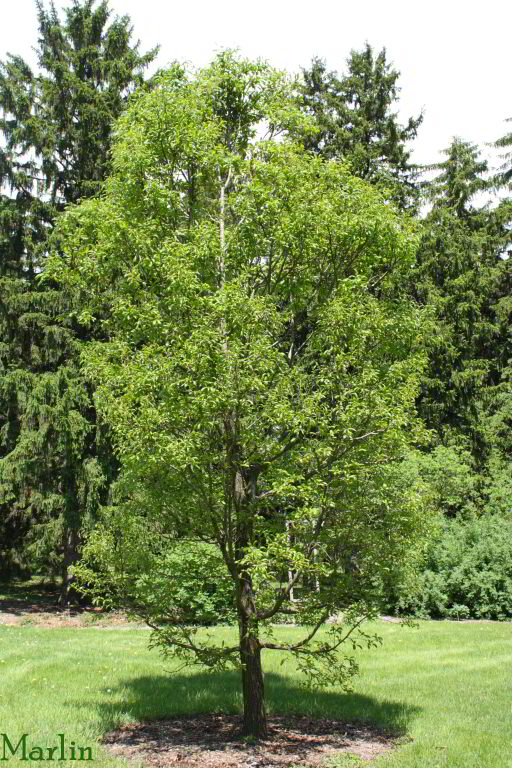
Durmast Oak, from seed, is 21 years old
USDA hardiness zones: 6B through 8. Height: to 40m / Spread: 10 to 15 meters. Crown uniformity: irregular outline or silhouette. Crown shape: round / Crown density: moderate. Growth rate: medium / Texture: medium [1]
References
- Edward F. Gilman and Dennis G. Watson, USDA, NFS Fact Sheet ST-554, Durmast oak
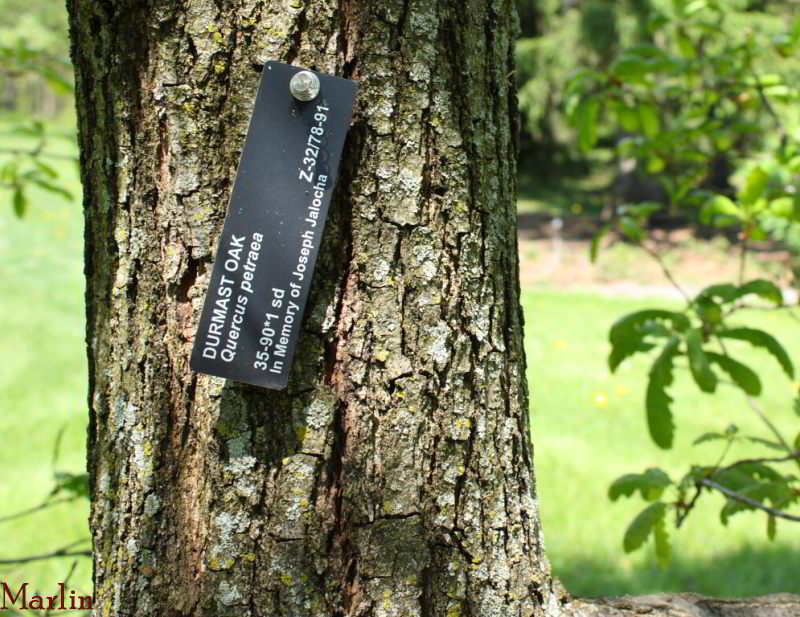
- Durmast Oak – Quercus petraea, Morton Arboretum acc.35-90-1, photos by Bruce Marlin
Family Fagaceae: Oak, Beech & Chinkapin
There are about 900 species in this family worldwide, about 65 trees and 10 shrubs of which are native to North America. Native to the northern hemisphere, the oak genus Quercus contains about 600 species, including both deciduous and evergreen species. Tree Encyclopedia | Tree Index | Fagaceae Index