Damask Red Horse Chestnut – Aesculus x carnea ‘Plantierensis’
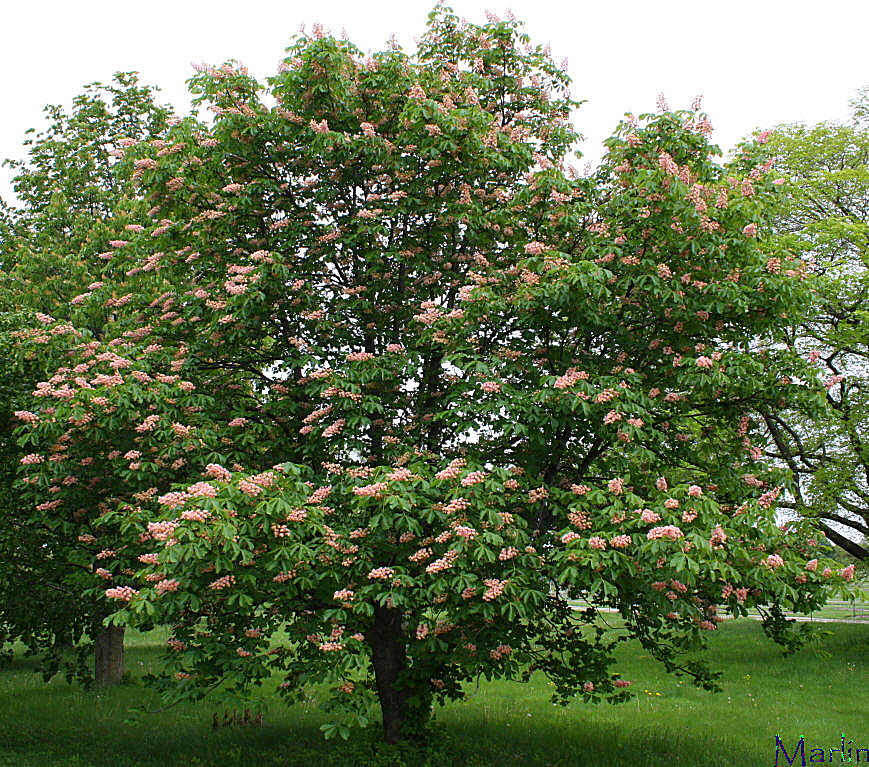
At 45 years old, this Damask Red horse chestnut is about 25 feet tall
This hybrid of A. hippocastanum and Aesculus pavia has very large, dark green leaves composed of five to seven leaflets, and will ultimately reach a height and spread of 30 to 40 feet.
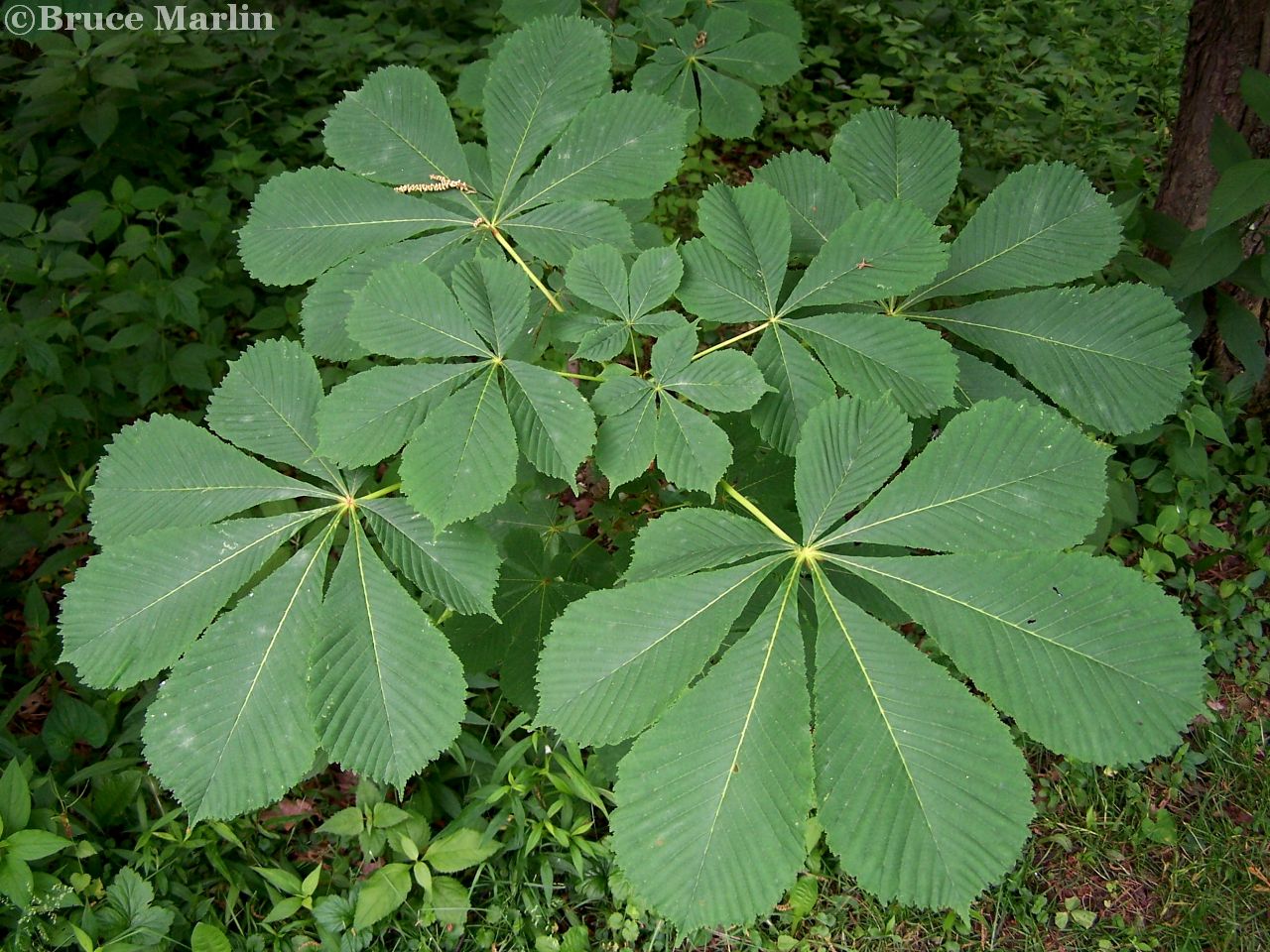
Common horse Chestnut leaf arrangement
Although deciduous, Red horse-chestnut does not produce any appreciable fall color and is well-suited for use as a specimen. The tree is quite striking with dark green, coarse-textured foliage. Pyramidal in shape when very young, Red Horse chestnut develops slowly into a round, very dense shade tree by five to seven years of age, and is outstanding in the landscape for its beautiful springtime display of blossoms. The multitude of pink to bright scarlet blooms appear on eight-inch-long panicles at each branch tip and are quite attractive to bees and hummingbirds. The prickly, rather messy, poisonous seedpods appear in fall.
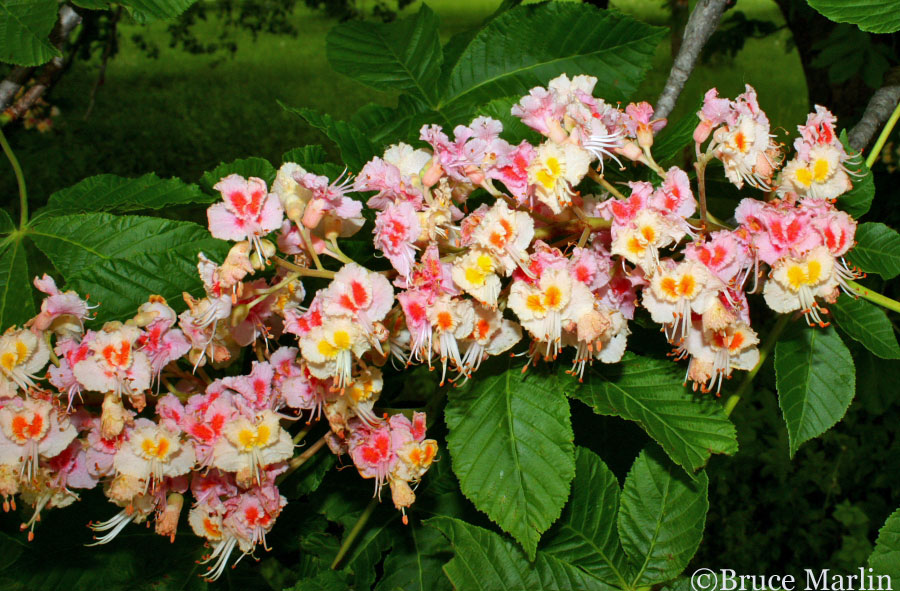
Flower color: pink; red, pale yellow with bright yellow centers. Flower characteristics: spring flowering; very showy
Red horse chestnut will grow in full sun or light shade and prefers moist, well-drained, acid soils but grows in slightly alkaline soil. Plants are moderately tolerant to drought, wind, and salt and resist the heat of the south very well. It holds up well in urban areas, even in restricted and compacted soil spaces. Red Horsechestnut appears to be less susceptible to disease than either of the parents. [2]
DESCRIPTION
Height: 30 to 45 feet
Spread: 30 to 45 feet
Crown uniformity: symmetrical canopy with a regular (or smooth) outline, and individuals have more or less identical crown forms. Crown shape: round; pyramidal
Crown density: dense
Foliage
Leaf arrangement: opposite/sub opposite. Leaf type: palmately compound. Leaflet margin: serrate. Leaflet shape: oblanceolate. Leaflet venation: pinnate. Leaf type and persistence: deciduous. Leaflet blade length: 4 to 8 inches. Leaf color: green. Fall color: no fall color change.
References:
1. Damask Red Horse Chestnut, Morton Arboretum acc. 520-65*2, photos by Bruce Marlin
2. Edward F. Gilman & Dennis G. Watson, USDA Forest Service Fact Sheet ST-65 “Red Horsechestnut”
3. Flora of China, Aesculus turbinata
Family Hippocastanaceae – Horse Chestnuts & Buckeyes
Consisting of three genera a 15 species, this small family is sometimes lumped together with Aceraceae (maple) in family Sapindaceae. Many are native to Europe, Asia, and North, Central, and South America. Tree Encyclopedia | Tree Index