Cornelian Cherry – Cornus mas
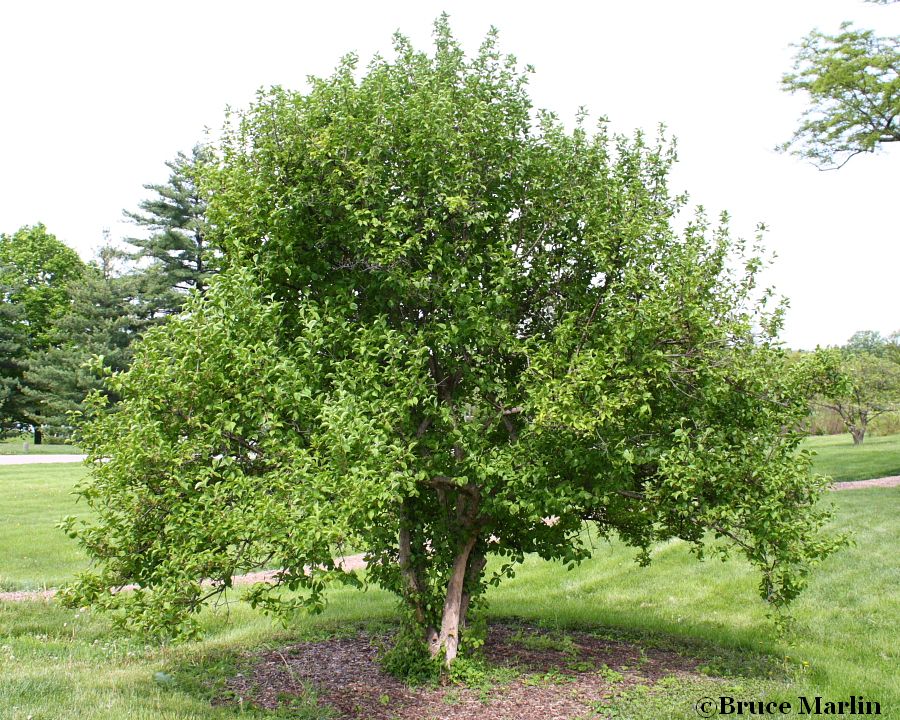
This dogwood is noted for its very early spring flowers. It grows to 15 feet tall by 20 wide.
Cornelian cherry prefers moist, well-drained soil, and grows best in full sun, but is very tolerant of drought, poor or dry soils, and heat. Being a member of the dogwood family it has virtually no disease or insect pest problems. Small yellow flowers appear in March, before foliage. Small oblong fruits turn bright cherry red in July, but are generally inconspicuous, except to the birds and squirrels that devour them with relish [1].
Often touted as an attractive alternative to Forsythia, cornelian cherry is used in landscapes in windbreaks or as a medium-large specimen or ornamental. It can be grown as a multi-trunked tree or large shrub.
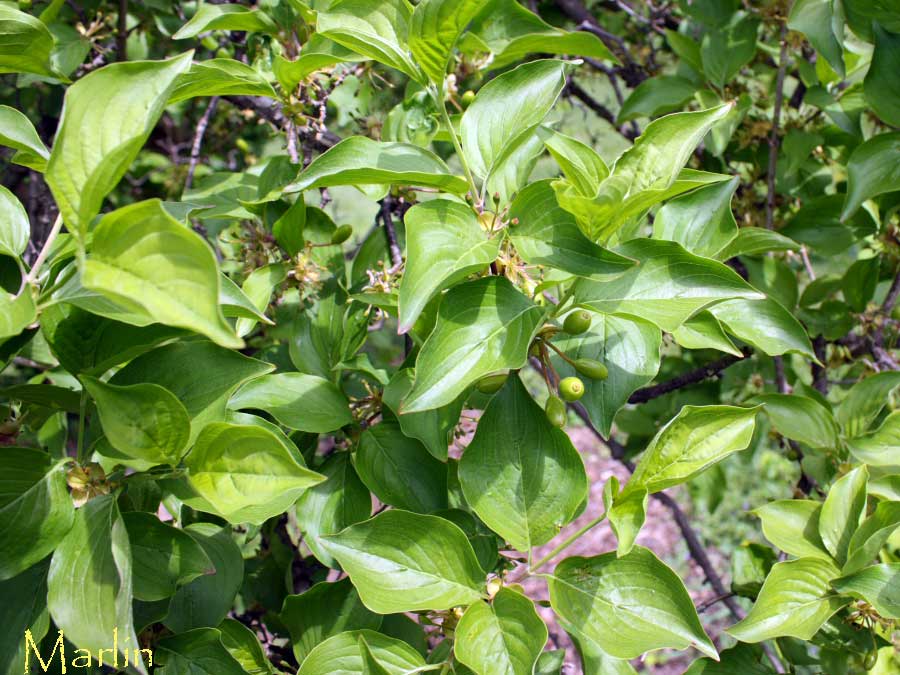
The wood of C. mas is so dense it does not float in water. This property makes it appropriate for tool handles, parts for machines, etc. Cornus mas was used from the seventh century B.C. onward by Greeks to construct spears, javelins and bows, the craftsmen considering it far superior to any other wood. [2]
The composition of the family Cornaceae has been a matter of much controversy among taxonomists for many years. Many sources, i.e. Flora of China treats the family as consisting of a single genus, Cornus, [1] while others include 17 or more genera. Cornus L. sensu lato consists of 55 species that are mostly trees and shrubs and rarely perennial herbs with woody rhizomes [2].
The USDA Plants Database includes Cornus, Aucuba, Campotheca, and Nyssa (tupelo) genera in the family [3].
The fruit of some species is used for food or as a source of industrial oil. Cornus mas is cultivated in China for medicinal uses.
References
1. Ohio State University, “Cornus mas”
2. Wikipedia “Cornelian Cherry”
3.Excerpts from Morton Arboretum articles used with permission
Trees Index | Family Cornaceae – Dogwood family | Fruit Trees | Nut Trees