Castor-Aralia – Kalopanax pictus
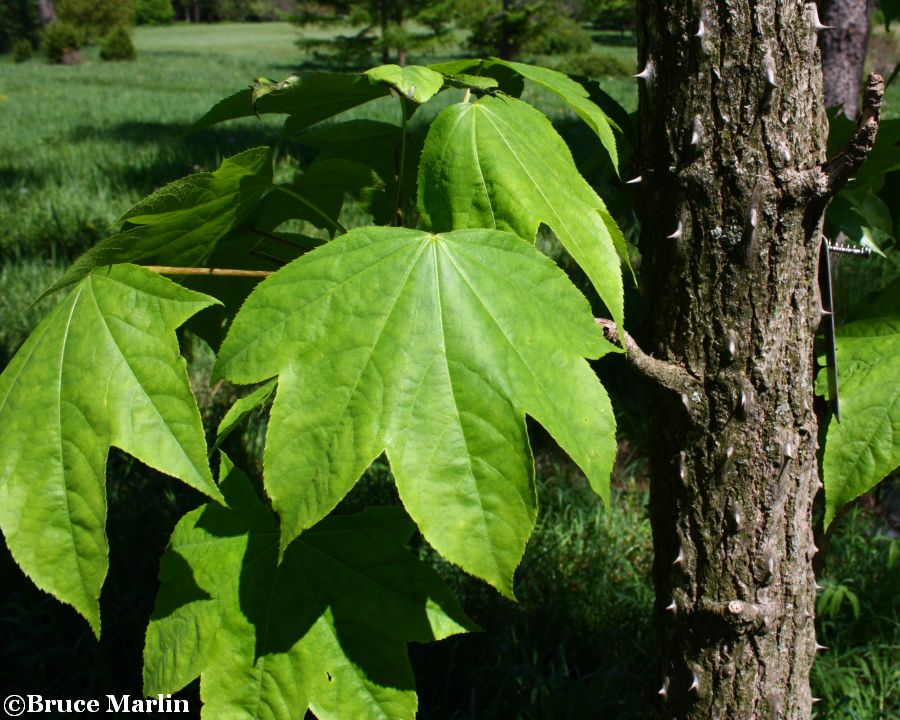
Castor aralia has 5-7 lobed leaves and wicked thorns
Family Araliaceae – Ivy or Ginseng Family. The Araliaceae comprise about 70 genera and 700 species of flowering shrubs, trees, climbing vines and herbs. The fruit is a berry or (rarely) a drupe (one-seeded fruit). Castor-aralia is native to China, Korea and Japan. A slow-growing deciduous tree growing to 60 ft. and spreading equally wide under cultivation, young trees have a coarse, open growth habit. Mature trees fill in their branches and foliage into a robust, rounded crown forming dense shade.
One-inch diameter flowers appear in dense, 12 to 24-inch-long terminal panicles and attract quite a few bees. The small black fruit which ripens in early fall is eagerly consumed by birds. Autumn colors are not showy, faint red [3]. (I’ll try to visit this tree in the fall.)
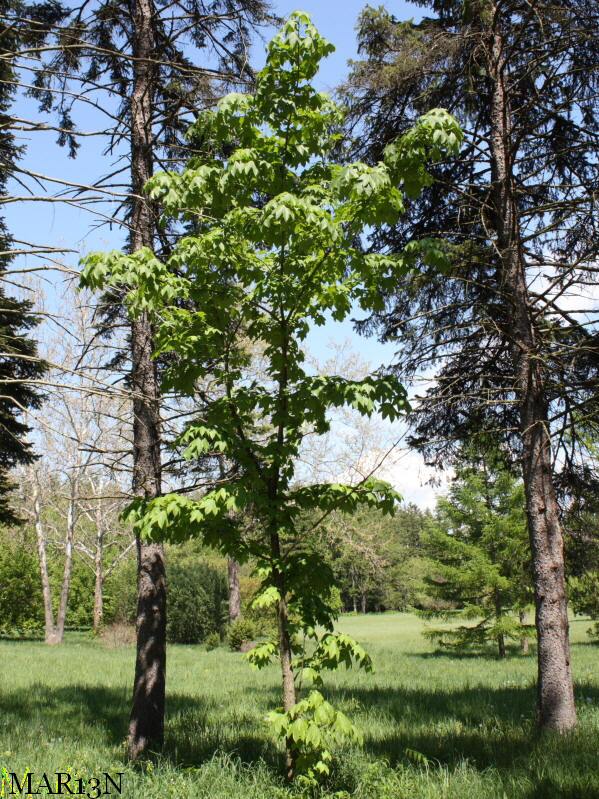
A long-lived tree, Castor-Aralia should be grown in full sun on well-drained soil but will tolerate alkaline soil. Seeds germinate readily in the landscape. The large size and coarse texture make it best suited for large-scale landscapes, such as golf courses, parks, business complexes and campuses. [3]

References:
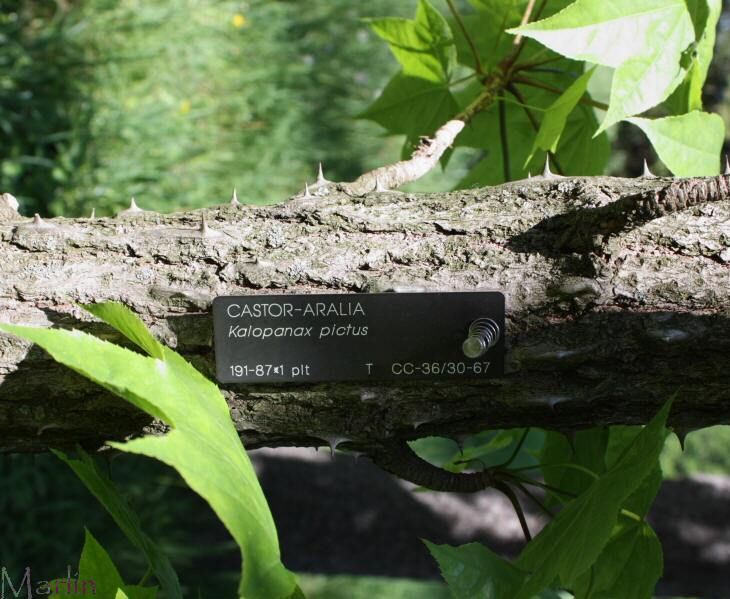
1. Kalopanax pictus, Morton Arboretum accession 191-87*1, photographed May 3, 2010 by Bruce Marlin
2. Ricinus communis photograph courtesy Geographer under Creative Commons Attribution 1.0 Generic license
3. Edward F. Gilman and Dennis G. Watson, USDA Forest Service Fact Sheet ST-335, “Kalopanax pictus”
Tree Encyclopedia
Trees live longer than any other organism on earth, and trees are the largest organisms on the planet. Trees have been living on Earth for more than 370 million years, and today can be found almost everywhere from the Arctic Circle to the Sahara Desert.
Tree Encyclopedia | Trees Index | Fruit Trees | Nut Trees
