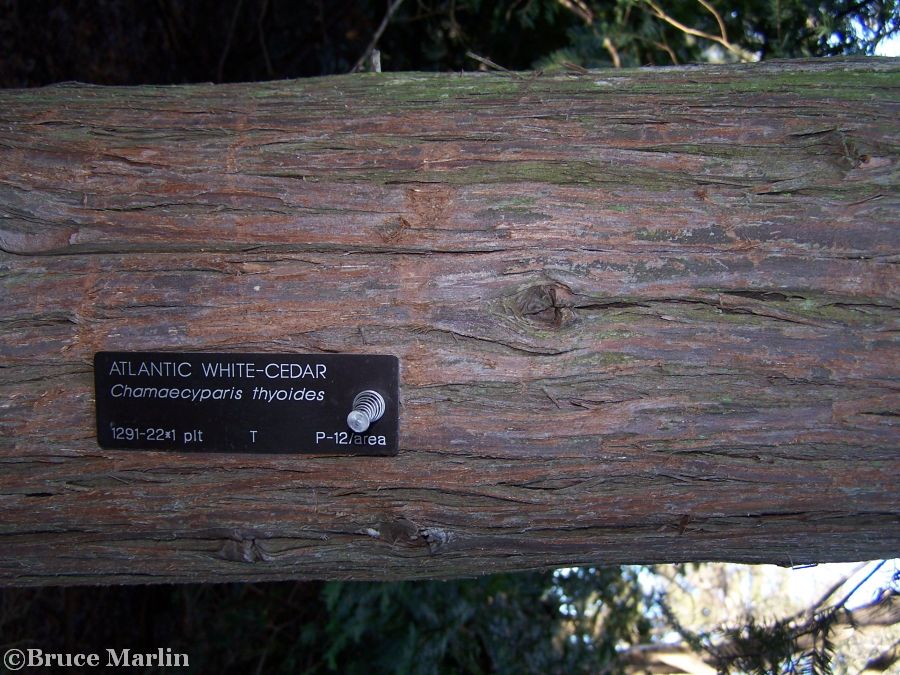
Atlantic White-Cedar - Chamaecyparis thyoides
Cupressaceae – Cypress family
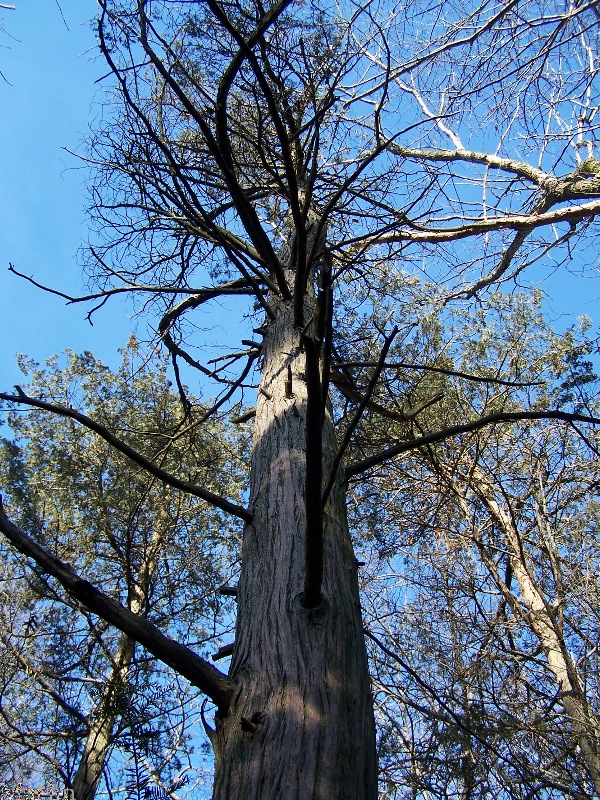
Atlantic white-cedar is a small to medium-sized, columnar evergreen tree which reaches 40 to 60 feet (12-18 m) in height and 36 inches d.b.h. Individuals may occasionally reach 120 feet (37 m) in height and 60 inches (152 cm) in diameter. Plants are long-lived and can reach 1,000 years of age. (3)


This Morton Arboretum specimen is 85 years old

Atlantic white cedar is one of only six species in this genus. Only three of the six are native to the continent, and two of them are west coast species. This leaves Atlantic white cedar as the only representative in the East, where it occurs in a narrow band along the Atlantic coast. Atlantic white cedar is an evergreen with scaly leaves that occur in a flat fern-like appearance. This species usually grows in very dense, solid stands, and has small rounded cones.
Atlantic white cedar can be confused with arborvitae (commonly called northern white cedar (Thuja occidentalis)) which also occurs in the region where the ranges overlap in New York and New England. In Atlantic white cedar, the evergreen leaves are paired and have short points on the tip. Arborvitae has leaves that are more rounded-appearing to the naked eye but also have short points when viewed closely or with a lens. Arborvitae has cones of similar size but are more elongated than those of Atlantic white cedar.

Atlantic white cedar is adapted to acid (pH 5.5 or lower), wet, lowland sites within 200 feet elevation of sea level. The growing season is about 140 days or longer. The habitat of this species is very limited, and increasingly rare due to coastal development. Associated trees include red maple, black gum, white pine, hemlock, gray birch, and pitch pine. Associated shrubs include lowbush and highbush blueberry. The great range in latitude that white cedar occupies (from Maine to Florida) helps account for the broad species association.
Arborvitae has a much broader longitudinal and elevational range, and is adapted to soils that are slightly acid to alkaline. Arborvitae grows on upland and lowland sites, and in areas with growing seasons as short as 30 days up to 200 days. Both species can be grown on wet, lowland sites with moderate acidity. (2)


Ancient white-cedar logs buried in swamps have been mined and found well preserved and suitable for lumber. Pioneers prized the durable wood for cabin logs, floors and shingles. During the Revolutionary War, the wood was burned for charcoal for gunpowder.
This species is a highly preferred food of deer during winter stress periods. It can easily be browsed out as seedlings or saplings with extensive damage done.

Due to the dense stands which white cedar often creates, it should not be surprising that 8-9 million seeds per acre may be disbursed in a decent seed crop. These seeds are winged and very light, and may be carried long distances by strong winds. Seed dormancy is common and seed can remain viable in the forest litter for many years. Light and moisture are required for germination to occur, and continuous moisture appears to be mandatory. Seedlings grow to saplings at the rate of about 12 inches per year on favorable sites with open but moist conditions. Seedlings are very vulnerable to crowding from other species.
White cedar seedlings are not commonly grown in the nursery, so little is documented about the size and age of transplants. It is likely that the 1-0 class would be preferred as bare-root stock. White cedar has a shallow root system, so suitable planting sites must have abundant moisture very close to the surface.

Site selection is critical to the success of white cedar. Moisture must be reliable, and competition from other species must be controlled. The site must also have protection from high winds or else severe wind-throw will result. Fire will readily kill white cedar if it gets into the crowns. Finally, heavy ice and snow will often break or topple young trees. Deer will preferentially browse white cedar. Beaver presence favors white cedar as deciduous species are preferentially cut by them, leaving the cedar saplings or poles. (2)

Common names:


Economic importance:


Native:


Synonyms:


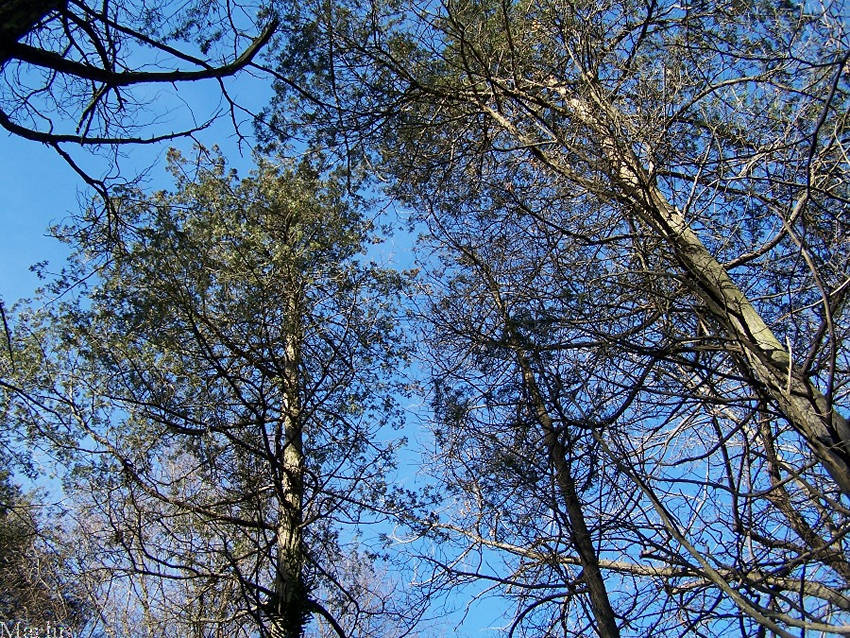
This is a dense stand of Atlantic white-cedar at the Morton Arboretum

Atlantic white-cedar is listed as a rare plant in Virginia where timber harvest has reduced its numbers. It may also serve as a "habitat indicator" for several other rare plants. In parts of Florida, many rare or endemic plants are associated with Atlantic white-cedar stands. The light brown, straight-grained wood of Atlantic white-cedar is lightweight, buoyant, and easily worked. It is fragrant, repels insects, and is resistant to decay. Atlantic white-cedar has been logged heavily since the Revolutionary War for fuels, ship-building, shingles, milled lumber, charcoal, household items, barrels, pails, tubs, water tanks, and duck decoys. The wood of Atlantic white-cedar is currently used for telephone poles, posts, pilings, ties, siding, boat railing, decking, lawn furniture, and paneling.

Atlantic white-cedar is a preferred deer browse in many areas. In lowland sites of New Jersey, deer often browse plants during the winter. Seedlings are especially favored and may be killed by intense deer use. Meadow mice occasionally browse the stems and often girdle seedlings. Trees serve as territorial marking posts for black bears in parts of the South.

Atlantic white-cedar provides cover for a variety of birds and mammals. The yellow-throated warbler, prairie warbler, and hooded warbler nest close to the ground in Atlantic white-cedar stands. Cavities provide nesting areas for the pileated woodpecker.  Atlantic white-cedar has potential value for rehabilitating certain disturbed wetland habitats. It has been planted at Tennessee Valley Authority impoundments along shorelines within the fluctuation zone.

Atlantic white-cedar is attractive and hardy and is often planted as an ornamental. More than 19 cultivars are now available. Atlantic white-cedar is used locally as a Christmas tree in parts of the South. 

Timber harvest: Wetland drainage and heavy cutting has greatly reduced Atlantic white-cedar, and in many areas harvested stands have been maintained in an immature and degraded condition. Harvesting on a commercial scale is now generally limited to parts of North Carolina. Atlantic white-cedar often reestablishes in dense stands after clear cutting. Following clear cutting in the Great Dismal Swamp, seed stored in the upper 1 inch (2.5 cm) of peat germinated at a rate of more than 3,574,840 per acre (8,640,000/ha) [19]. The following guidelines have been recommended for harvested Atlantic white-cedar sites: (1) remove most of the slash, (2) allow periodic fires, (3) control deer browsing if necessary, and (4) prevent the establishment of competing vegetation. (3)

References
1. USDA, ARS, National Genetic Resources Program.
Germplasm Resources Information Network - (GRIN)

2. USDA NRCS Plant Fact Sheet Atlantic White Cedar
3. USDA Fire Effects Information Atlantic White Cedar


       web      www.cirrusimage.com