Toringo Crabapple - Malus sieboldii [2]
Rose Family: Rosaceae
Height: 15 feet / USDA zones hardy to 4a
[Cirrus Home]  [Tree Encyclopedia] [Trees Alphabetic Table of Contents]   [Family Rosaceae Table of Contents]
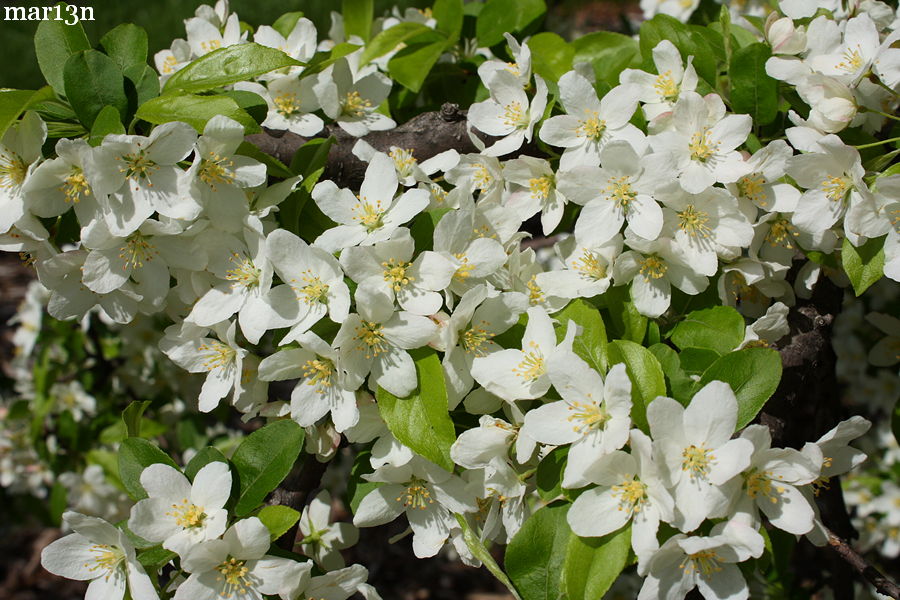
  Toringo Crabapple Blossoms
Malus sieboldii, commonly called Toringo crabapple or Siebold's crabapple, is sometimes considered to have three varieties: M. sieboldii var. sieboldii (the true Siebold's crabapple), M. sieboldii var. sargentii, which is sometimes considered to be a separate species, and M. sieboldii var. zumi.
Crabapples are best grown in a sunny location with good air circulation and have no particular soil preferences, except soil should be well-drained. Root pruned trees transplant most easily. Tree size, flower color, fruit color, and growth and branching habit vary considerably with the cultivar grown but many grow about 20 feet tall and wide. A few Crabapples have good fall color and double-flowered types hold blossoms longer than single-flowered cultivars. Some Crabapples are alternate bearers, blooming heavily only every other year. Crabapples are grown for their showy flowers and attractive, brightly colored fruit. [1]
Plants are used for specimens, patios (small-fruiting types), and along streets to create a warm glow of color each spring. Most are attractive during the summer, bearing glossy green foliage. Popular around overhead power lines due to their small stature, a row of Crabapples along each side of the street or median strip can “make” a neighborhood. Select plants which have been grafted onto EMLA 106 or 111 rootstock to reduce root suckering.

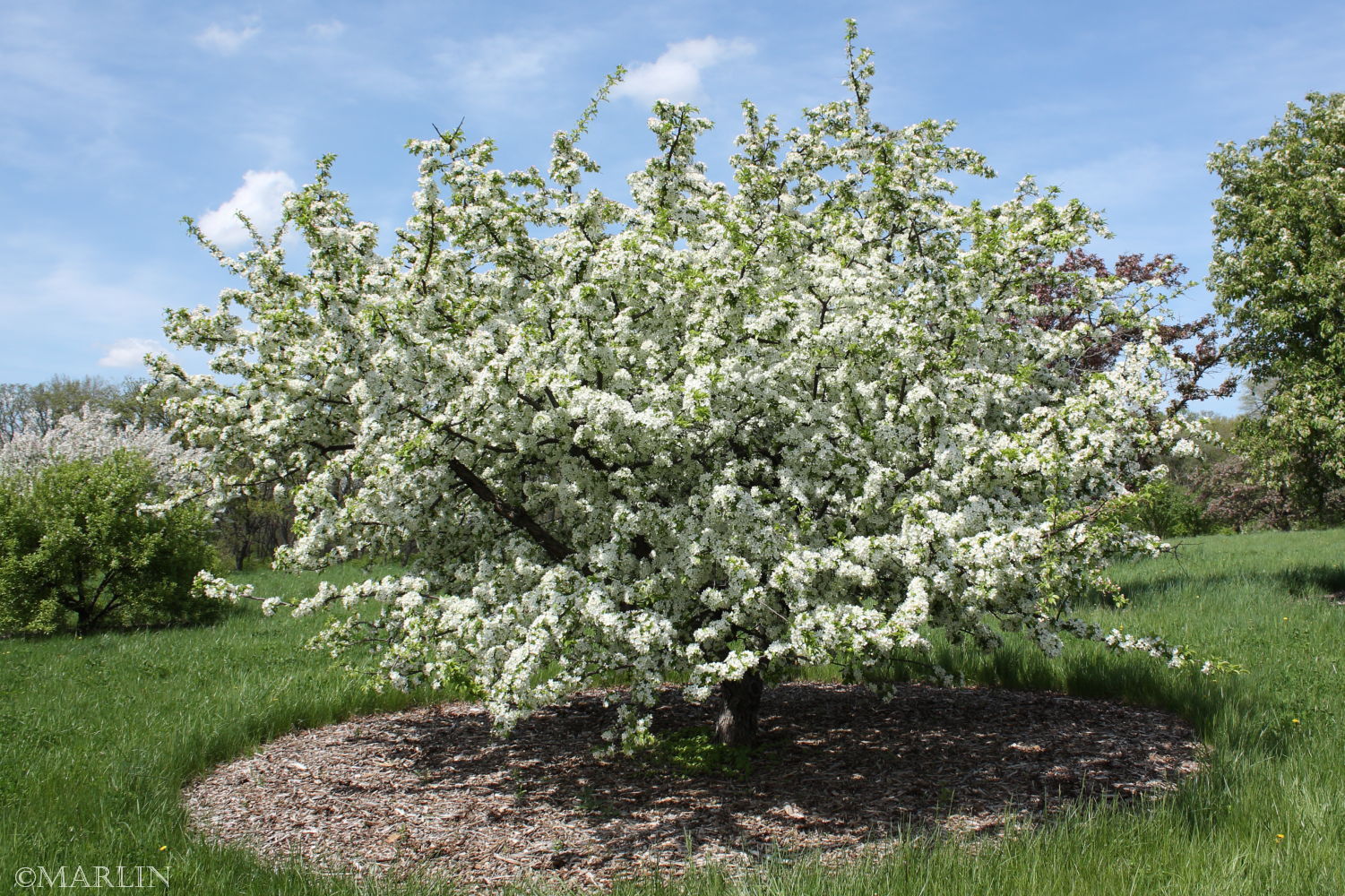
Toringo Crabapple - Malus sieboldii
Toringo Crabapple - Malus sieboldii, Morton Arboretum acc. 368-88-1, from planting, is 21 years old [2]

Crabapples are versatile, small, ornamental trees used in the urban landscape. Crabapples bloom in spring, usually in May, bearing flowers that vary a great deal in color, size, fragrance ,and visual appeal. It is common for flower buds to be red, opening to pink or white flowers. The fruit ripens between July and November, and varies in size from ¼ to 2 inches long or wide.

Crabapples thrive in full sun and grow best in well drained, slightly acidic soils (pH 5.5-6.5); however, they will grow well in many soil types. Most crabapple selections tolerate the cold winters and hot, dry summers prevalent in the Midwest. For many years, crabapple cultivars have been selected on the basis of their flowers, but with some cultivars, undesirable features, such as disease problems and early fruit drop, outweigh their short-lived spring beauty. No single cultivar can fulfill every landscaping need. Consider the following information when choosing a crabapple cultivar for your landscape. [3]


Toringo Crabapple - Malus sieboldii, Morton Arboretum acc. 368-88-1
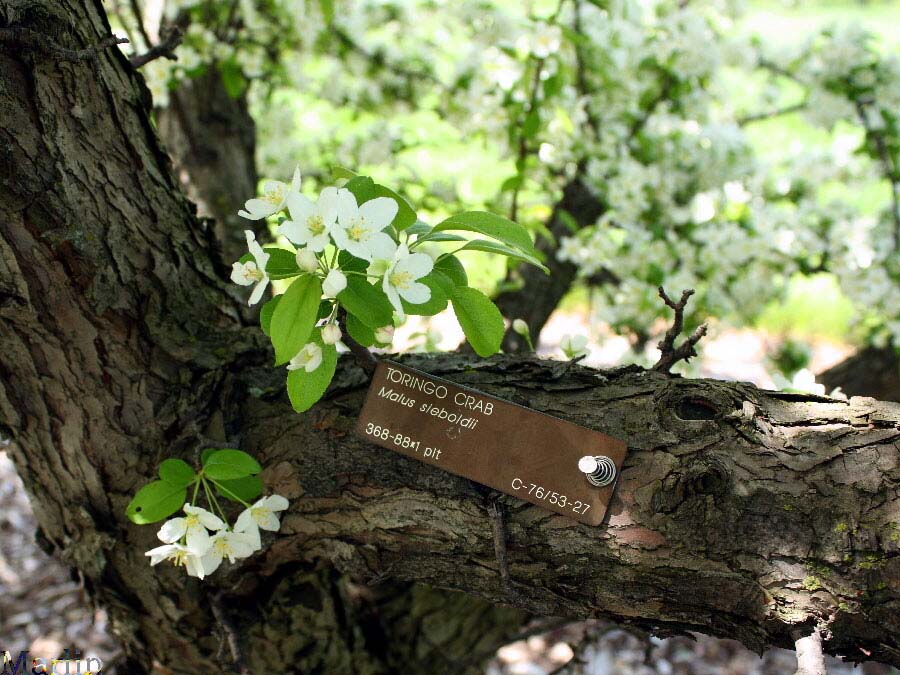
Toringo Crabapple bark

Malus x 'Mary Potter' 'Mary Potter' Crabapple white flowers, red and fairly large fruit, susceptible to scab and powdery mildew; 'Red Jade' - weeping habit, white flowers, red fruit persisting after leaves drop; 'Sargenti' - dwarf, pink bud opens to white flowers, small dark red fruit; 'Snowdrift' - white flowers, orange red fruit; 'Tanner' - white flowers, red fruits, susceptible to diseases; 'Tschonoski' - white flowers, vigorous growth, good bronze red fall color, fruit brownish; 'White Angel' - white flowers, glossy red fruit persisting into winter; 'White Candle' - pink buds open to white flowers, red fruit, upright growth habit; 'Zumi Calocarpa' - white flowers, bright red persistent fruit. Pink flowered cultivars include: 'Arnoldiana' - red buds, pale pink to white flowers, red and yellow fruits, susceptible to diseases.

 'Barbara Ann' - double pink flowers; 'Beverly' - pink flowers, small, bright red fruit, upright open habit; 'Brandywine' - double, pink flowers, foliage tinged reddish; 'Candied Apple' - red buds and pink flowers, persistent bright red fruits; 'Coralburst'- pink flowers, a dwarf about eight feet tall; 'Dorothea' - red buds, pink flowers, yellow fruits, susceptible to scab; 'Hopa' - pink flowers, red and yellow fruit, extremely susceptible to scab; 'Margaret' - disease-resistant; 'Mount Arbor Special' - disease-resistant, red fruit; 'Oekonomierath Echtermayer' - somewhat weeping habit, redbuds, pink flowers, red fruits; 'Pink Perfection' - pink flowers, susceptible to scab; 'Prairie Rose' - double pink flowers, no fruit; 'Radiant' - red buds, pink flowers, persistent red fruits, susceptible to scab; 'Van Eseltine' - double pink flowers, columnar; 'Velvet Pillar' - upright form, pink flowers, red fruit and purple foliage; 'Weeping Candied Apple' - pink flowers and red fruit on horizontal to pendulous branches.

Cultivars with red flowers include: 'American Beauty' - double, red flowers, susceptible to scab; 'Centurion' - a columnar growth habit, red flowers followed by bright red, persistent fruits; 'Indian Magic' - red flowers, maroon fall color, small red fruit, persistent; 'Purpurea Lemoinei' - dark rose color flowers, alternate bearing; 'Profusion' - red flowers and fruit; 'Red Baron' - red flowers, susceptible to scab; 'Red Silver' - red flowers, red fruit, susceptible to scab; 'Red Splendor' - red buds, red to pink flowers, red fruit, susceptible to scab; 'Royal Ruby' - double red flowers, sparse red fruit, susceptible to scab; 'Royalty' - red flowers, red fruits, young foliage purple, susceptible to scab; 'Selkirk' - red flowers, red fruits, susceptible to diseases; 'Sparkler' - red flowers, red fruits; 'Tomiko' - disease-resistant, reddish-purple blooms; 'Wisley' - red flowers. [1]

References
  1. USDA National Forest Service Fact Sheet 393, Malus x 'Mary Potter'
  2. Toringo Crabapple - Malus sieboldii, Morton Arboretum acc. 368-88-1, photographed May 8th, 2009. Photographer: Bruce Marlin
  3. Morton Arboretum Crabapples For The Home Landscape


       web      www.cirrusimage.com