Liset Crabapple – Malus ‘Liset’
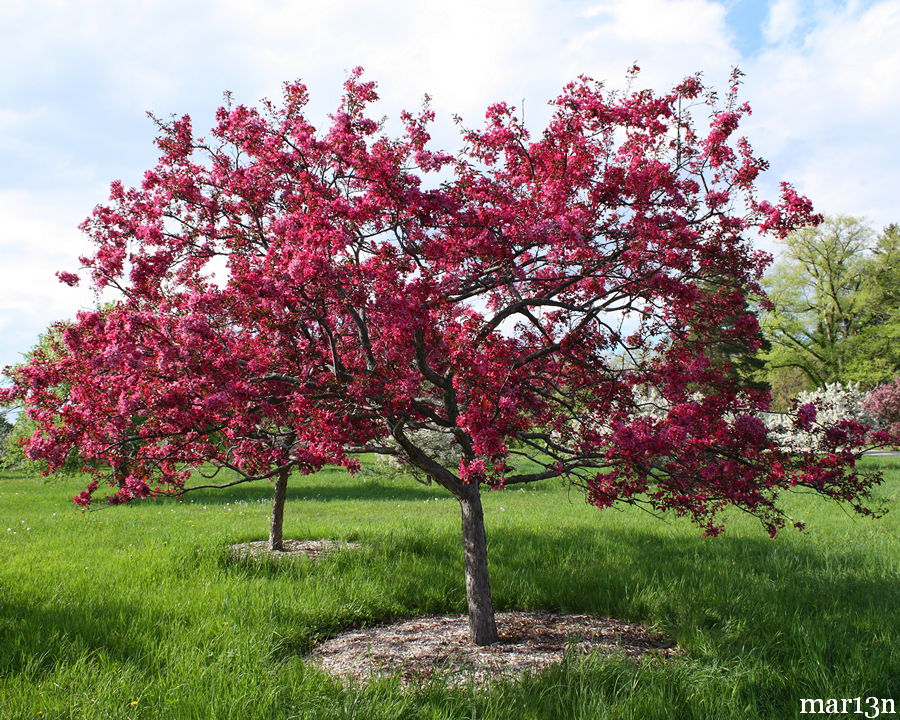
Liset crabapple is one of the most prolific producers of blossoms in the Morton Arboretum collection. The bright, screaming crimson flowers last nearly a week, and coupled with its attractive maroon foliage creates an absolutely mind-numbing display. Liset has an upright, spreading form that can be half again wider than tall. Dark red fruit are not winter persistent and the fall fruit-drop may create a mess.
Liset has good resistance to apple scab and excellent resistance to rust, but is susceptible to both fire blight and powdery mildew [1].
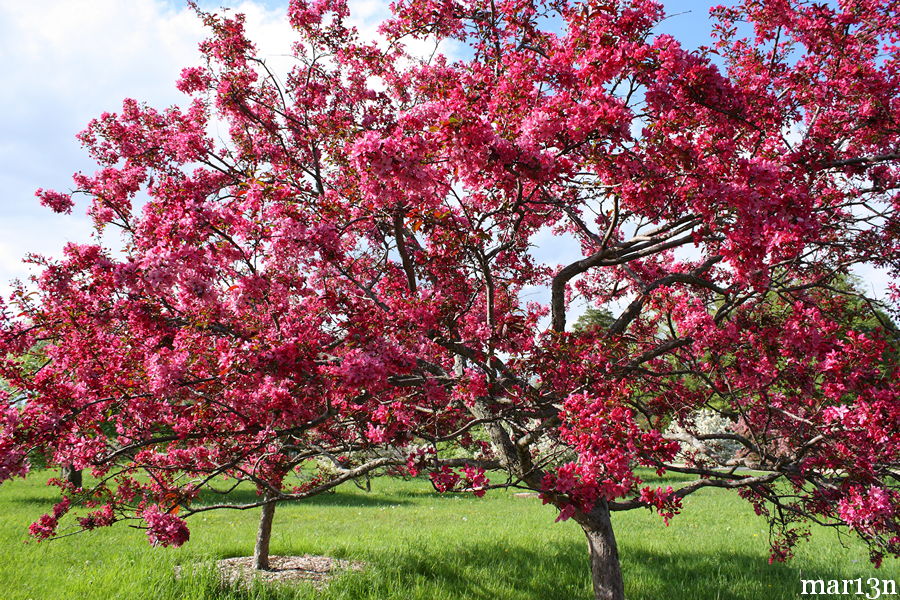 Liset crabapples are a riot of scarlet blossoms
Crabapples are best grown in a sunny location with good air circulation and have no particular soil preferences, except soil should be well-drained. Root pruned trees transplant most easily. Tree size, flower color, fruit color, and growth and branching habit vary considerably with the cultivar grown but many grow about 20 feet tall and wide. A few Crabapples have good fall color and double-flowered types hold blossoms longer than single-flowered cultivars. Some Crabapples are alternate bearers, blooming heavily only every other year [1].

References
1. Morton Arboretum, ‘Liset Crabapple‘
2. Liset Crabapple, Morton Arboretum acc. 50-84-1, 2 & 3 photos by Bruce Marlin
3. Morton Arboretum Crabapples For The Home Landscape
Family Rosaceae – Rose Family; Fruit Trees
Trees Index | Pine Family | Beech, Oak | Nut Trees | Birch Family | Magnolias
Tree Encyclopedia / North American Insects & Spiders is dedicated to providing family-friendly educational
resources for our friends around the world through large images and macro photographs of flora and fauna.
Online since 2002