Klehm Prairie Crabapple – Malus ioensis ‘Klehmii’
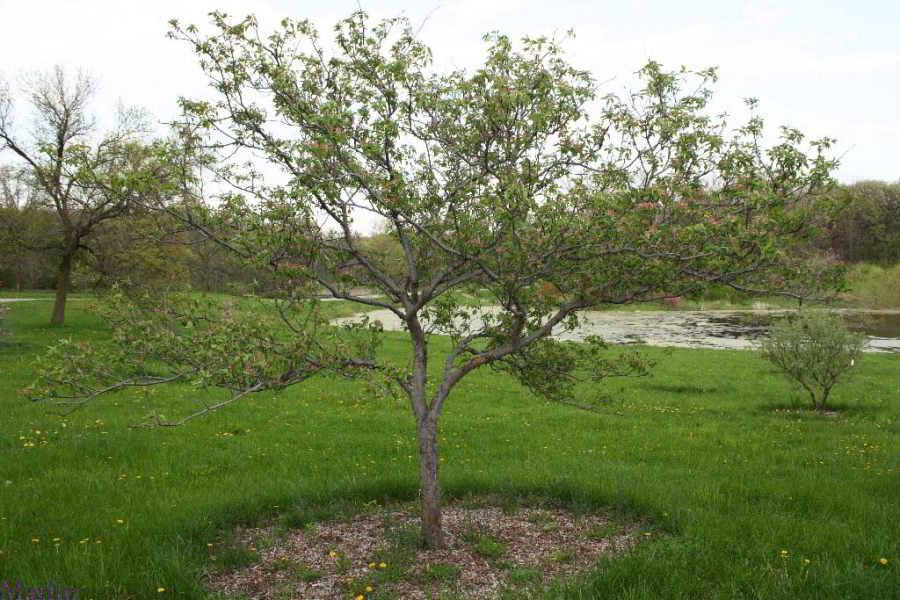 Klehm Prairie Crabapple – this is a mature tree at 30+ years old [2]
This variety of the prairie native was developed at the famous Klehm Nursery at Barrington, Illinois. The Klehm cultivar was developed as an extremely cold-hearty tree for severe Midwestern winters. (Seems silly now!)
I’m sorry the tree has not been in bloom to meet my time schedule! I hope to revisit it in future years.
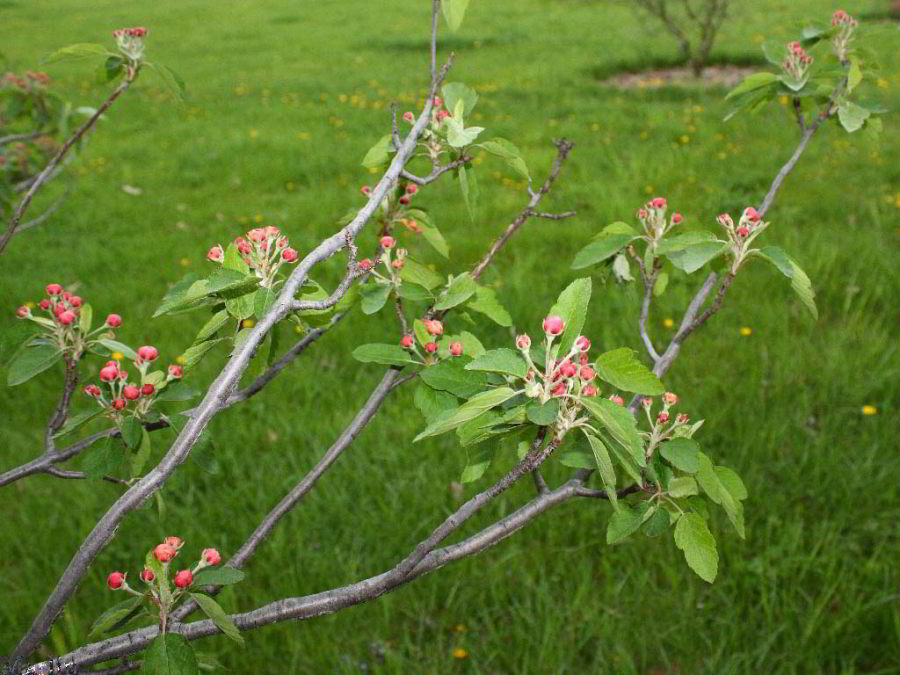
Field identification: Prairie crab apple can be recognized by its unique leaf shape and tomentose stems and inflorescence. Prairie crab apple has been cultivated since 1885, primarily for its showy and fragrant flowers. The fruits are hard and sour, but have been used to make jellies, cider and vinegar. The fruits are eaten by many species of birds and mammals.
Crabapples thrive in full sun and grow best in well drained, slightly acidic soils (pH 5.5-6.5); however, they will grow well in many soil types. Most crabapple selections tolerate the (used to be) cold winters and hot summers prevalent in the American Midwest.
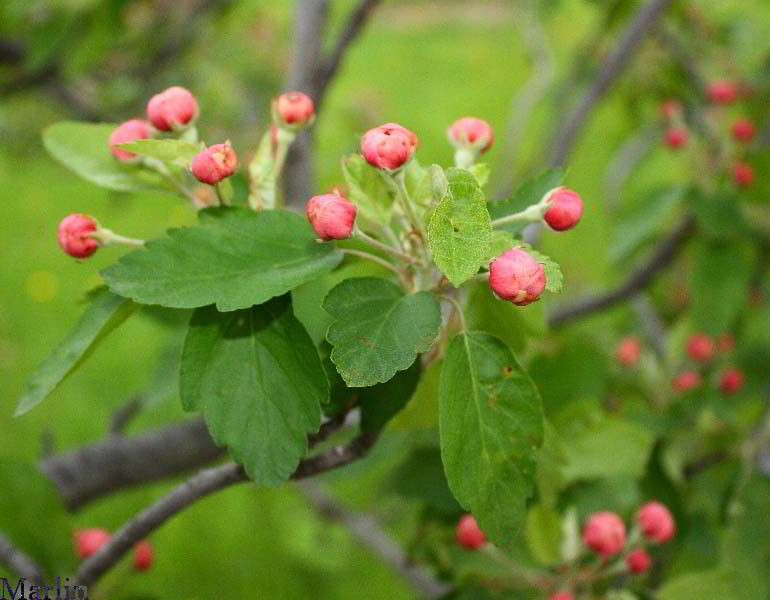
Crabapples bloom in spring, usually in May, bearing flowers that vary a great deal in color, size, fragrance, and visual appeal. It is common for flower buds to be red, opening to pink or white flowers. The fruit ripens between July and November, and varies in size from ¼â€to 2†long or wide. Crabapples thrive in full sun and grow best in well drained, slightly acidic soils (pH 5.5-6.5); however, they will grow well in many soil types. Most crabapple selections tolerate the cold winters and hot, dry summers prevalent in the Midwest. [3]
References
- Morton Arboretum, Crabapple: A Tree For All Seasons
- Klehm Prairie Crabapple, Morton Arboretum acc. 231-76-3, Photos – Bruce Marlin
- Morton Arboretum, Crabapples for the Home Landscape
- Morton Arboretum, Plant Health Care Report, Issue 2009.07, May 22- May 28, 2009
Family Rosaceae – Rose Family; Fruit Trees
Trees Index | Pine Family | Beech, Oak | Nut Trees | Birch Family | Magnolias
Tree Encyclopedia / North American Insects & Spiders is dedicated to providing family-friendly educational
resources for our friends around the world through large images and macro photographs of flora and fauna.
Online since 2002