![]() | Jewelberry Crabapple - Malus 'Jewelberry' [2] Rose Family: Rosaceae Height: 15 feet / 4.5 m / USDA zones 4 through 8A [4] [Cirrus Home] [Tree Encyclopedia] [Trees Alphabetic Table of Contents] [Family Rosaceae Table of Contents] |
![]() |
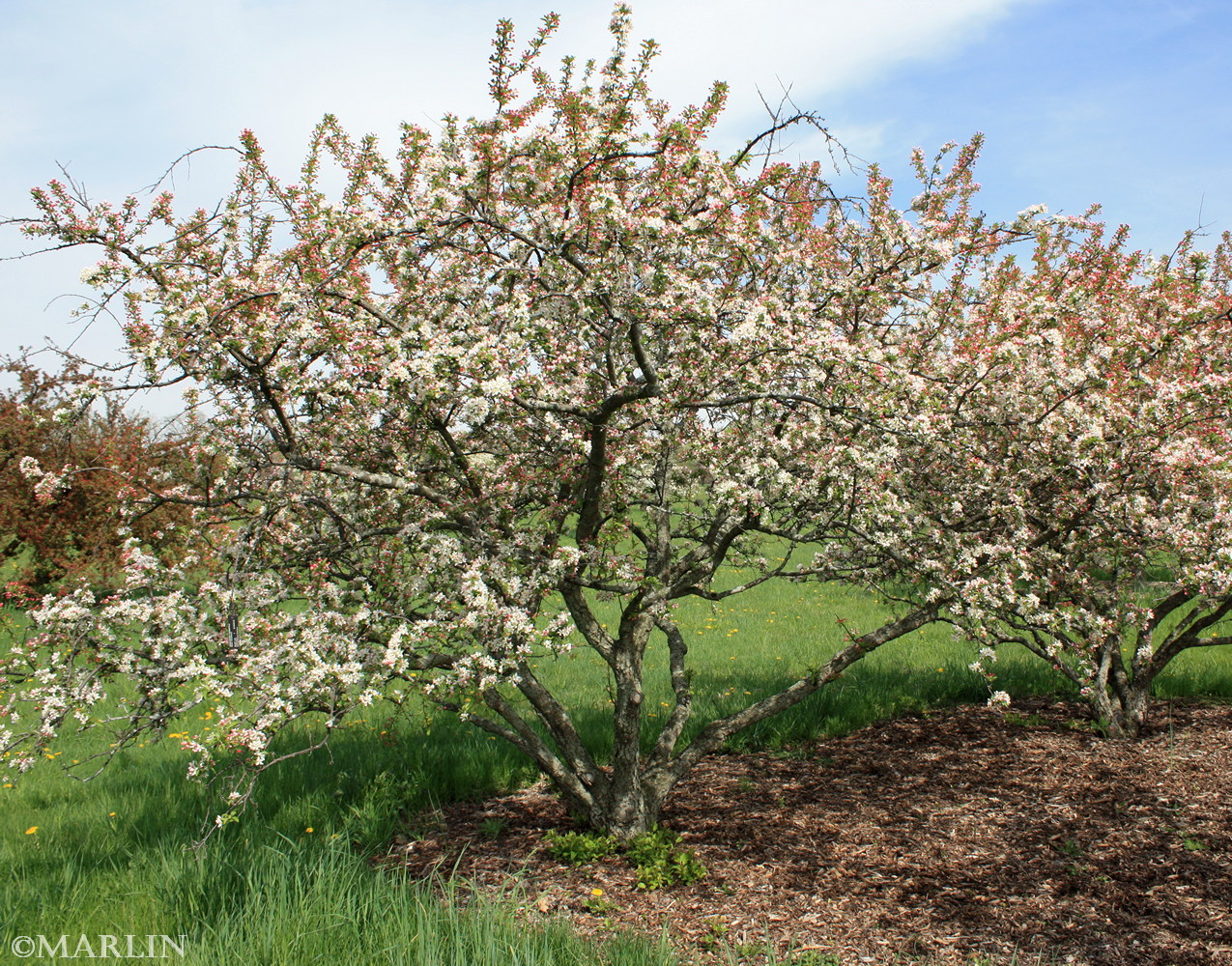
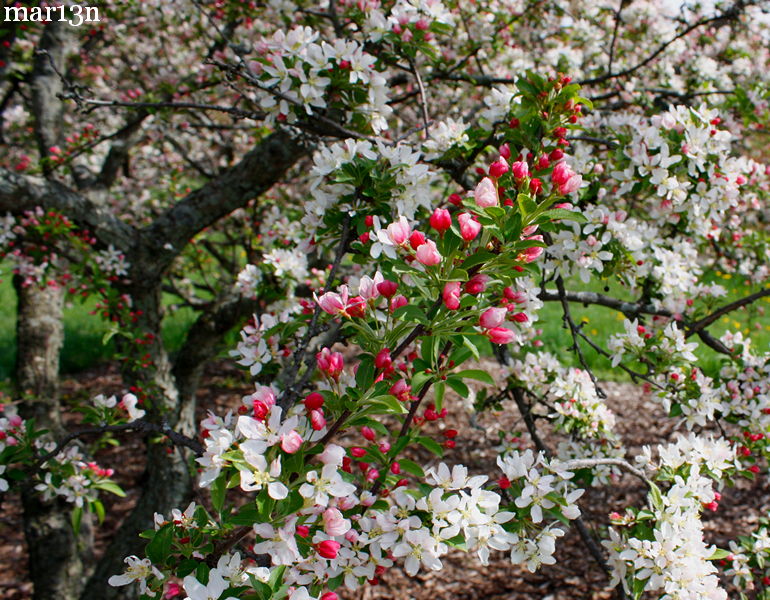
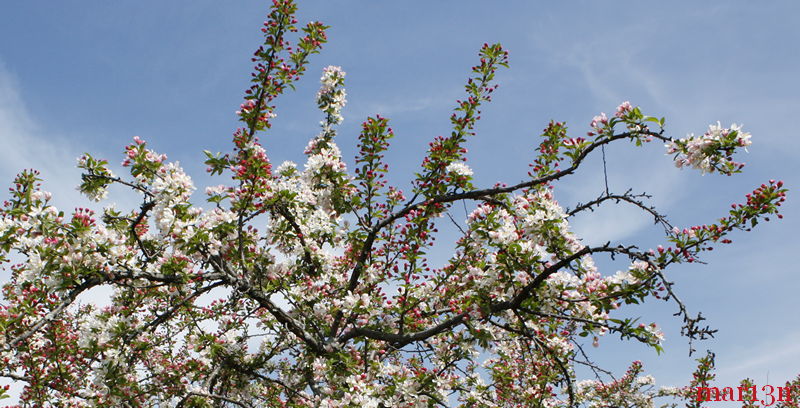
| Jewelberry crabapple grows to 15 feet, spreads to 15. The trio pictured below is one of the amazing plantings of three trees in an isosceles triangle, as is the Morton Arboretum's wont. The effect is more than the sum of its parts. This crabapple attracts winter birds with showy, persistent fuits that grow to 13mm (1/2 inch). [4] |
Custom Search
|
| Crabapple is well-adapted to compacted urban soil, tolerates drought and poor drainage well and is somewhat tolerate of salt-spray. Well adapted to all areas within its hardiness zone range, including Texas and Oklahoma. Very adaptable tree. Do not overfertilize, since this could increase the incidence of disease. Select only from disease-resistant cultivars. Crabapples grow well in the Texas panhandle but are not extremely drought tolerant and are not well suited for high-pH soil. Large-fruited types can create a maintenance problem because rotting fruits attract insects and rodents and are quite messy. Some crabapples sprout vigorously from the roots, and these will require regular pruning to maintain an attractive tree. Trees used as street trees will require regular pruning early in their lives to train lower branches for pedestrian and vehicle clearance. There are hundreds of crabapple cultivars with single or double red, pink, or white flowers, and varying fruit size. Many are cultivars of Malus baccata and Malus floribunda. Since disease resistance can vary depending on where a particular cultivar is grown, be sure to choose a cultivar that has been shown to be resistant to disease in your area. Your urban forestry program could suffer if you plant the wrong cultivar but it could blossom if the correct ones are installed. [4] |
| Abstract. Seventeen crabapple (Malus) cultivars planted under utility wires in 27 communities were evaluated as street trees. In most communities, 2 cultivars were alternated within each of several plots. Cooperators in the Municipal Tree Restoration Program used standardized methods to measure them annually at the end of the growing period for 3 years and periodically afterwards until the ninth year in some cases. Many differences were found in growth rate, height, crown width, and trunk diameter. Most cultivars had healthy foliage, though some injuries were caused by apple scab and several insects. Basal sprouts were common, and low branching of broader cultivars also required periodic pruning especially in confined spaces. Centurion®, Harvest Gold®, Red Jewel®, ‘Spring Snow’, and Sugar Tyme® are recommended as street trees based on the most extensive data. ‘Adams’, ‘Donald Wyman’, ‘Prairiefire’, ‘Red Barron’, and zumi ‘Calocarpa’ also appear promising. Key Words. Crabapple; Malus; ‘Adams’; American Masterpiece ®; American Spirit; American Triumph; Brandywine®; Centurion®; ‘Donald Wyman’; Harvest Gold®; Madonna®; ‘Prairiefire’; 'Purple Prince'; ‘Red Barron’; Red Jewel®; ‘Sentinel’; ‘Snowdrift’; Sugar Tyme®; Velvet Pillar; zumi ‘Calocarpa’; street trees; performance testing. [3] |

METHODS Adirondack Crabapple requires very little pruning but any that is needed should be completed before late spring, to ensure dormant flower buds are not removed. Trees used as street trees should be trained to develop a central trunk and should be occasionally thinned to eliminate water sprouts or crossed-branches, and to open up the crown. This allows for better air circulation through the crown and helps reduce disease. |
|
Various cultivars of genus Malus and their attributes: 'Barbara Ann' - double pink flowers; 'Beverly' - pink flowers, small, bright red fruit, upright open habit; 'Brandywine' - double, pink flowers, foliage tinged reddish; 'Candied Apple' - red buds and pink flowers, persistent bright red fruits; 'Coralburst'- pink flowers, a dwarf about eight feet tall; 'Dorothea' - red buds, pink flowers, yellow fruits, susceptible to scab; 'Hopa' - pink flowers, red and yellow fruit, extremely susceptible to scab; 'Margaret' - disease-resistant; 'Mount Arbor Special' - disease-resistant, red fruit; 'Oekonomierath Echtermayer' - somewhat weeping habit, redbuds, pink flowers, red fruits; 'Pink Perfection' - pink flowers, susceptible to scab; 'Prairie Rose' - double pink flowers, no fruit; 'Radiant' - red buds, pink flowers, persistent red fruits, susceptible to scab; 'Van Eseltine' - double pink flowers, columnar; 'Velvet Pillar' - upright form, pink flowers, red fruit and purple foliage; 'Weeping Candied Apple' - pink flowers and red fruit on horizontal to pendulous branches. |
Custom Search
|
References
|
|
|
[Cirrus Home] [Tree Encyclopedia]
[Trees Alphabetic Table of Contents] [Family Rosaceae Table of Contents] |
| © Cirrus Digital / All Rights Reserved |