Japanese Mulberry – Morus australis
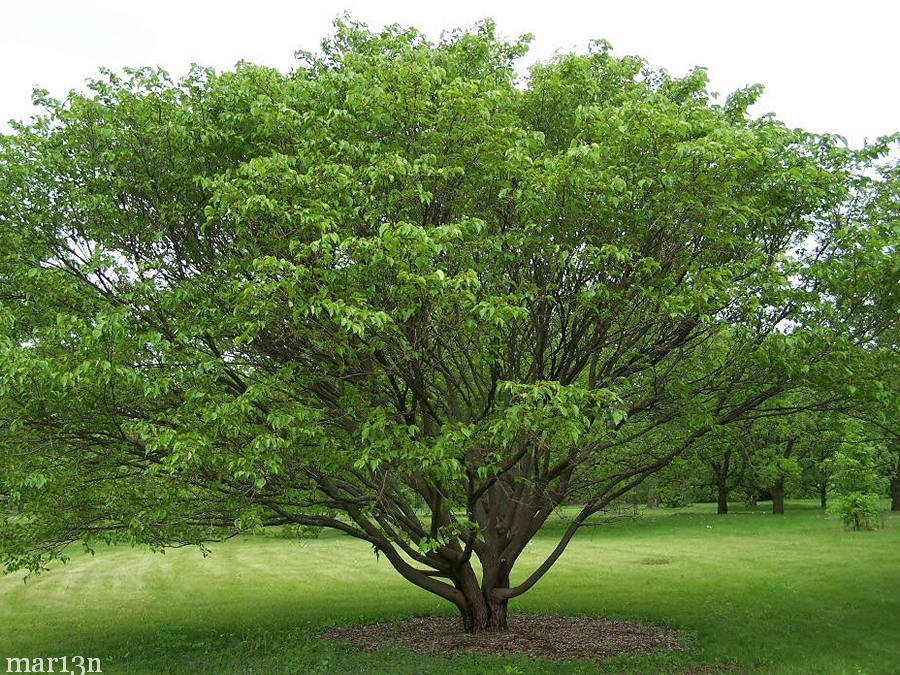 This Morton Arboretum Japanese Mulberry specimen is 36 years old, grown from seed
Mulberry Family: Moraceae
Mulberries are edible and the bark is used in many types of specialized papers.
Sunny forest margins, mountain slopes; 500-2200 m. Anhui, Fujian, SE Gansu, Guangdong, Guangxi, Guizhou, Hebei, Henan, Hubei, Hunan, Jiangsu, Jiangxi, Shaanxi, Shandong, S Shanxi, Sichuan, Yunnan, Zhejiang [Japan (cultivated), Korea] [2].
Japanese Mulberry grows as a small tree or shrub. Bark grayish brown. The bark fibers are used for making paper, the leaves are used as food for silkworms, the fruit are edible, and the bark is used medicinally. [3]
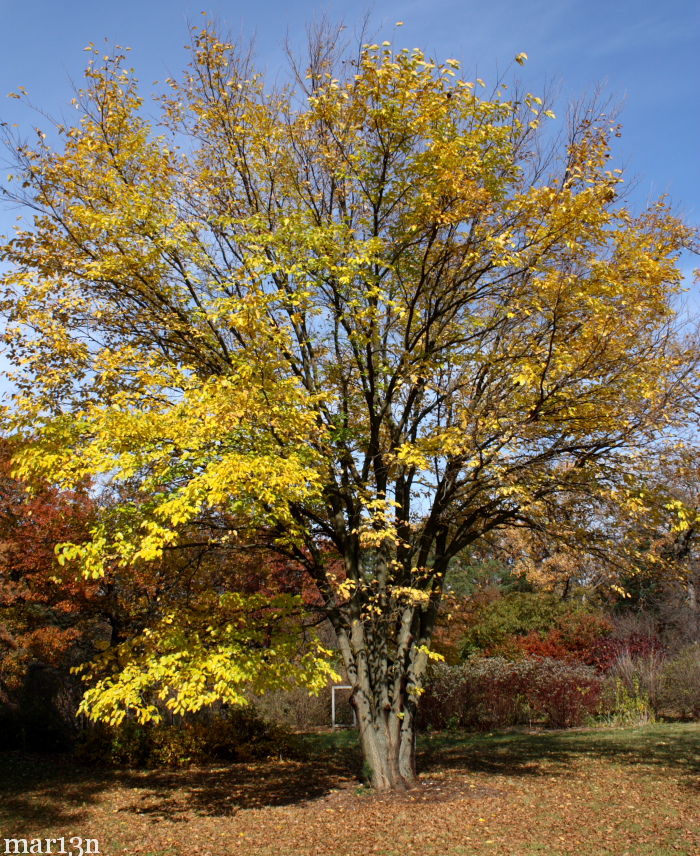
Male catkins 1-1.5 cm, pubescent. Female inflorescences globose, ca. 1 cm, densely white pubescent; peduncle short. Male flowers: calyx lobes green, ovate; anther yellow. Female flowers: calyx lobes dark green, oblong; style long; stigma 2-branched, abaxially pubescent. Syncarp red to dark purple when mature, shortly cylindric, ca. 1 cm in diam. [2] I haven’t a clue as to what most of this means – I’m not a botanist.
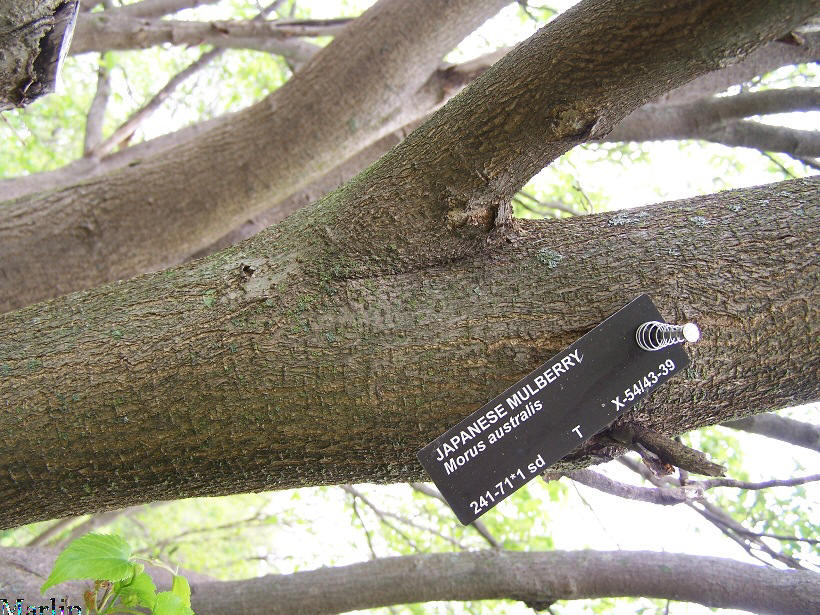
Shrubs or small trees, 1-7 m tall, deciduous. Bark grayish brown. This species is closely related to Morus indica Linnaeus, and some authors have considered them conspecific. Varieties have been recognized on the basis of differences in leaf form, particularly the degree of division. Deeply divided leaves are characteristic of juvenile growth in a number of genera in the Moraceae and other families, and it does not seem advisable to give such material formal names, at least without more detailed population studies.
Mulberry Family: Moraceae consists of flowering trees, shrubs, herbs or lianas (vines), both evergreen and deciduous; mainly woody and tropical, they are most abundant in Asia. Moraceae includes both self-supporting and epiphytic (plants that use an immobile object such as another plant, or a building to support their structure) vines. The largest genus is Ficus, with about 750 species of figs.
Family Rosaceae – Rose Family; Fruit Trees
Trees Index | Pine Family | Beech, Oak | Nut Trees | Birch Family | Magnolias
Tree Encyclopedia / North American Insects & Spiders is dedicated to providing family-friendly educational
resources for our friends around the world through large images and macro photographs of flora and fauna.
Online since 2002