Japanese Flowering Crabapple – Malus floribunda
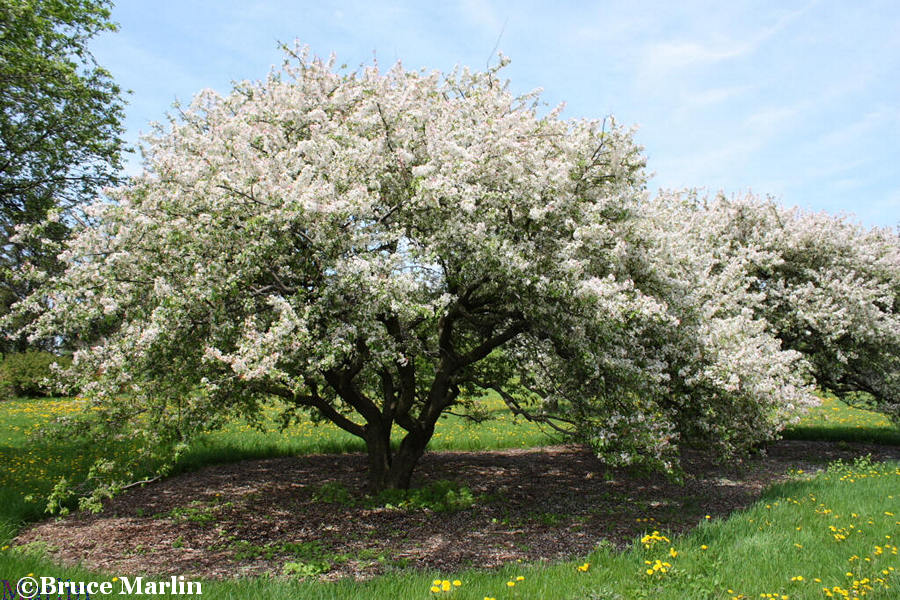
Family Rosaceae- Rose family
Also commonly called showy crabapple. Height: 30 feet USDA zones 4 through 7
Japanese Flowering Crabapple requires very little pruning but any that is needed should be completed before late spring, to ensure dormant flower buds are not removed. Trees used as street trees should be trained to develop a central trunk and should be occasionally thinned to eliminate water sprouts or crossed-branches, and to open up the crown. This allows for better air circulation through the crown and helps reduce disease.
The Morton Arboretum’s Crabapple Collection was started in 1924. Part of this collection on the West Side participated in the National Crabapple Evaluation Program which evaluated new and disease-resistant varieties. As a result of the multi-year evaluation and additions, it has transformed into the West Side Malus collection which now contains 60 different kinds and over 140 specimens with highly desirable qualities.
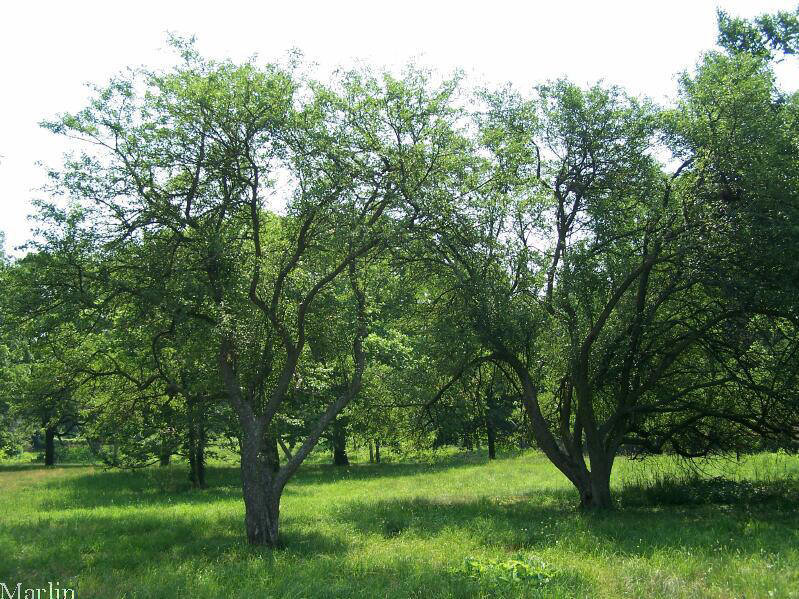
I consider the crabapple collection at The Morton to be one of the most beautiful, colorful places on Earth during springtime. If you live anywhere near Chicago, you absolutely must see these trees in bloom. Yes, the cherry trees around the tidal basin in Washington D.C. are magnificent, but they are of only one variety and color (not to look a gift horse in the mouth), they can’t hold a candle to the riot of red, pink, purple, white and seemingly every shade in between. It’s good for the soul.
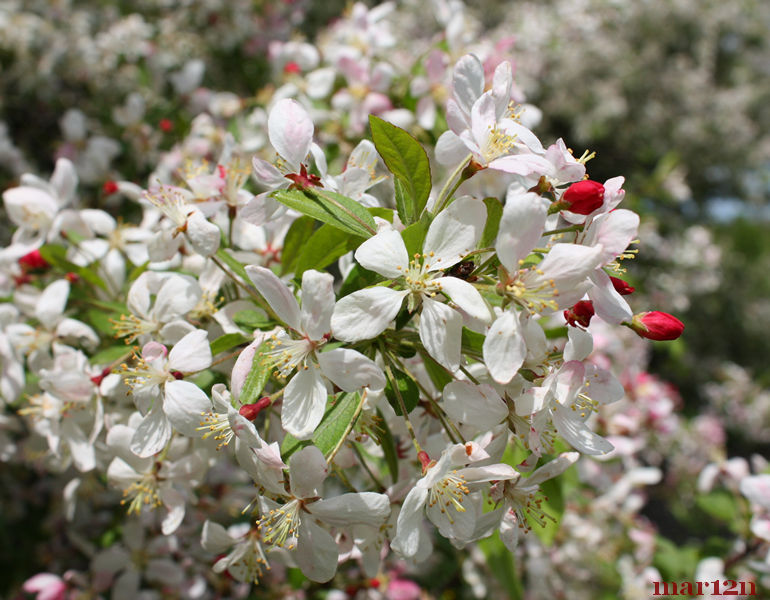
I would advise to consult the arboretum on blooming progress before planning your trip. With our recent warmest-ever March (2012), many trees bloomed 3-4 weeks earlier than usual. Of course, the crabs don’t all bloom at the same time, but there is enough overlap that if timed correctly, you can see 80% of the trees near their peak at one visit. –and don’t forget the flowering trees section on the west side!
References
- Morton Arboretum, Crabapple Cultivars
- Japanese Flowering Crabapple, Morton Arboretum acc. 137-64-1 & 2, photos © Bruce Marlin
- Morton Arboretum, Flowering trees collection
Trees Index | Pine Family | Beech, Oak | Nut Trees | Birch Family | Magnolias | Rose Family
Tree Encyclopedia / North American Insects & Spiders is dedicated to providing family-friendly educational
resources for our friends around the world through large images and macro photographs of flora and fauna.
Online since 2002