
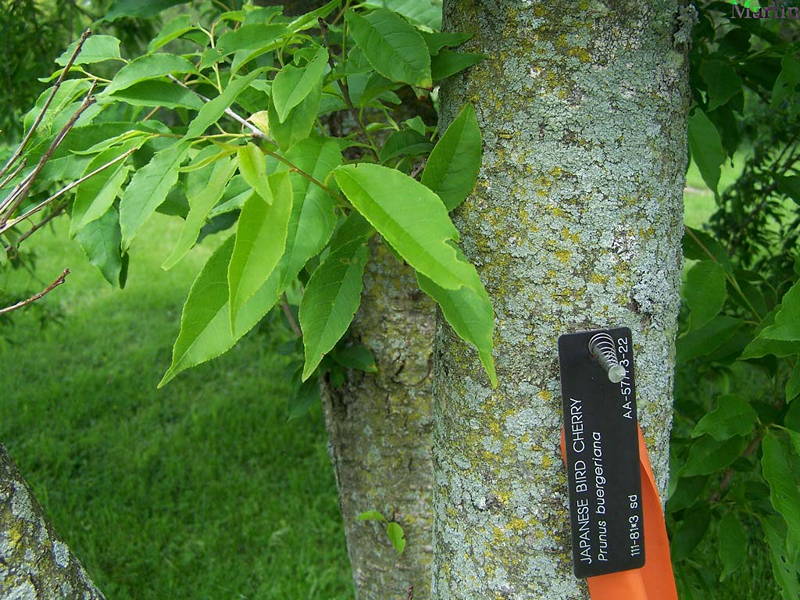
Japanese Bird Cherry – Prunus buergeriana
Gray’s Bird Cherry – Prunus grayana
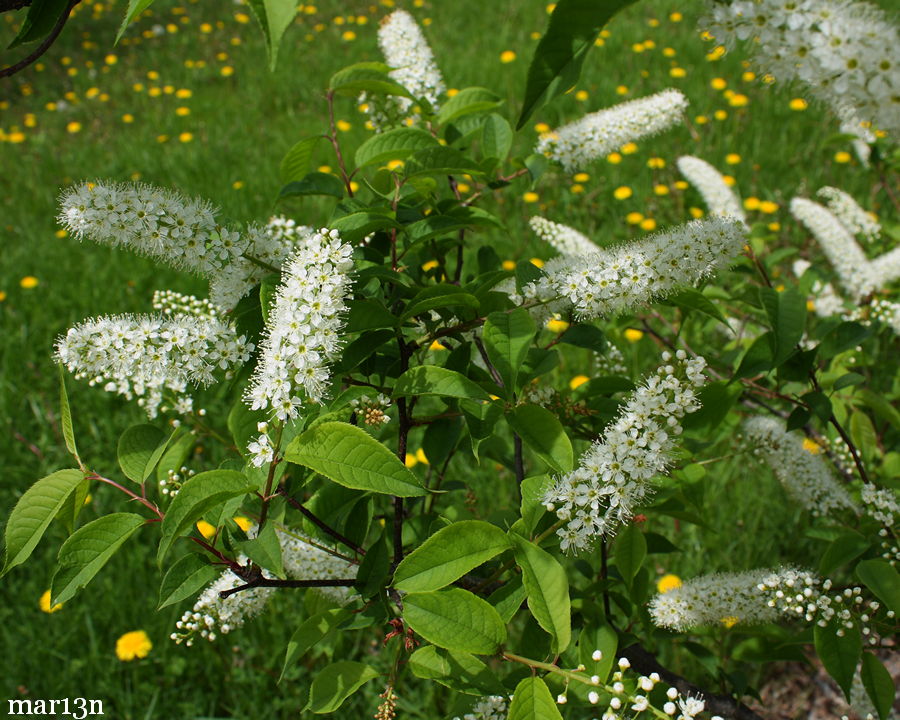 Gray’s bird cherry flowers
Prunus grayana is named for Asa Gray, an important American botanist of the 19th century, whose extensive Manual of the Botany of the Northern United States is still a standard work in this subject. Gray was an associate of Charles Darwin and was “kept fully informed” concerning publication of Darwin’s publication Origin of Species in 1859. Gray allowed some variation could be caused by natural selection, but being a devout Christian (as was Darwin) insisted the influence of divine intervention was a causative agent also [3].
Cherry flowers are insect pollinated. Several species of flies, flower beetles, and bees, including the honey bee work the blossoms for pollen and nectar. Late spring frosts may damage the flowers before they open, and frosts occasionally cause large numbers of newly set fruits to fall from the pedicels without maturing. Premature dropping of green fruits is also a problem in some years.
The United States is one of the leading producers of sweet cherries in the world. In 2000 the U.S. was second in overall production worldwide with 203,000 metric tons of cherries with Iran leading the way with 229,000 tons. Germany was fifth with 133,000 tons.
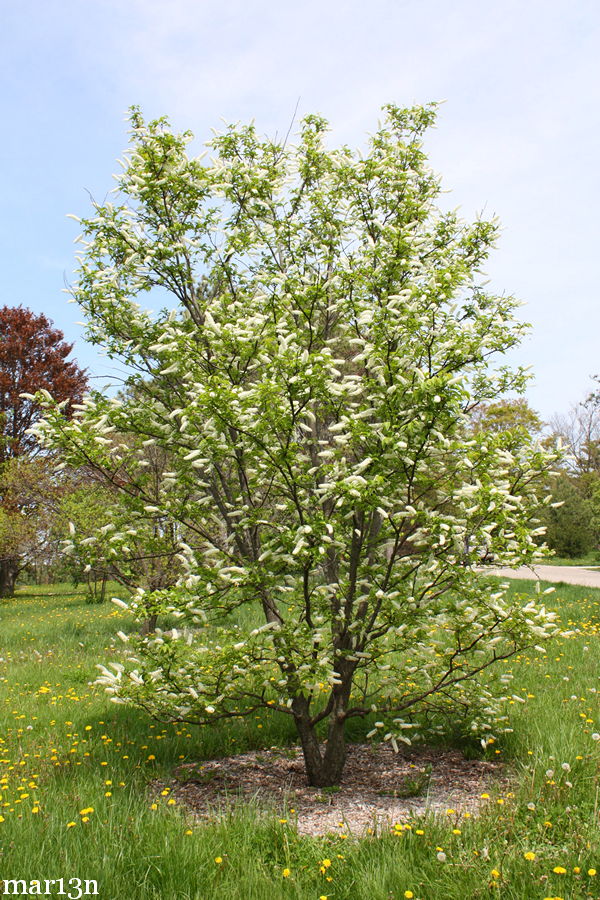 Gray’s Bird Cherry – Prunus grayana
In the U.S., the majority of cherries are produced in the Pacific Coast states of Washington, Oregon and California with the greatest volume of production in the north. The five year average, ending in 2000 shows Washington averaging 86,000 metric tons, Oregon a distant second at 50,000 tons and California at 36,000 tons. The only other significant cherry production region in the United States is Michigan in the north-central region with 18,000 tons, most of which is grown for the processing market. [4]
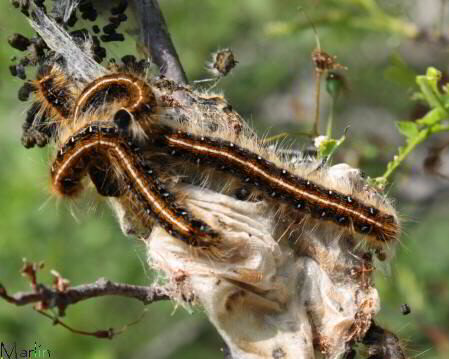 Cherry is often infested with tent caterpillars in springtime.
These pests can strip a tree of foliage in a matter of days.
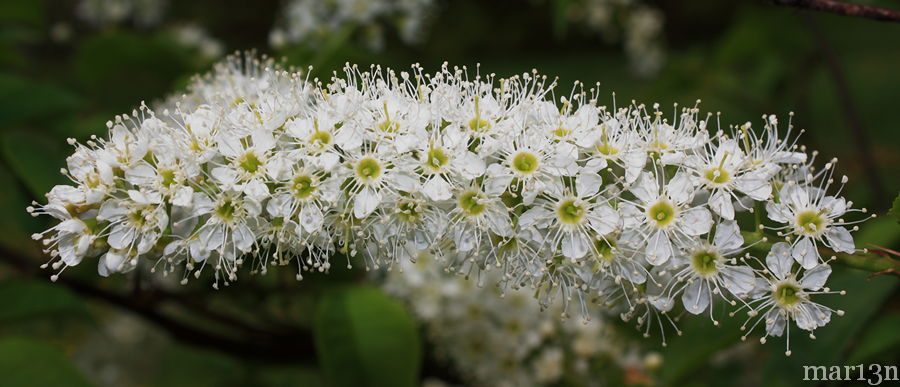
The two cherries pictured here are not raised for commercial cherry production, their fruit being somewhat small and sour for eating or canning. Just right for birds though. The showy flowers and compact form of Gray’s bird cherry make for an nice upright ornamental. The larger, multi-trunked and spreading P. buergeriana obviously needs room, being a vigorous grower.
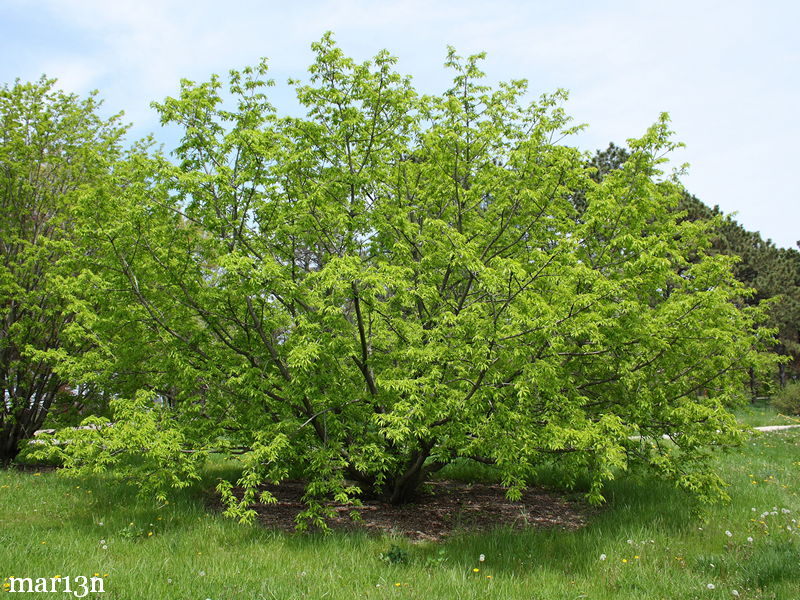 Japanese Bird Cherry – Prunus buergeriana will grow as a multi-trunk tree
Cherries are an important source of mast for many nongame birds, squirrel, deer, turkey, mice and moles, and other wildlife. The leaves, twigs, and bark of black cherry contain cyanide in bound form as the cyanogenic glycoside, prunasin. During foliage wilting, cyanide is released and domestic livestock that eat wilted foliage may get sick or die. Deer eat unwilted foliage without harm.
The bark has medicinal properties. In the southern Appalachians, bark is stripped from young black cherries for use in cough medicines, tonics, and sedatives. The fruit is used for making jelly and wine. Appalachian pioneers sometimes flavored their rum or brandy with the fruit to make a drink called cherry bounce. To this, the species owes one of its common names, rum cherry.
The most important defoliating insects attacking cherry trees include the eastern tent caterpillar (below) and the cherry scallop shell moth (Hydria prunivorata). Infestations of these insects are sporadically heavy, with some apparent growth loss and occasional mortality if heavy defoliations occur several years in a row.
References
- USDA, ARS, – (GRIN) Prunus buergeriana
- Prunus buergeriana & Prunus grayana, Morton Arboretum accessions photos © Bruce Marlin
- Encyclopedia Britannica, ‘Asa Gray‘
- Lynn E. Long, Oregon State University Extension Horticulturist, Growing Quality Cherries
Trees Index | Pine Family | Beech, Oak | Nut Trees | Birch Family | Magnolias | Rose Family
Tree Encyclopedia / North American Insects & Spiders is dedicated to providing family-friendly educational
resources for our friends around the world through large images and macro photographs of flora and fauna.
Online since 2002