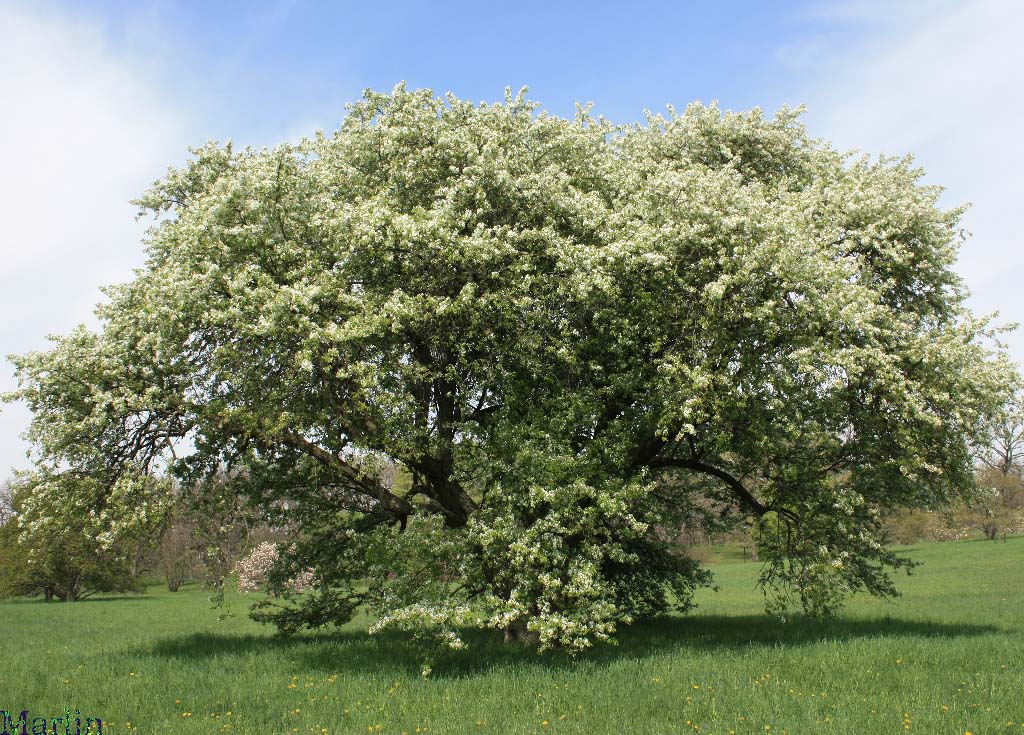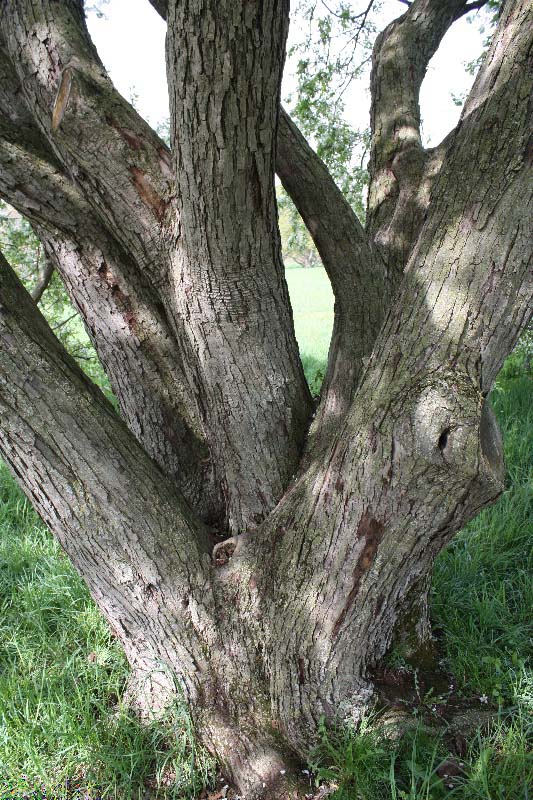
| Crabapple - Malus flexilus Family Rosaceae - Rose Family; Fruit Trees This is an ancient specimen, for a crabapple, 81 years old Tree Encyclopedia | Trees Index | Crabapples | Nut Trees | Fruit Trees Index | |
![]() |
| Crabapples are versatile, small, ornamental trees used in the urban landscape. Crabapples bloom in spring, usually in May, bearing flowers that vary a great deal in color, size, fragrance ,and visual appeal. It is common for flower buds to be red, opening to pink or white flowers. The fruit ripens between July and November, and varies in size from ¼ to 2 inches long or wide. Crabapples thrive in full sun and grow best in well drained, slightly acidic soils (pH 5.5-6.5); however, they will grow well in many soil types. Most crabapple selections tolerate the cold winters and hot, dry summers prevalent in the Midwest. For many years, crabapple cultivars have been selected on the basis of their flowers, but with some cultivars, undesirable features, such as disease problems and early fruit drop, outweigh their short-lived spring beauty. No single cultivar can fulfill every landscaping need. [3] |
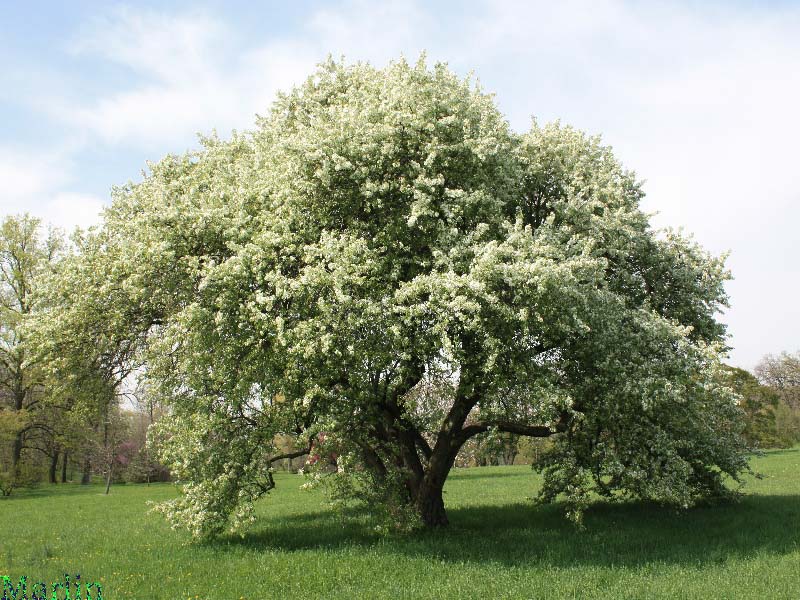
Crabapple - Malus flexilus, Morton Arboretum acc. 936-28*1, from a graft, is 81 years old, and one of the orginal plantings[2]Trees are essential elements of livable communities and a healthful environment. They are not only beautiful, they carry out many beneficial environmental functions. Trees absorb carbon dioxide, the major greenhouse gas (up to 50 pounds per tree each year), and release oxygen. They shelter and provide nesting habitats for wildlife, retain moisture in soils, hold topsoil in place, and provide shade and cooling. Trees also provide fruits, nuts, oils, and syrups; pulp for paper, cloth, and rope; and wood for innumerable products and heat. Trees provide both direct and indirect economic benefits. Air-conditioning costs are less in a tree-shaded home, and heating costs are reduced when a home has properly selected and placed windbreaks. Beyond energy savings, landscaping with mature trees increases the value of property. Indirect economic benefits extend beyond the individual to the community or region. Customers pay lower electricity bills when power companies use less water in their cooling towers and fewer measures to control air pollution. Communities also save money if fewer facilities must be built to control storm water. Trees make the world more beautiful. They add color, structure, height, and grace to our neighborhoods, parkways, and streetscapes. Trees also neutralize the harshness and stress of urban life. They enrich our lives. Our forests, woodlands, parks, and preserves help us feel more relaxed and serene. A day or even an hour in the woods can help us feel rejuvenated. Trees are magnets for wildlife, which also add beauty, value, and interest to our world. City and suburban trees often serve several architectural functions. They provide privacy, frame views, and screen out objectionable sights. They reduce glare and reflection, direct pedestrian traffic, and provide background for and soften, complement, or enhance architecture." -From Morton Arboretum "Go green" |

| References: 1. NCGR Corvallis 2. Crabapple - Malus flexilus , Morton Arboretum acc. 936-28*1, photos © Bruce J. Marlin 3. USDA National Agricultural Library 5. University of Michigan, Native American Ethnobotany 6. USDA Natural Resources Conservation Services Threatened and Endangered Species (Illinois) |
![]() |
Family Rosaceae - Rose Family; Fruit Trees Containing hawthorn, apple, pear, cherry, plum, peach, almond, mountain-ash and whitebeam. Many of these plants are of vital economic importance. The Rosaceae contain a great number of fruit trees of temperate regions, the fruit of which contain vitamins, acids, and sugars and can be used both raw and for making preserves, jam, jelly, candy, wine, brandy, cider and other beverages. Tree Encyclopedia | Tree Index | Fruit Tree Index |