
 |
Family Tetragnathidae Long-Jawed Orb Weavers Tetragnathids spin less elaborate webs than Araneae Spider Index | Spider Main | Orb Web | Cobweb |

Custom Search
|
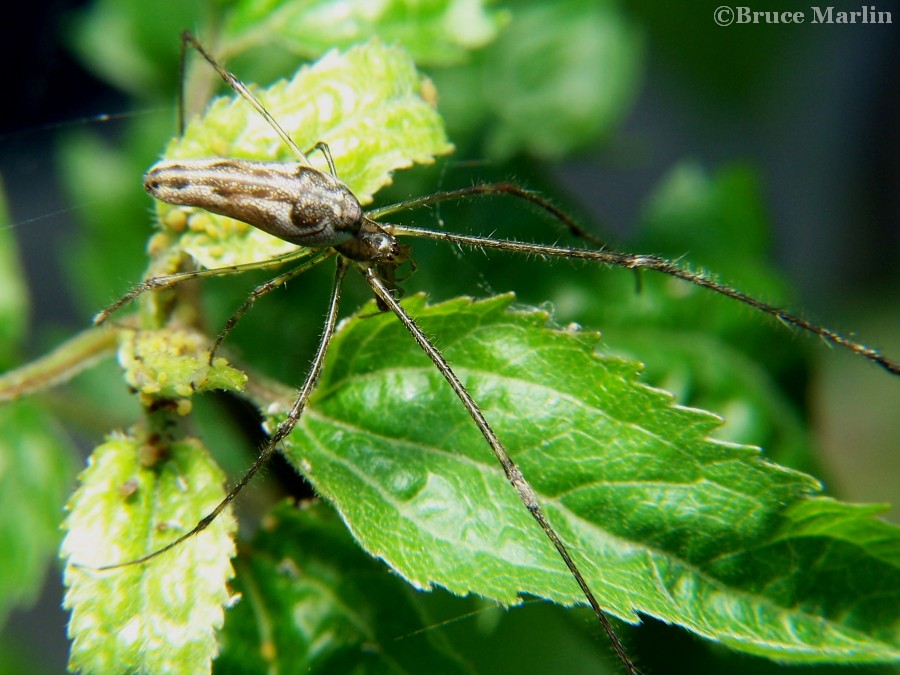 Tetragnatha elongata |
| Larger spiders in this family are often found near water, especially moving water of rivers and streams. They build orb webs in the horizontal plane, often just inches above the surface of water where they can catch emerging insects like midges, mayflies, and stoneflies. I have seen them construct elaborate scaffolding atop plants at the water's edge, upon which they can travel quite rapidly, seemingly on thin air.
Smaller species build webs in fields and meadows, often in trees and shrubs or low foliage in the forest understory. Most of their orb webs are built closer to the horizontal than vertical, with a large open area in the center through which the spider can pass to access both side of the web. Other species are active hunters and build only the aforementioned scaffolding. |
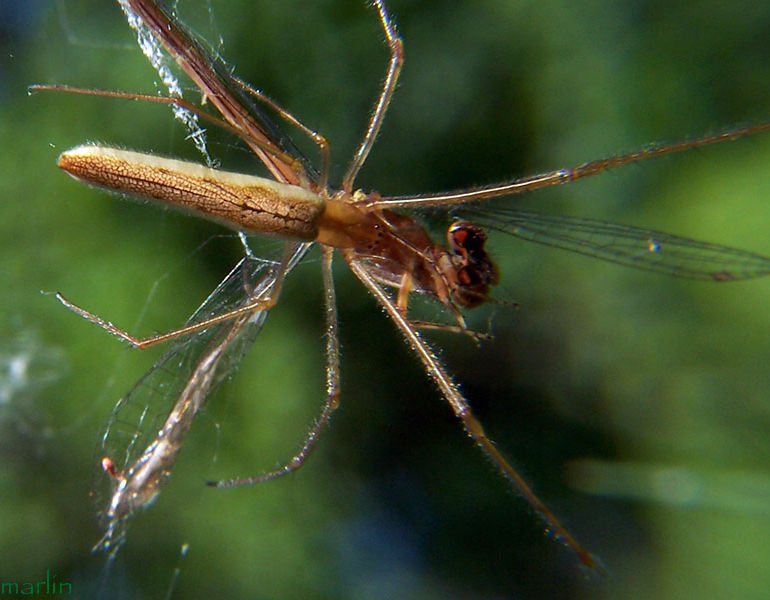 Tetragnatha straminea
|
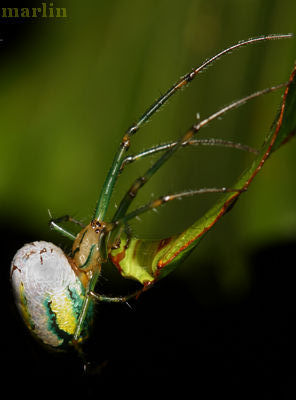
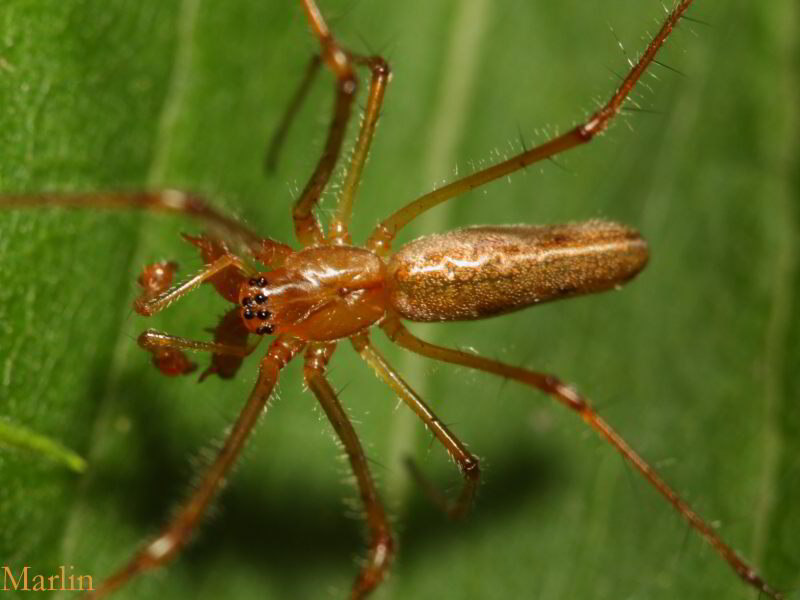
|
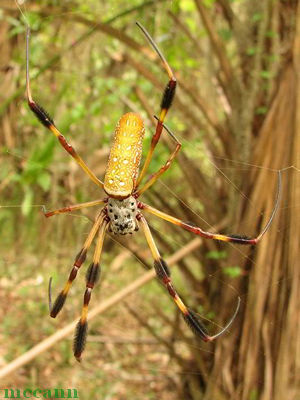
The oldest fossil record of an orb-weaver is from the Lower Cretaceous. Several fossils provide direct evidence that the three major orb weaving families; Araneidae, Tetragnathidae and Uloboridae evolved 140 MYA..
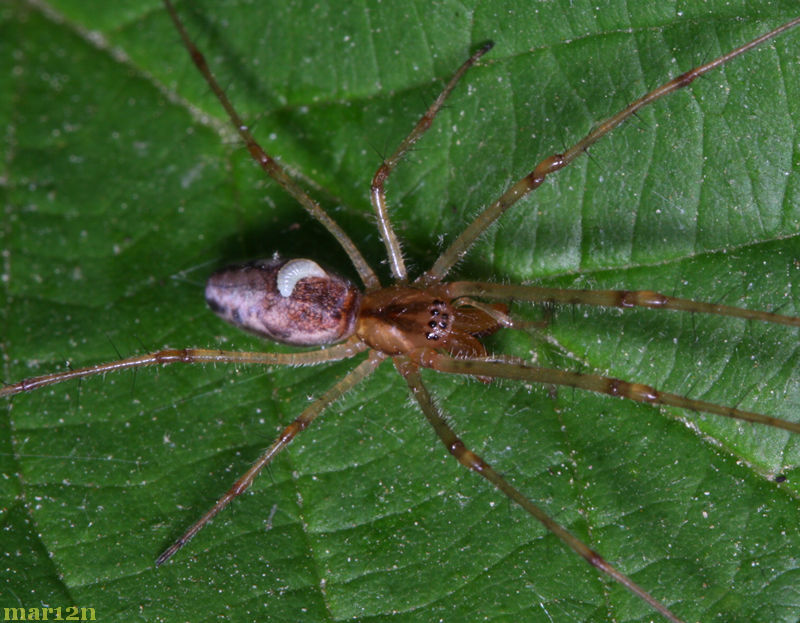 Long-jawed orb weaver with ectoparasite |
References
|
| Wondering how to get that bug identified? Please see the kind folks at Bugguide.net. (North America) North American Insects & Spiders is dedicated to macro photography of live, wild organisms in situ. |
|
North American Insects & Spiders Explore over 3,000 close-up photos and information on over 700 arthropod species commonly found in North America. Our live insects & spiders have been photographed unposed, in the wild, at various locations in Canada, Mexico and the United States. Spiders Index | Spiders Main | Beetles | Butterflies | Stinging Insects |
