Humpback Orb Weaver – Eustala species
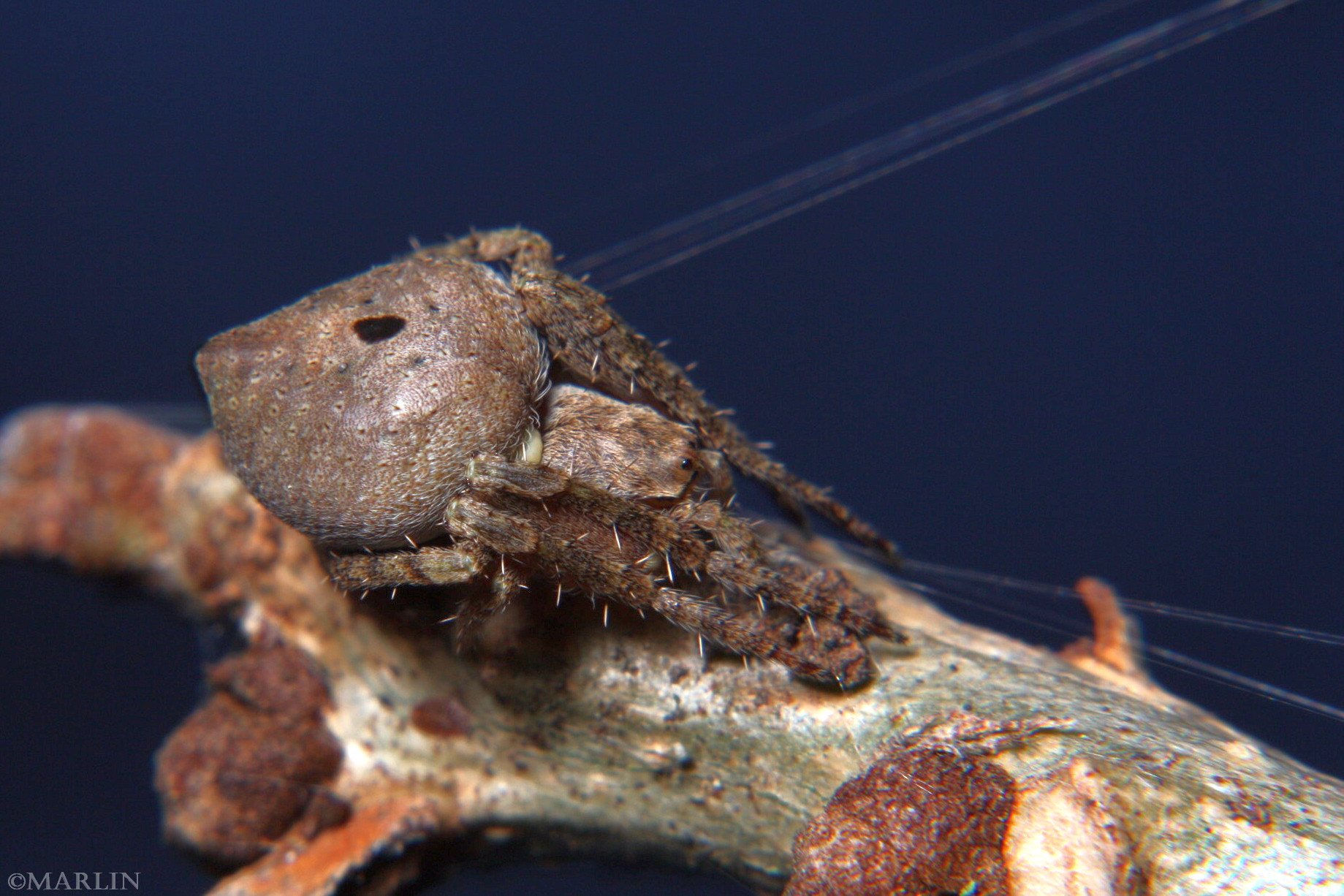
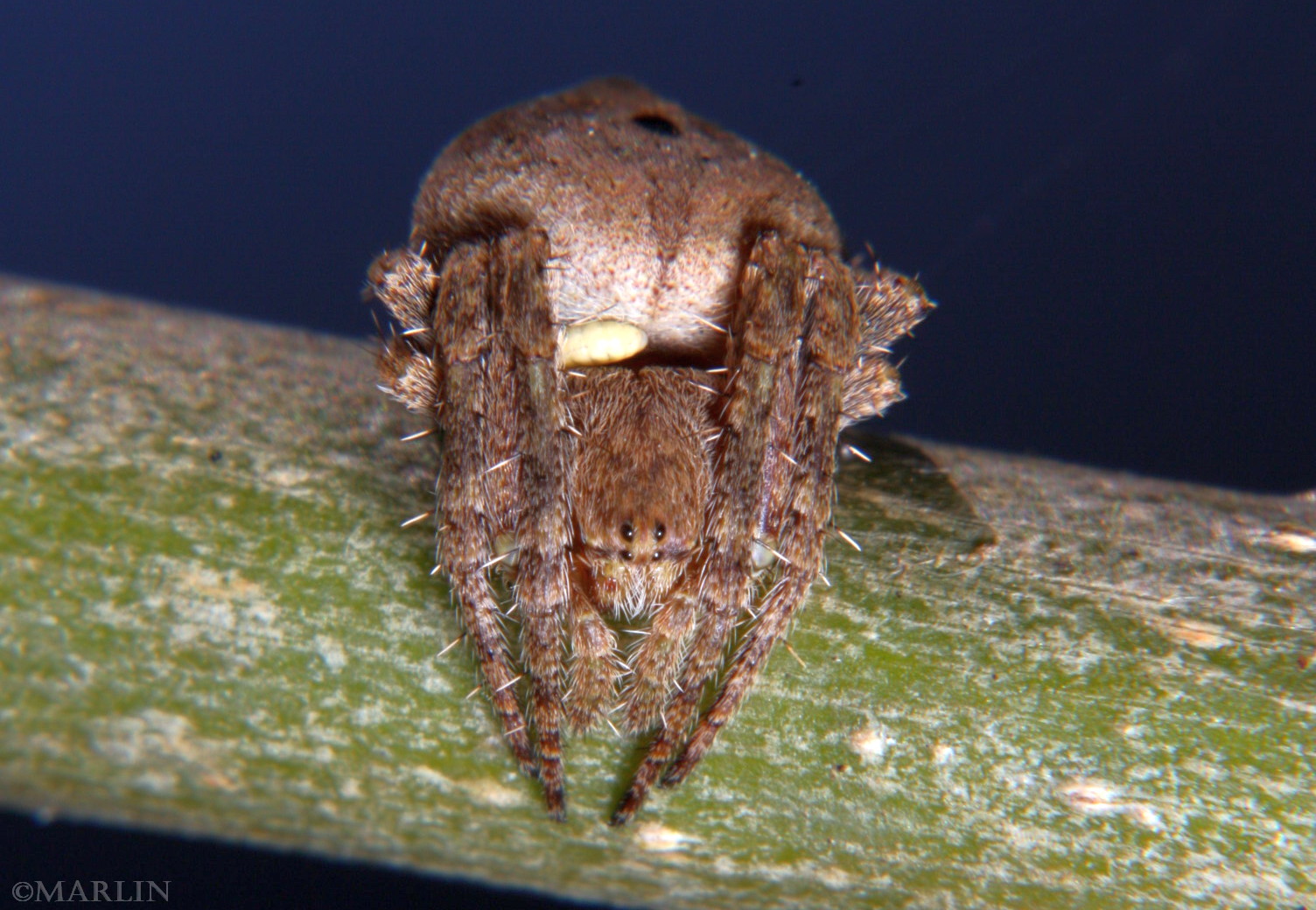
This tiny (5mm) unfortunate spider had become host to some sort of parasitic larva – you can see the white, worm-shape on top of the cephalothorax under the overhang of the abdomen. Some have suggested it may be a mantid larva or perhaps some sort of wasp larva. It could be a parasitic fly in the family Syrphidae, Tachinidae, or Phoridae (the flies that infect the domestic honey bees). I will visit her every day and maybe see what happens. (She disappeared 2 days later.)
This from the Atlantic magazine online: “Consider Polysphincta gutfreundi, a parasitic wasp that grabs hold of an orb spider and attaches a tiny egg to its belly. A wormlike larva emerges from the egg, and then releases chemicals that prompt the spider to abandon weaving its familiar spiral web and instead spin its silk thread into a special pattern that will hold the cocoon in which the larva matures. The “possessed” spider even crochets a specific geometric design in the net, camouflaging the cocoon from the wasp’s predators.”
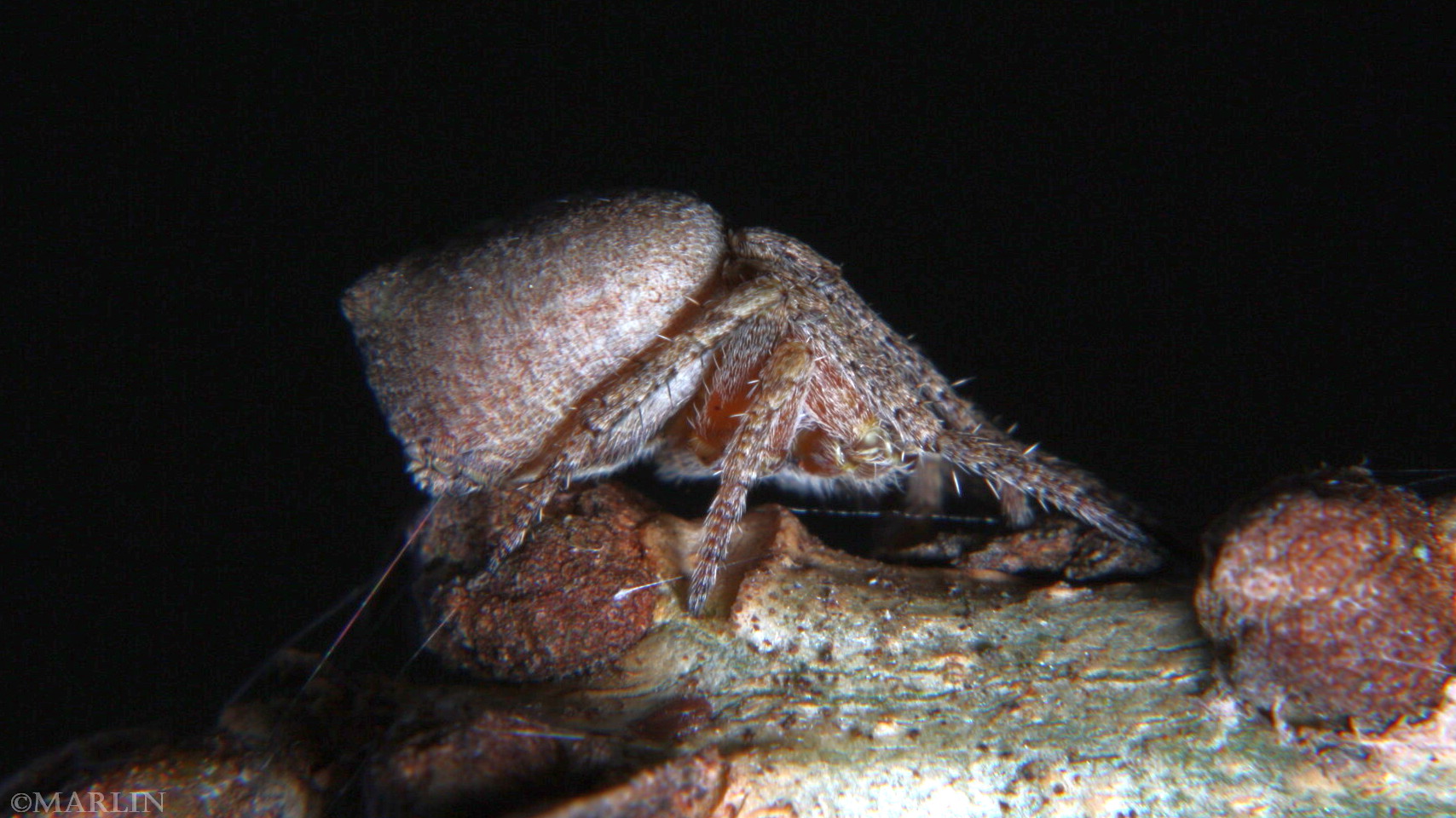
This lateral view shows why the name “humpback orb-weaver.” The oldest fossil record of an orb-weaver is from the Lower Cretaceous. Several fossils provide direct evidence that the three major orb weaving families; Araneidae, Tetragnathidae and Uloboridae evolved ~140 MYA. Ants have only been around for 130 million years.
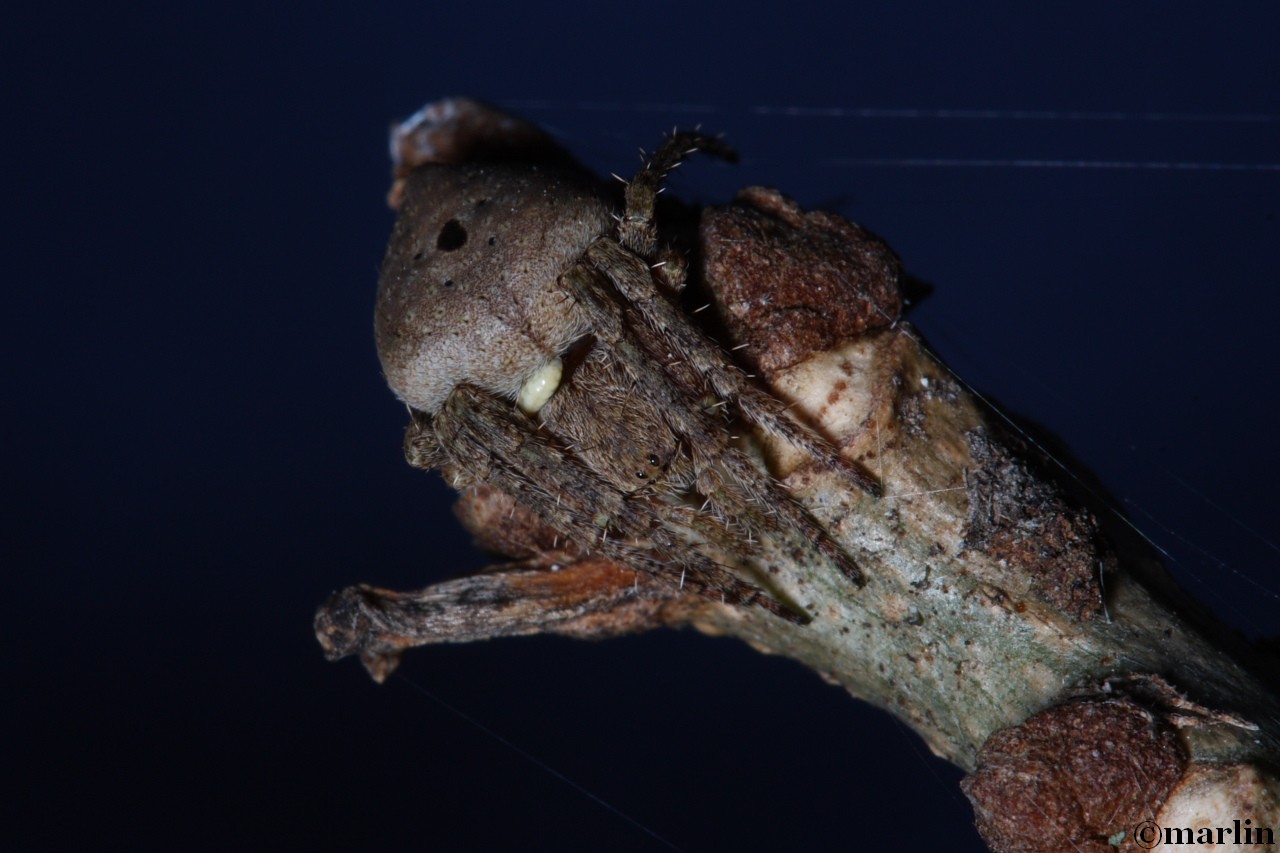
Such perfect camouflage. You have no idea how many spiders there are out in the woods, watching you. (Shudder.) Orb weavers comprise a huge family of spiders, with 3500 species worldwide, 180 of which call North America home.
Sigh. It’s a tough job, but somebody’s got to do it.
Tree Encyclopedia / North American Insects & Spiders is dedicated to providing scientific and educational resources for our users through use of large images and macro photographs of flora and fauna in their natural habitat.
Spiders Main | Spiders Index | Orb Weavers | Jumping Spiders | Nursery Web
Tree Encyclopedia / North American Insects & Spiders is dedicated to providing family-friendly educational
resources for our friends around the world through large images and macro photographs of flora and fauna.
Online since 2002