
Nursery Web Spider – Pisaurina mira
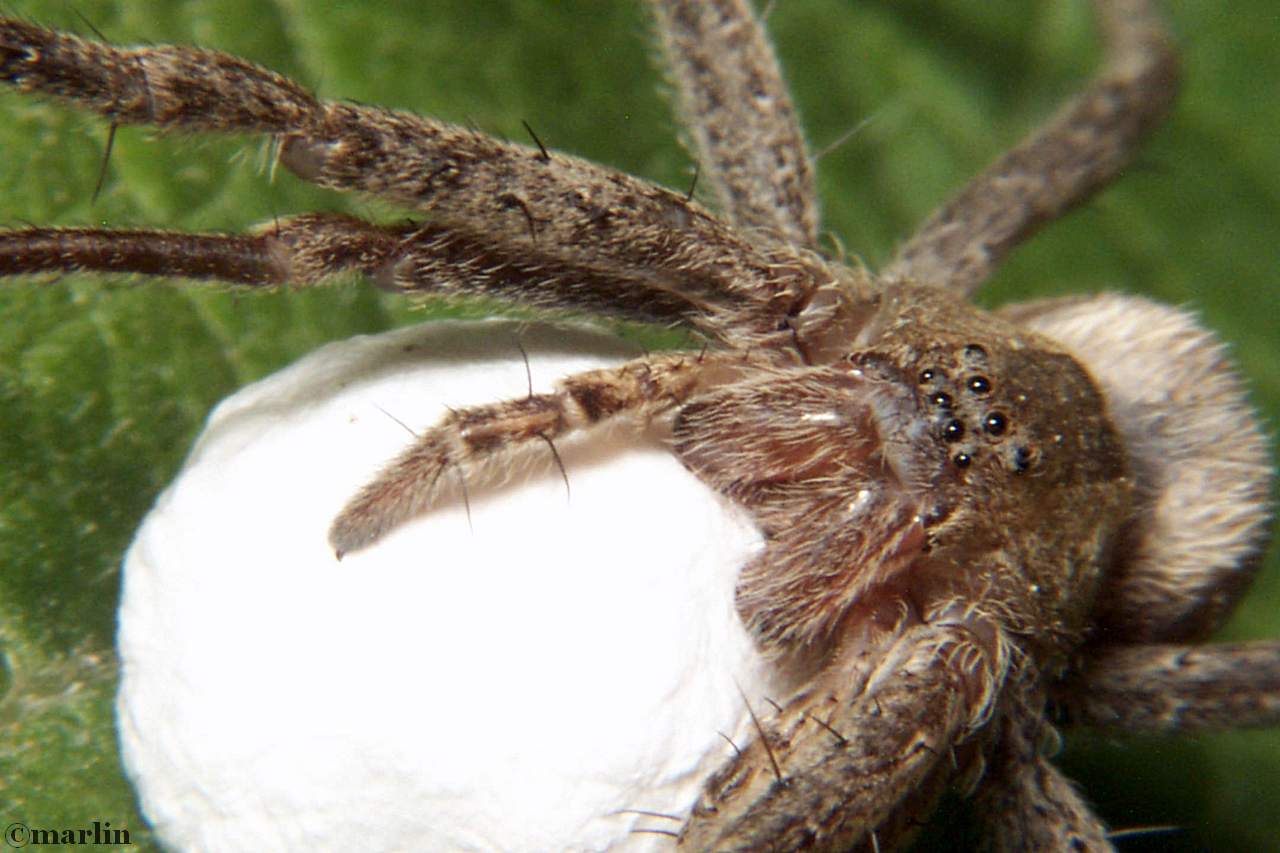
Pisauridae – Nursery Web and Fishing Spiders
Live adult male and female spiders macro-photographed at Georgia and northern Illinois.
These spiders resemble the wolf spiders (Lycosidae), but have a different eye pattern. Pisaurids have their eyes arranged in 2 rows, the posterior row slightly recurved, the median eyes in the second row slightly (if any) larger than the others. (Wolf spiders have eyes arranged in 3 rows).
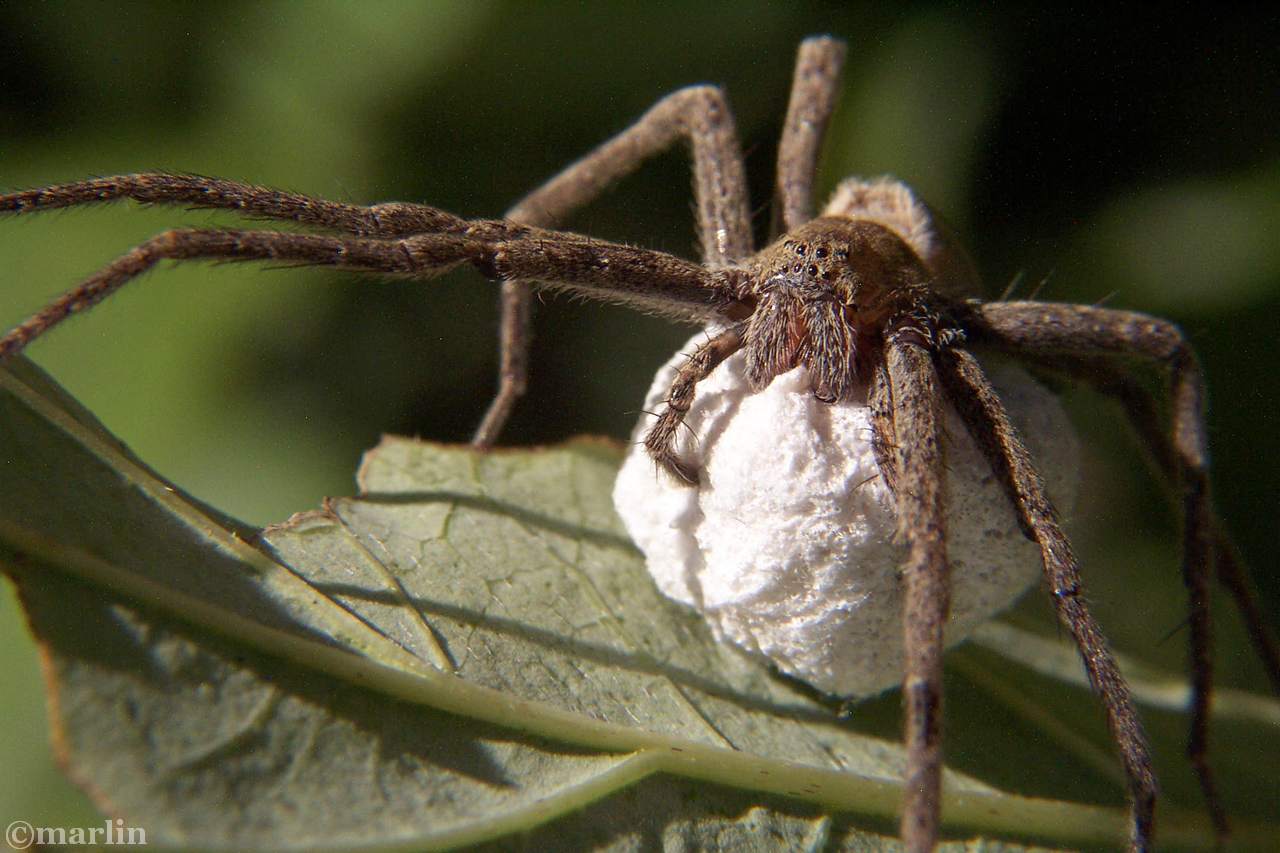
The egg sac is carried by the female under her prosoma, held there by her chelicerae and pedipalps. It is further supported by silk lines to the spinnerets. [1] She carries her egg-sac until near hatching. She then spins a protective web in which her hatchlings live until their first moult.
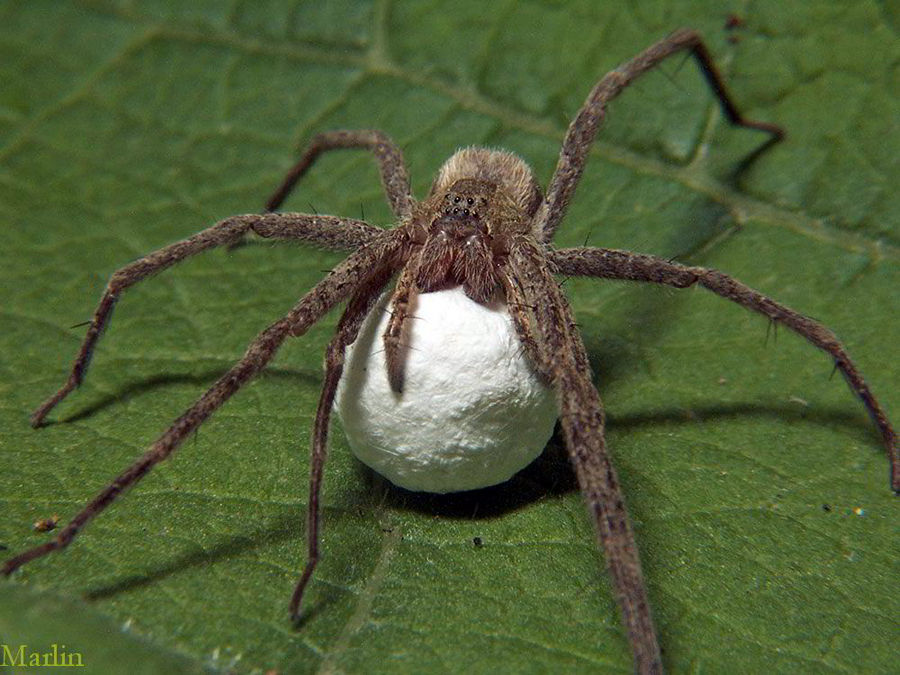
This egg sac is about 15mm diameter
Before the eggs hatch, the female attaches the sac to a plant and then builds a web around it (below). When the eggs inside are hatching, the momma spider opens the cocoon and releases the hatchlings — then stands guard nearby. The hatchlings remain in the web until thier first moult. The Pisaurids forage for their food and build webs only for protecting their young.
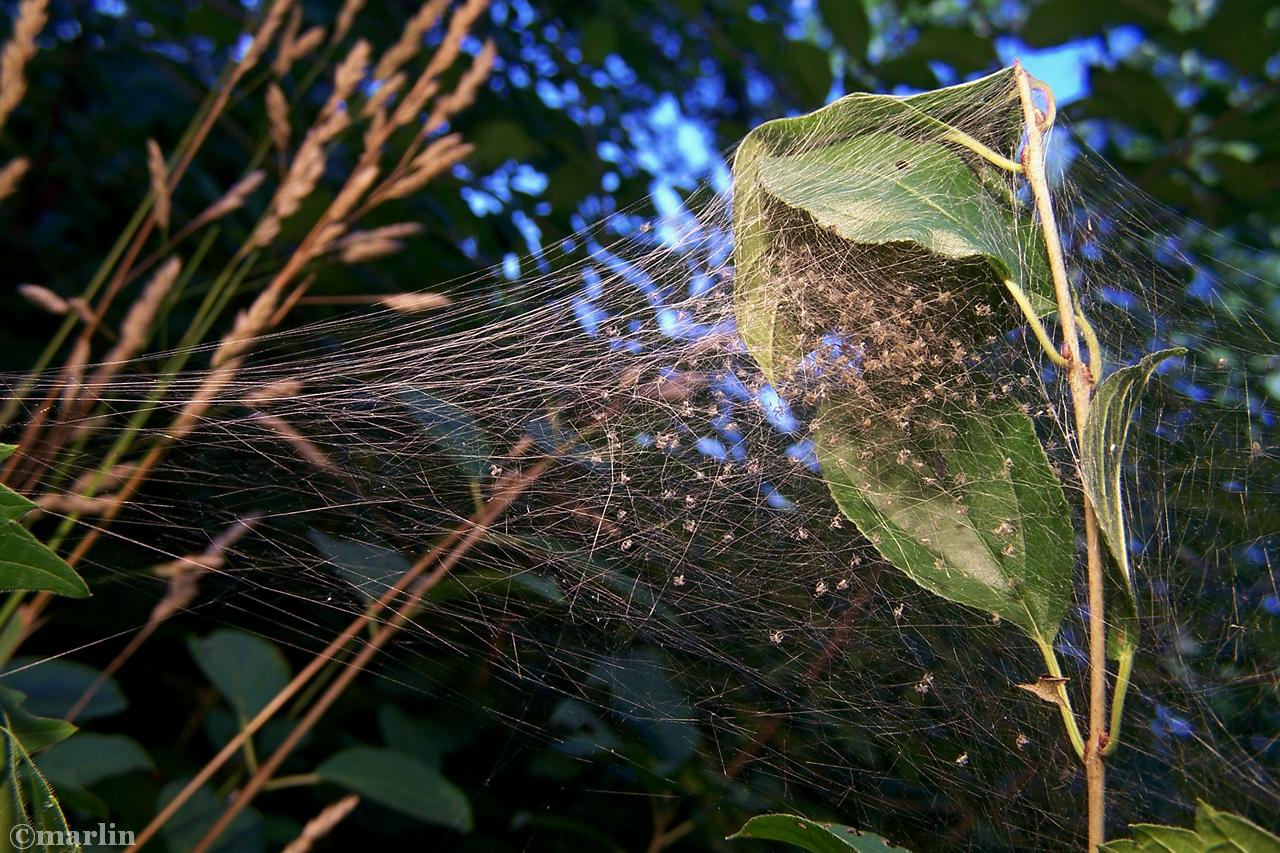
Nursery web filled with hundreds of spiderlings
References
- Paul Hillyard, Private Life of Spiders (New Holland Publishers Ltd, 2007).
- Arthur V. Evans, National Wildlife Federation Field Guide to Insects and Spiders of North America
- Bugguide.net Nursery web spider with egg sac Pisaurina mira
- Bugguide.net Nursery web spider Pisaurina mira
Spiders Main | Spiders Index | Orb Weavers | Jumping Spiders | Nursery Web
Tree Encyclopedia / North American Insects & Spiders is dedicated to providing family-friendly educational
resources for our friends around the world through large images and macro photographs of flora and fauna.
Online since 2002