
Dimorphic Jumping Spider – Maevia inclemens
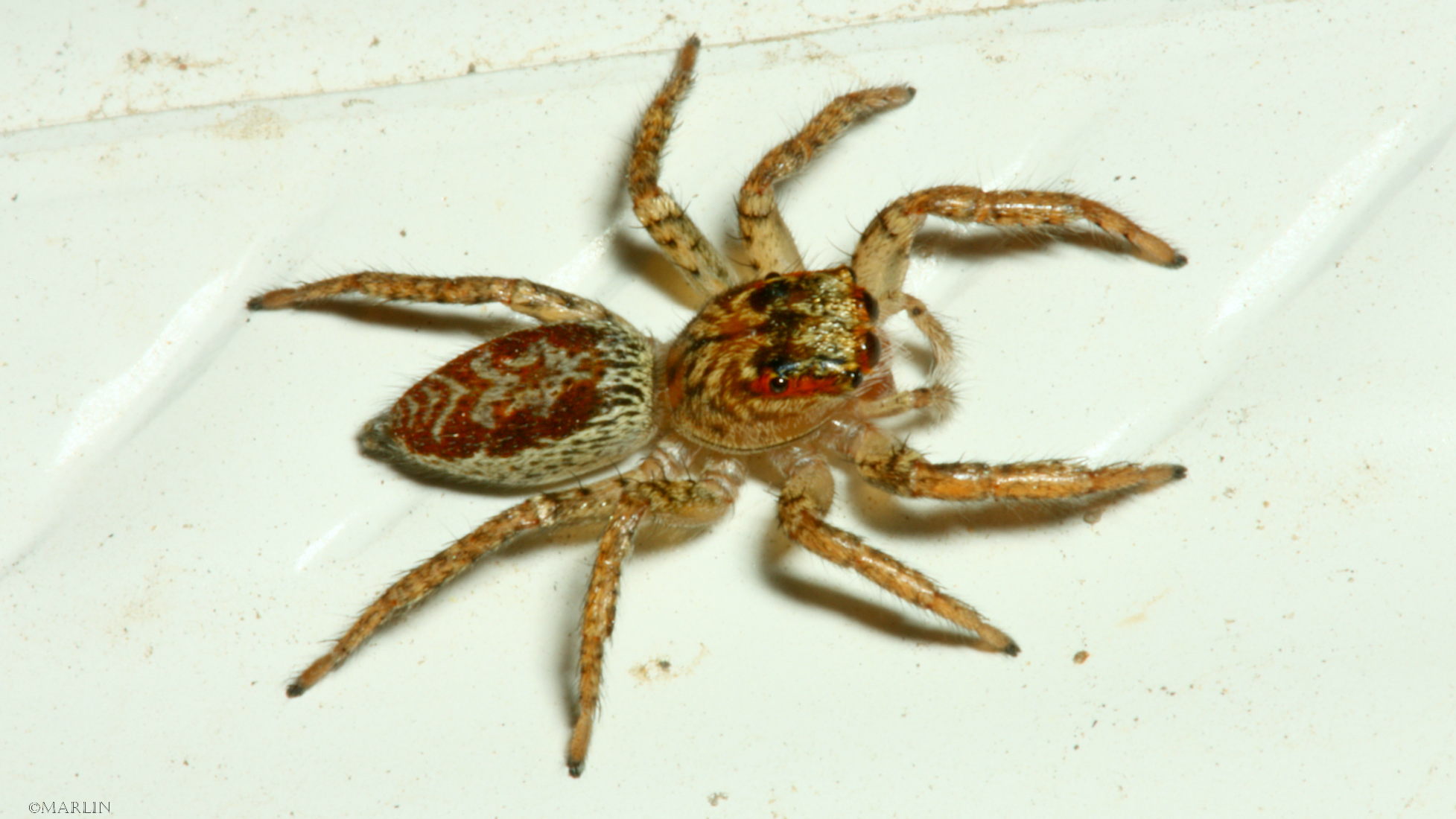
Jumping spiders have excellent vision, among the highest acuity in invertebrates. The eight eyes are grouped four on the face (the two big anterior median eyes in the middle, and two smaller anterior lateral eyes to the side), and four on top of the carapace.
The two large, forward-facing eyes (AME) are tubular behind the lens, with a well-developed musculature, unique to salticids, that supports and moves the retina – the opposite arrangement of our own eyes.
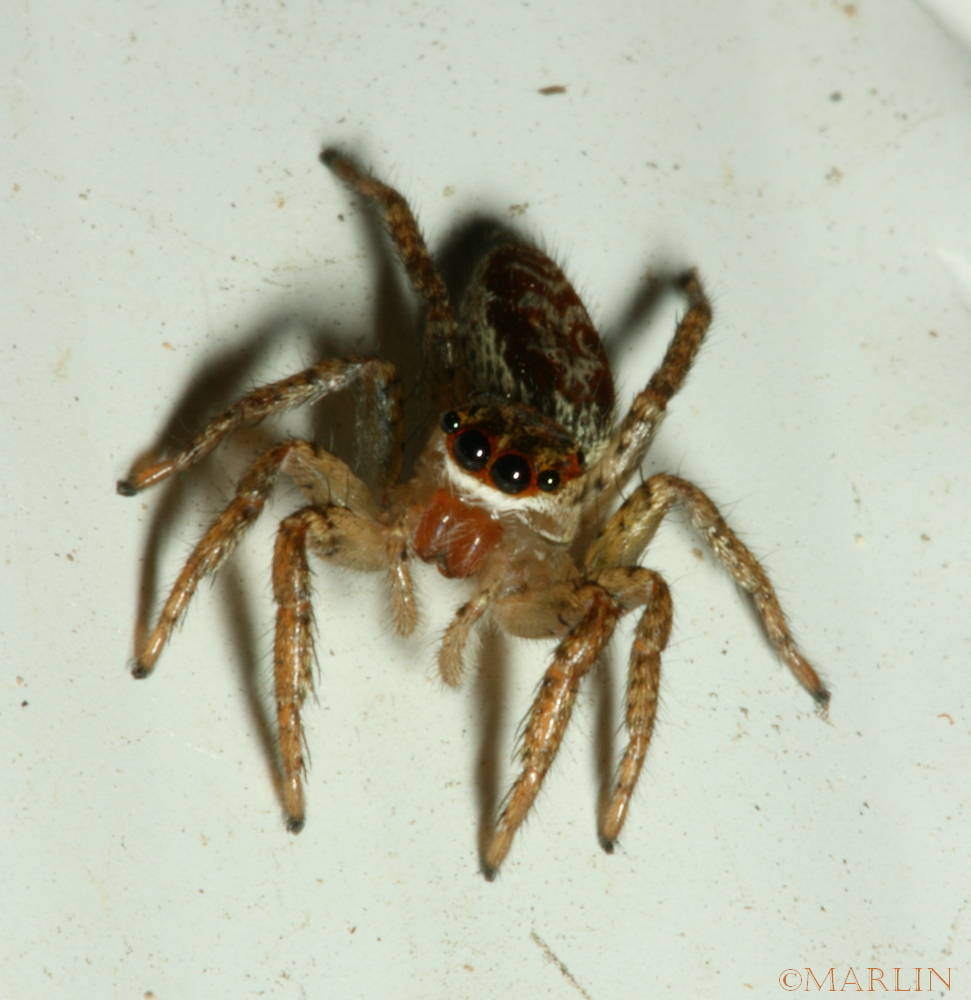
Jumping spiders are distinguished from other spiders by their four big eyes on the face and four smaller eyes on top of the head. Around the world there are probably more than 5000 species of jumping spiders. Jumping spiders are charming lil buggers that look up and watch you.
Although a jumping spider can jump more than fifty times its body length, none of its legs has enlarged muscles. The power for jumping comes from a quick contraction of muscles in the front part of the body increasing the blood pressure, which causes the legs to extend rapidly much as the hydraulics in a low-rider car.

Salticids are perhaps as old and diverse as mammals, though not many humans know of their world. Many salticids are colorful, they take on a variety of body forms, and some have disguises, looking like ants and other organisms.
Tree Encyclopedia / North American Insects & Spiders
Online since 2002