Peck’s Skipper Butterfly – Polites peckius
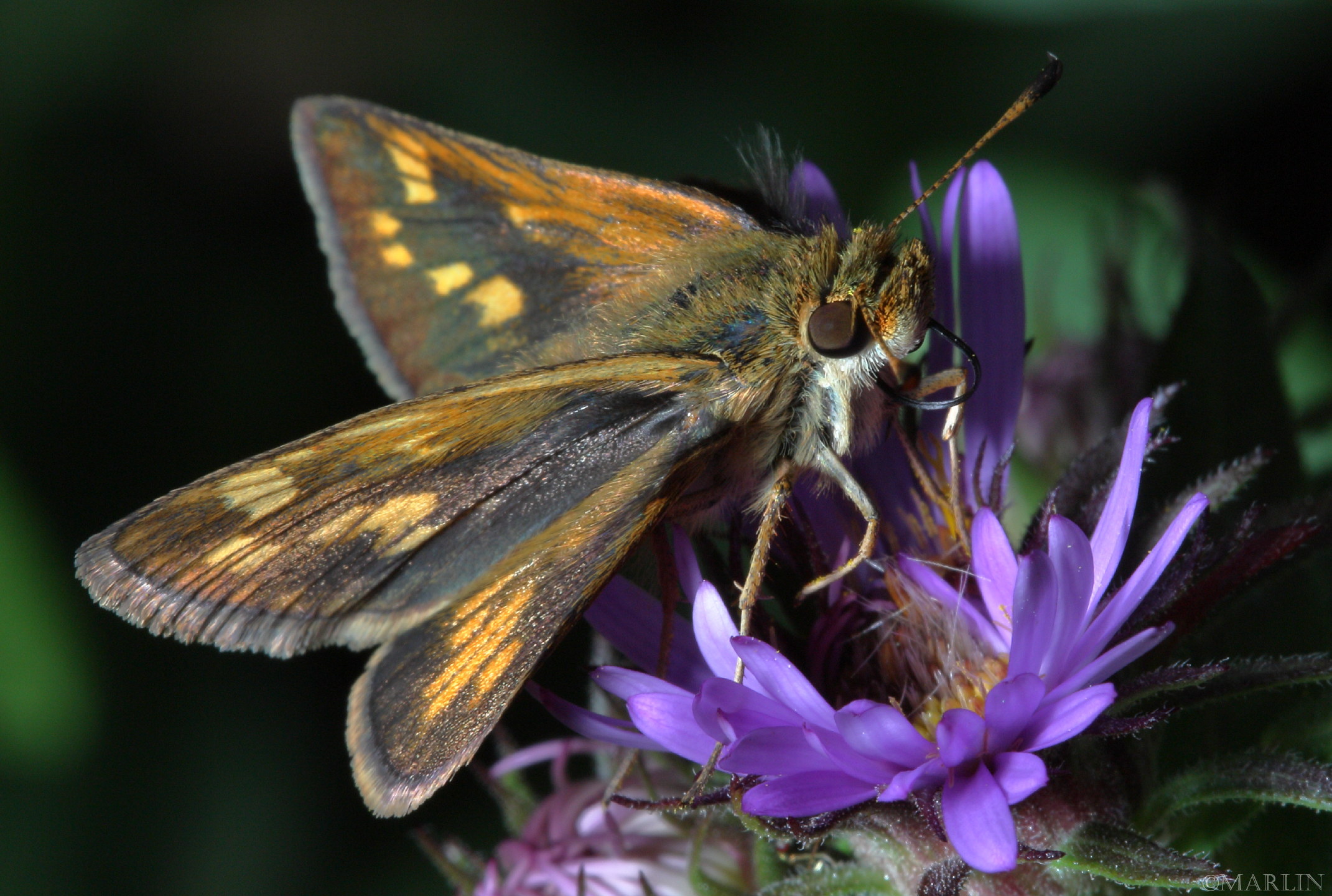
Family Hesperiidae – skipper butterflies. Also commonly called “Yellowpatch skipper”
Live adult skipper butterflies photographed at New York state and Illinois, USA.
Skipper Butterflies display many structural features of both moths and butterflies; stocky with a large head, widely spaced, hooked antennae, a chunky body and short wings, these smallish butterflies are sometimes rapid, erratic fliers.
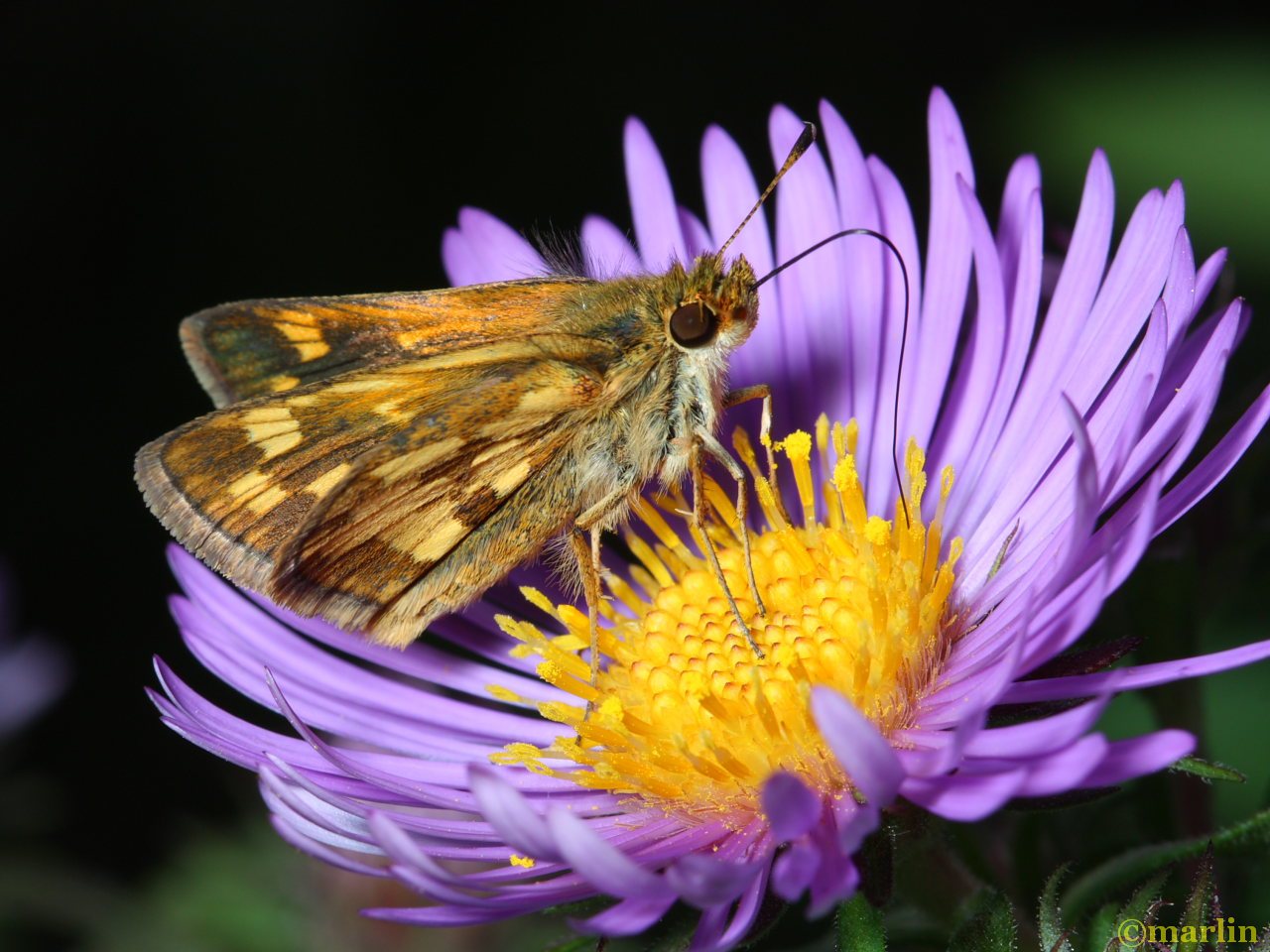
Peck’s skipper on New England Aster
Identification: Upper side of male is brown with reddish-orange patches; forewing has a sinuous stigma. Female is darker with no stigma. Underside of the hindwing of both sexes has a patch of large yellow spots in the center surrounded by dark brown. Males perch in sunny open areas to await receptive females, and courtship takes place throughout the day. Females lay eggs singly; caterpillars eat leaves and live in leaf shelters. Caterpillars and chrysalids hibernate.
Flight: Two to three broods from May-October.
Wing span: 1 – 1 1/4 inches (2.5 – 3.2 cm).
Caterpillar hosts: Rice cutgrass (Leersia oryzoides); probably bluegrass (Poa pratensis) and others.
Adult food: Nectar from flowers including red clover, purple vetch, thistles, selfheal, New York ironweed, blue vervain, common milkweed, swamp milkweed, dogbane, and New Jersey tea.
Habitat: Many open grassy habitats including meadows, prairies, lawns, marshes, landfills, roadsides, vacant lots, and power line right-of-ways.
Range: British Columbia east across southern Canada to Nova Scotia; south to northeastern Oregon, southern Colorado, northwest Arkansas, and northern Georgia.
NatureServe Global Status: G5 – Demonstrably secure globally. [1]
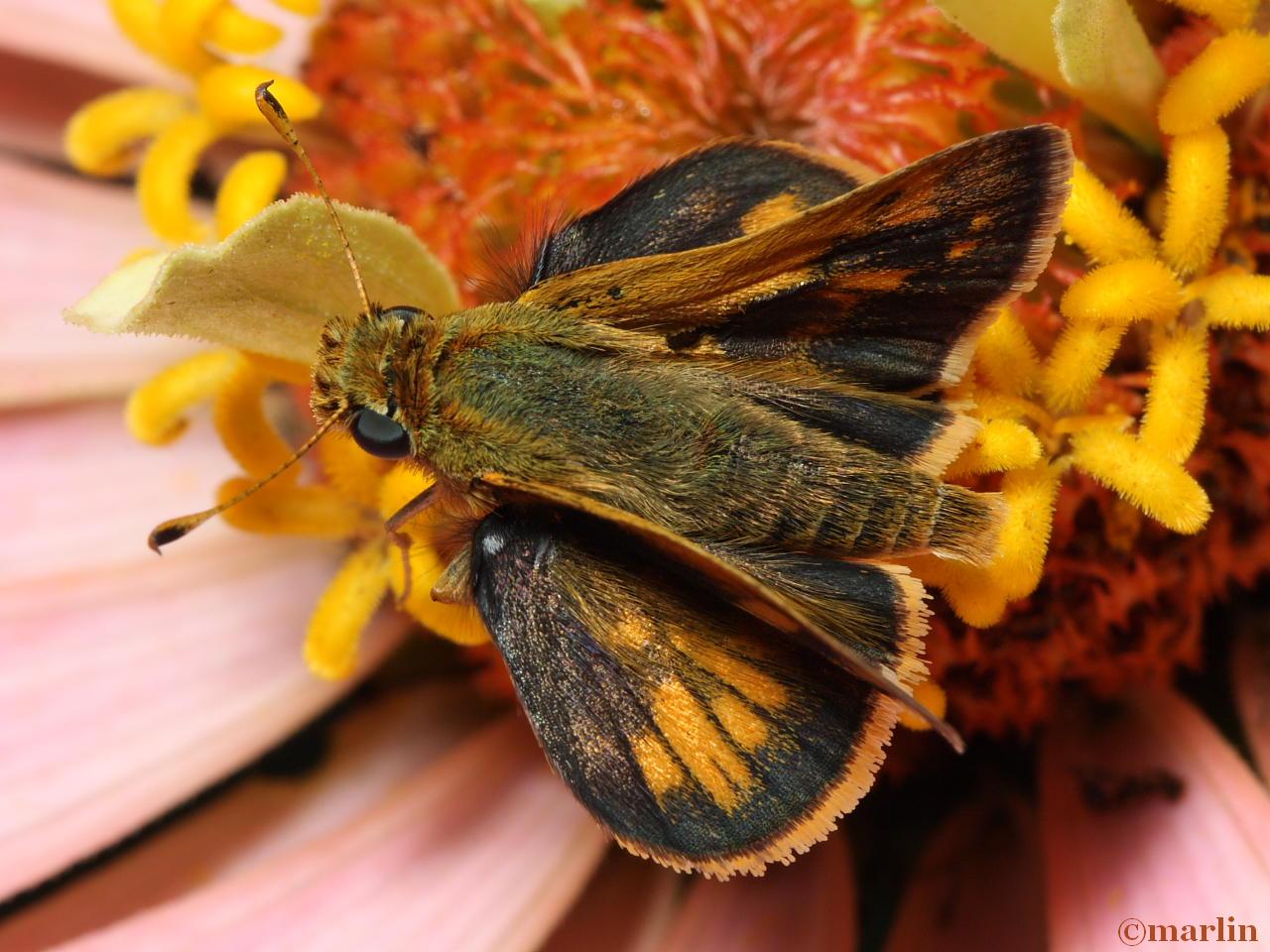
Peck’s skipper at Science Lake, Allegany State Park, New York
Before I started photographing insects, I was completely unaware of these charming little butterflies. I have since come to appreciate their antics and admire their flying abilities. Skippers present a physical challenge to photogs – they rarely stay in one spot for more than a few moments, and they will weathervane you all day, never presenting their full profile while you follow them around a flower blossom.
Family Hesperiidae: Skipper Butterflies consist of nearly 3,000 species worldwide, 250 of which call North America home. Roughly one third of North American butterflies belong to this family. Skippers are named for their rapid, erratic flight. Skippers can be the most difficult butterfly species to identify; their markings are maddeningly similar.
References
- USGS, National Biological Information Infrastructure, Montana State University Big Sky Institute, Butterflies and Moths of North America, Peck’s Skipper Butterfly – Polites peckius
Moths Index | Moths | Butterflies Main | Butterflies Index | Skippers
Tree Encyclopedia / North American Insects & Spiders is dedicated to providing family-friendly educational
resources for our friends around the world through large images and macro photographs of flora and fauna.
Online since 2002